
 AI-generated
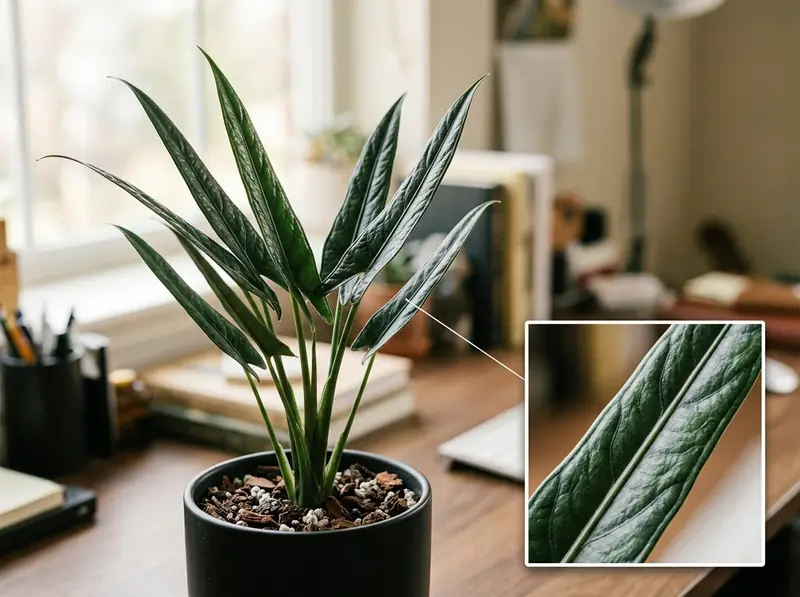
Scalprum Alocasia
Alocasia scalprum
Scalprum alocasia is a compact, slow-growing species with narrow, upright leaves shaped like a blade. It is less common and less thirsty than the giant alocasias. Give it bright light, warmth, and an airy, quick-draining mix.
Saving is free with a KinClub account, and it works here and in the KinClub app. Sign up free
Care profile
- Light
- Bright, indirect lightLow → direct sun
- Water
- Moderate wateringAbout every 8 days
- Difficulty
- ModerateTricky → easy
- Coldest it tolerates
- 60°F
- Humidity
- High
- Mature size
- SmallSmall → tree-size
- Growth rate
- Slow to moderate
- How common
- EnthusiastRare → everywhere
- Plant family
- Araceae
Pets and toxicity
Toxic to cats
Keep away from cats. Call your vet or a pet poison helpline if a cat chews it.
Toxic to dogs
Keep away from dogs. Call your vet or a pet poison helpline if a dog chews it.
Source: ASPCA toxic and non-toxic plants. If a pet eats any houseplant, call your vet or an animal poison helpline.
How to care for Scalprum Alocasia
Light
Bright indirect light keeps the leaf shape compact. Avoid hot direct sun, and keep it near a window rather than in a dim corner.
Watering
Water when the top inch or two is dry, about every 7 to 10 days in summer and every 2 to 3 weeks in winter, when growth slows. Never let it sit in water.
Soil
Use a very airy mix, such as potting soil with plenty of perlite and bark.
Feeding
Feed lightly once a month in spring and summer with half-strength balanced fertilizer.
Repotting
Repot every 2 years in spring into a pot only slightly larger; it likes being snug.
Propagation
Divide the clump or separate offsets at the base in spring.
Common problems
- Spider mites and thrips stipple leaves; wipe them off and use insecticidal soap.
- Dry air browns leaf edges; keep humidity near 50 percent.
- Rot at the base follows overwatering in cool, dim rooms; repot into dry mix and trim soft tissue.
Similar plants
Same light needs and difficulty.
 AI-generated
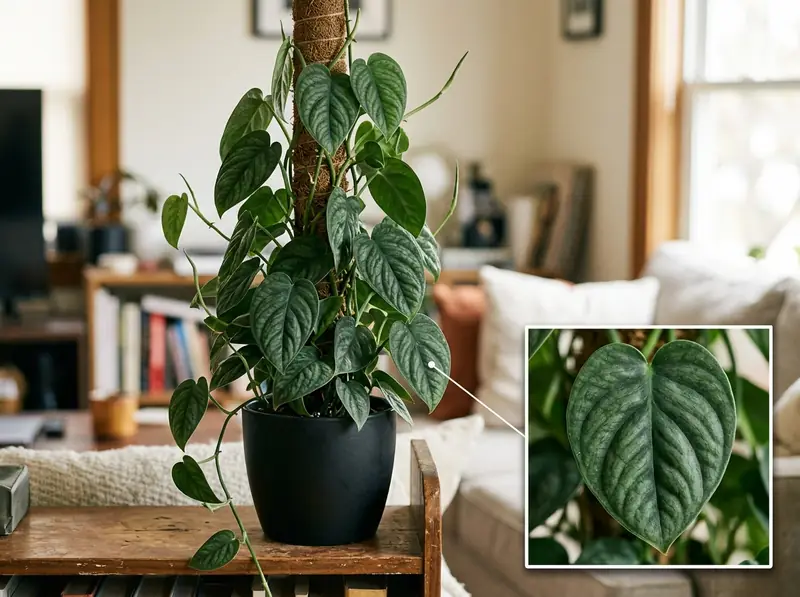
Mayari Scindapsus
Scindapsus mayari
- Medium to bright, indirect light
- Dry to moderate watering
Toxic to cats and dogs AI-generated
 AI-generated
 AI-generated