
 AI-generated
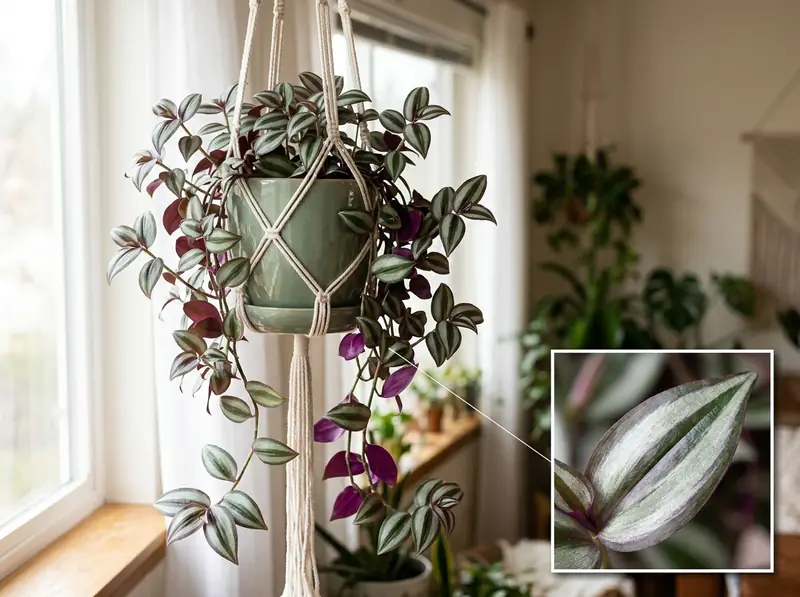
Silver Inch Plant
Tradescantia zebrina
Silver Inch Plant is a fast-growing trailing plant with striped silver-green leaves and purple undersides. It is forgiving and ideal for beginners, and it looks best in a hanging basket or on a shelf in bright, indirect light. Pinch it regularly and replace it with cuttings when it gets leggy.
Saving is free with a KinClub account, and it works here and in the KinClub app. Sign up free
Care profile
- Light
- Bright, indirect lightLow → direct sun
- Water
- Moderate wateringAbout every 7 days
- Difficulty
- EasyTricky → easy
- Coldest it tolerates
- 50°F
- Humidity
- Medium
- Mature size
- Small to mediumSmall → tree-size
- Growth rate
- Fast
- How common
- Very commonRare → everywhere
- Plant family
- Commelinaceae
Pets and toxicity
Cats and dogs: not yet checked
Not yet checked against ASPCA — don't assume it's safe for pets.
No toxicity source on record for this plant yet. If a pet eats any houseplant, call your vet or an animal poison helpline.
How to care for Silver Inch Plant
Light
Give it bright, indirect light, such as a spot near an east or west window. A few hours of gentle morning sun is fine, but hot midday sun can scorch the leaves.
Watering
Water when the top inch of soil feels dry, usually about once a week in the growing season. Water thoroughly until it drains, then empty the saucer; cut back to every 10 to 14 days in winter.
Soil
Use an ordinary well-draining potting mix, ideally with a handful of perlite added. Make sure the pot has drainage holes.
Feeding
Feed every 4 weeks in spring and summer with a balanced liquid houseplant fertilizer diluted to half strength. Skip feeding in fall and winter.
Repotting
Repot every year or two in spring, moving up only 1 to 2 inches in pot size. The plant gets straggly with age, so refreshing it with cuttings is often better than repotting.
Propagation
Cut a stem piece 4 to 6 inches long below a node, remove the lowest leaves, and place in water or moist soil. Roots form within 1 to 2 weeks; plant several cuttings together for a fuller pot.
Common problems
- Leggy stems with bare sections: move to brighter light and pinch or cut back hard to encourage branching.
- Faded stripes and plain green leaves: the plant needs more light, so move it closer to a bright window.
- Brown, crispy leaf tips: usually low humidity or irregular watering, so water more consistently and keep away from heaters.
- Webbing and speckled leaves: spider mites; rinse the plant in the shower and treat with insecticidal soap weekly until clear.
- Mushy stem bases: overwatering or root rot; let soil dry, trim rotted stems, and re-root healthy cuttings in fresh mix.
Similar plants
Same light needs and difficulty.
 AI-generated
 AI-generated
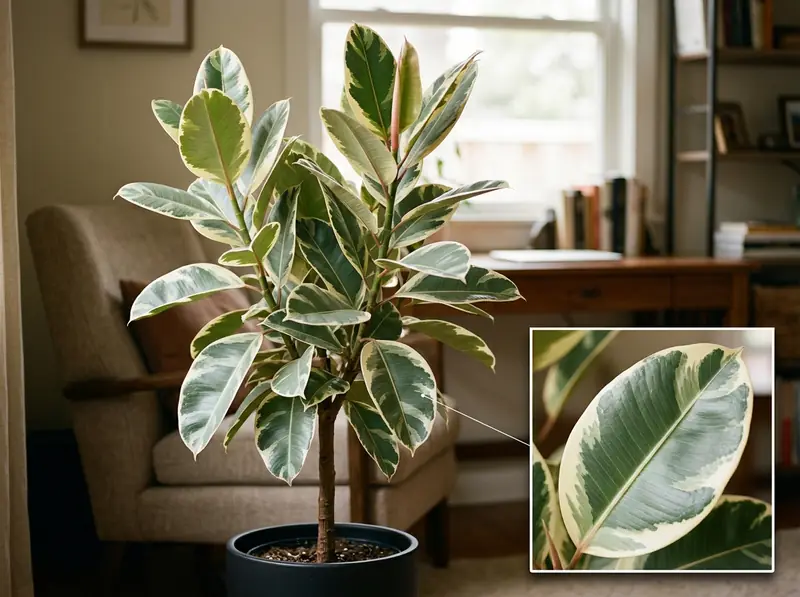
Tineke Rubber Plant
Ficus elastica 'Tineke'
- Bright, indirect light
- Moderate watering
Toxic to cats and dogs AI-generated
Chinese Money Plant
Pilea peperomioides
- Bright, indirect light
- Dry to moderate watering
Pets: not yet checked AI-generated
Christmas Cactus
Schlumbergera × buckleyi
- Bright, indirect light
- Moderate watering
Pets: not yet checked