
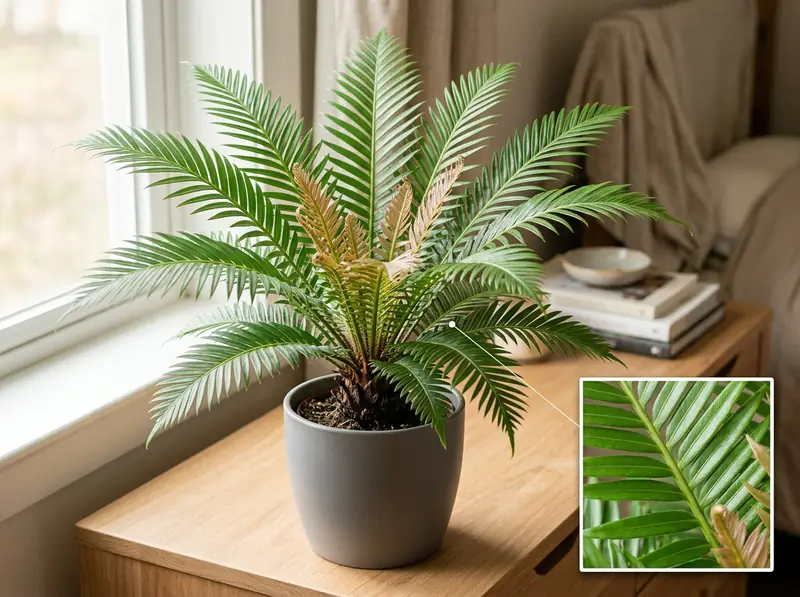
 AI-generated
Silver Lady Fern
Blechnum gibbum
Silver Lady Fern forms a tidy rosette of arching, glossy green fronds, with new growth often flushing coppery-pink. It likes bright indirect light, evenly moist soil and good humidity, making it a great choice for a bathroom or a humid spot. Avoid letting it dry out or sit in soggy soil, and it will grow steadily.
Saving is free with a KinClub account, and it works here and in the KinClub app. Sign up free
Care profile
- Light
- Bright, indirect lightLow → direct sun
- Water
- Keep moistAbout every 6 days
- Difficulty
- ModerateTricky → easy
- Coldest it tolerates
- 50°F
- Humidity
- High
- Mature size
- MediumSmall → tree-size
- Growth rate
- Moderate
- How common
- CommonRare → everywhere
- Plant family
- Blechnaceae
Pets and toxicity
Cats and dogs: not yet checked
Not yet checked against ASPCA — don't assume it's safe for pets.
No toxicity source on record for this plant yet. If a pet eats any houseplant, call your vet or an animal poison helpline.
How to care for Silver Lady Fern
Light
Give bright, indirect light, such as a spot a few feet from an east or north-facing window. It tolerates medium light but avoid direct midday sun, which scorches the fronds.
Watering
Keep the soil evenly damp like a wrung-out sponge, usually watering about every 5 to 7 days in the growing season. Water around the edge of the plant rather than into the crown, and never let the pot dry out fully.
Soil
Use a peat-free or peat-based, airy potting mix with added orchid bark or perlite, roughly 2 parts mix to 1 part bark or perlite. It should hold moisture but drain freely, and the pot needs drainage holes.
Feeding
Feed monthly in spring and summer with a balanced liquid fertilizer diluted to half strength. Skip feeding in winter, as ferns are easily burned by too much fertilizer.
Repotting
Repot every 2 to 3 years in spring when roots fill the pot, moving up only 1 to 2 inches in pot diameter. Keep the crown at soil level, not buried.
Propagation
Mature plants can form offsets, which can be divided in spring with roots attached and potted separately. Spore growing is possible but slow and difficult at home.
Common problems
- Brown, crispy frond tips: air is too dry or soil dried out, so raise humidity with a pebble tray or humidifier and water more regularly.
- Yellowing fronds: usually overwatering or poor drainage, so let the top of the soil barely dry and empty the saucer.
- Scale or mealybugs on stems and frond undersides: wipe with rubbing alcohol on a cotton swab and treat repeatedly with insecticidal soap.
- Fronds dropping in winter: cold drafts or heating vents are the usual cause, so move it somewhere above 60°F away from vents.
Similar plants
Same light needs and difficulty.
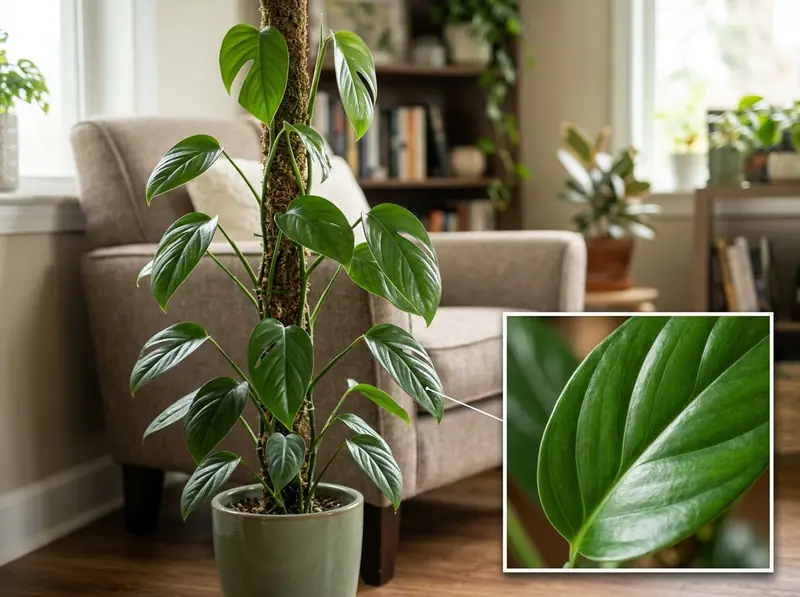 AI-generated
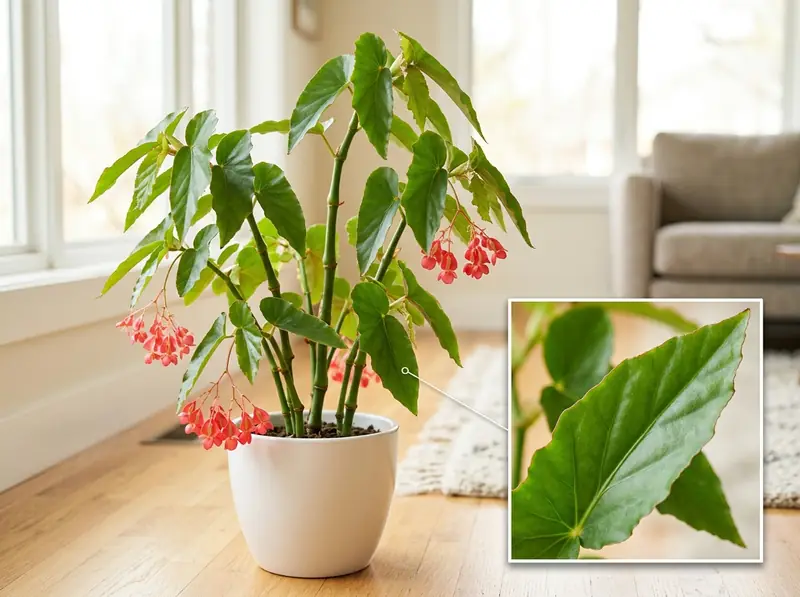 AI-generated
 AI-generated
 AI-generated