
 AI-generated
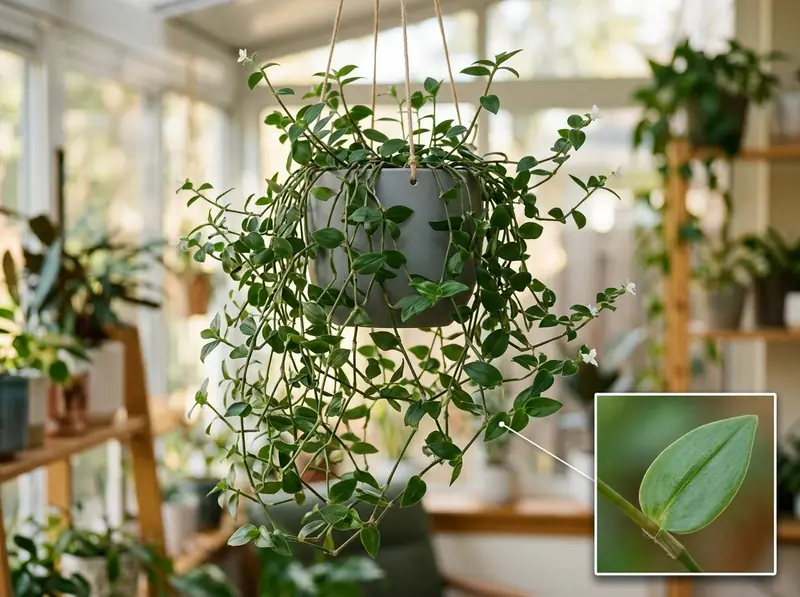
Small-Leaf Spiderwort
Tradescantia fluminensis
Small-leaf spiderwort is a fast-growing trailing plant with small, oval, often green or variegated leaves. It is easy to grow in bright, indirect light and looks best in a hanging basket or on a shelf. Regular trimming keeps it full, and cuttings root readily in water or soil.
Saving is free with a KinClub account, and it works here and in the KinClub app. Sign up free
Care profile
- Light
- Bright, indirect lightLow → direct sun
- Water
- Moderate wateringAbout every 7 days
- Difficulty
- EasyTricky → easy
- Coldest it tolerates
- 45°F
- Humidity
- Medium
- Mature size
- SmallSmall → tree-size
- Growth rate
- Fast
- How common
- Very commonRare → everywhere
- Plant family
- Commelinaceae
Pets and toxicity
Cats and dogs: not yet checked
Not yet checked against ASPCA — don't assume it's safe for pets.
No toxicity source on record for this plant yet. If a pet eats any houseplant, call your vet or an animal poison helpline.
How to care for Small-Leaf Spiderwort
Light
Give it bright, indirect light, such as a spot near an east or north-facing window or a few feet back from a sunny one. Gentle morning sun is fine, but hot midday sun can scorch the leaves.
Watering
Water thoroughly when the top inch of soil feels dry, usually about once a week in the growing season. Let excess drain away and water less in winter, when growth slows.
Soil
Use an ordinary well-draining potting mix, ideally with a handful of perlite added. Make sure the pot has drainage holes.
Feeding
Feed every 4 to 6 weeks in spring and summer with a balanced liquid houseplant fertilizer diluted to half strength. Skip feeding in winter.
Repotting
Repot every year or two in spring into a pot only 1 to 2 inches wider, or simply divide and refresh the plant. It grows quickly and is often easier to replace with new cuttings.
Propagation
Snip stem pieces 3 to 4 inches long with a few nodes and place them in water or moist soil. They root within 1 to 2 weeks, and several cuttings planted together make a fuller pot.
Common problems
- Leggy, sparse stems: move to brighter light and pinch or cut back the stems to encourage bushy growth.
- Faded or plain green leaves: the plant needs more light, so move it closer to a bright window.
- Brown, crispy leaf tips: the soil is drying out too much or the air is very dry, so water more consistently.
- Mushy stems at the base: the plant is overwatered, so cut away rotted parts, let the soil dry, and re-root healthy cuttings.
- Fine webbing and stippled leaves: spider mites, so rinse the plant and treat with insecticidal soap.
Similar plants
Same light needs and difficulty.
 AI-generated
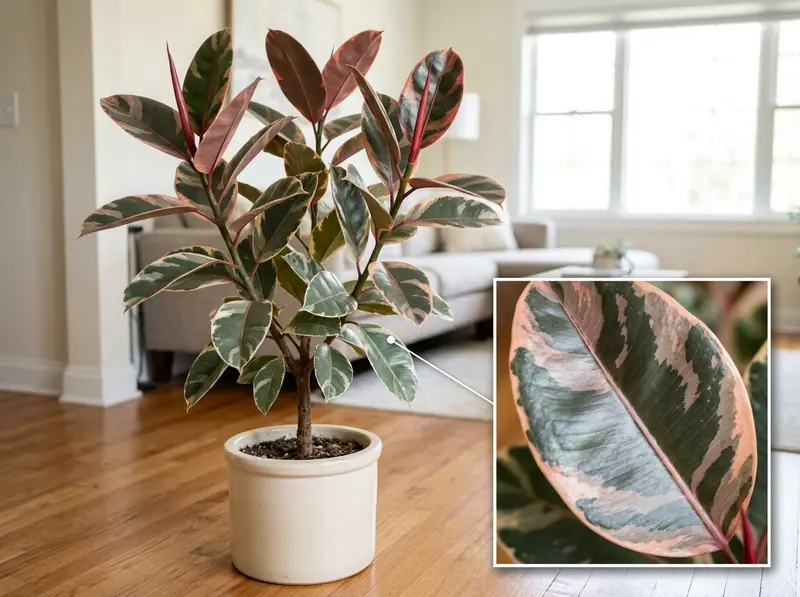
Ruby Rubber Plant
Ficus elastica 'Ruby'
- Bright, indirect light
- Moderate watering
Toxic to cats and dogs AI-generated
 AI-generated
Chinese Money Plant
Pilea peperomioides
- Bright, indirect light
- Dry to moderate watering
Pets: not yet checked AI-generated
Christmas Cactus
Schlumbergera × buckleyi
- Bright, indirect light
- Moderate watering
Pets: not yet checked