AI-generated image, not a photograph of this plant. Real plants look different depending on light, soil, temperature and age.
RubiaceaeCommon in stores
Snow Rose
Serissa japonica
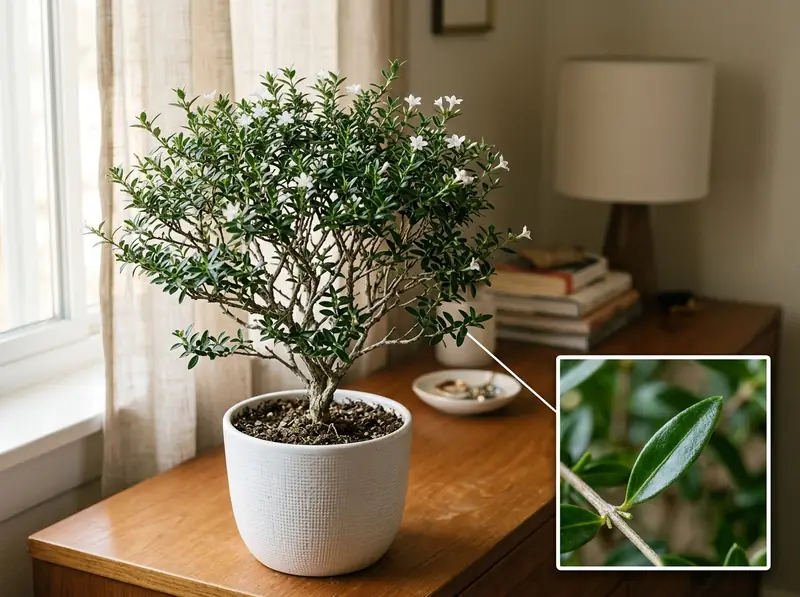
Snow rose is a tiny-leaved, bushy shrub often sold as bonsai, with small white or pinkish flowers in spring and summer. It is fussy: it wants bright light, steady moisture, and no sudden changes, and often drops its leaves if any of these shift. Give it a permanent bright spot and consistent watering for best results.
Pets: not yet checked
💡
Saving is free with a KinClub account, and it works here and in the KinClub app. Sign up free
🪴 Care profile
Light
Bright, indirect lightLow → direct sun
Water
Keep moistAbout every 5 days
Difficulty
ChallengingTricky → easy
Coldest it tolerates
40°F
Humidity
Medium to high
Mature size
SmallSmall → tree-size
Growth rate
Slow to moderate
How common
CommonRare → everywhere
Plant family
Rubiaceae
🐾 Pets and toxicity
Cats and dogs: not yet checked
Not yet checked against ASPCA — don't assume it's safe for pets.
No toxicity source on record for this plant yet. If a pet eats any houseplant, call your vet or an animal poison helpline.
🌿 How to care for Snow Rose
Light
Give it at least 4 to 6 hours of bright light, including some gentle direct morning sun, in an east or south window. Dim rooms cause leaf drop and no flowers.
Watering
Keep the soil evenly slightly damp, watering when the top half inch feels dry, usually every 4 to 7 days. Never let it dry out completely or sit in standing water. Soft, low-mineral water such as rainwater is best.
Soil
Use a well-draining, slightly acidic potting mix, such as regular mix with about one-quarter perlite or bark added. The pot must have drainage holes.
Feeding
Feed every 2 to 4 weeks in spring and summer with a balanced fertilizer at half the label strength. Pause in winter.
Repotting
Repot only every 2 to 3 years in spring, going up just one pot size, and handle the fine roots gently. Root disturbance can trigger leaf drop.
Propagation
Take 3 to 4 inch softwood cuttings in late spring or summer, dip in rooting hormone, and insert in moist perlite and peat. Keep warm and humid, and roots form in about 4 to 8 weeks.
Common problems
Sudden leaf drop after moving or a change in conditions: keep it in one bright spot and avoid drafts; it usually regrows new leaves in a few weeks.
Yellowing leaves from soggy soil: let the top layer dry slightly, check the drainage holes, and cut back watering.
Crispy brown leaf edges from dry air or missed waterings: water more consistently and set on a pebble tray or group with other plants.
Webbing or stippled leaves from spider mites: rinse the plant, then spray with insecticidal soap weekly for 3 weeks.
No flowers: move to brighter light and give a cooler, slightly drier winter rest.

 AI-generated
 AI-generated
 AI-generated
 AI-generated
 AI-generated