
 AI-generated
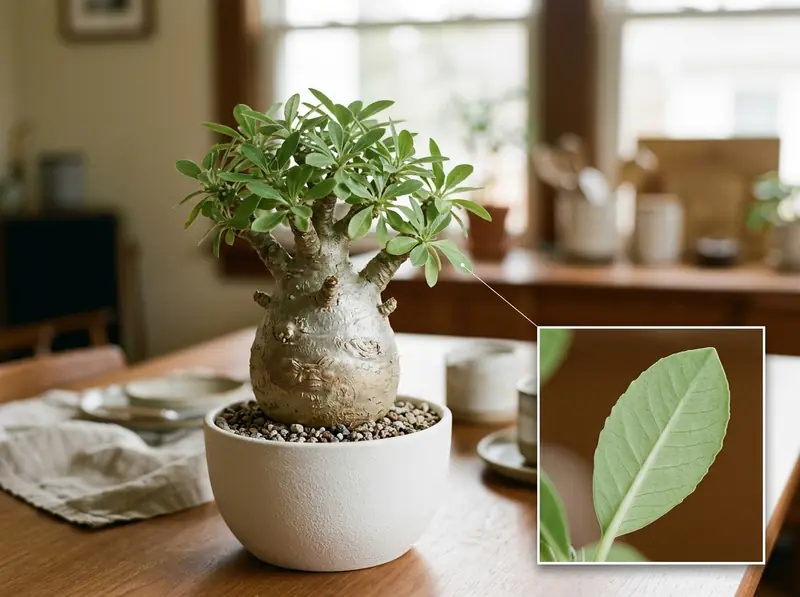
Socotra Fig
Dorstenia gigas
Socotra fig is a rare succulent from Socotra Island with a swollen, bottle-shaped gray caudex topped by a rosette of thin green leaves. It is slow and sculptural, a collector plant that wants bright light, grit, and very little water.
Saving is free with a KinClub account, and it works here and in the KinClub app. Sign up free
Care profile
- Light
- Bright, indirect to direct sunLow → direct sun
- Water
- Let it dry outAbout every 14 days
- Difficulty
- ModerateTricky → easy
- Coldest it tolerates
- 50°F
- Humidity
- Low
- Mature size
- Small to mediumSmall → tree-size
- Growth rate
- Slow
- How common
- RareRare → everywhere
- Plant family
- Moraceae
Pets and toxicity
Cats and dogs: not yet checked
Not yet checked against ASPCA — don't assume it's safe for pets.
No toxicity source on record for this plant yet. If a pet eats any houseplant, call your vet or an animal poison helpline.
How to care for Socotra Fig
Light
Bright light with gentle direct morning sun, such as an east or lightly filtered south window. It tolerates less than a desert succulent but stays compact in good light.
Watering
Water thoroughly only when the soil is completely dry, about every 2 weeks in summer. Cut back sharply when it loses its leaves in winter; it handles drought better than overwatering.
Soil
Use a gritty cactus mix with plenty of pumice or coarse sand, in a shallow terra-cotta pot with a large drainage hole.
Feeding
Feed with a half-strength cactus fertilizer once a month from spring to late summer, and never in winter.
Repotting
Repot every 2 to 3 years in spring into a shallow, wide pot; it grows slowly and prefers being pot-bound.
Propagation
Seed is the main way, and the plant also self-seeds by flinging seeds from its flower heads. Cuttings of the caudex are not practical.
Common problems
- Caudex rot comes from wet soil in cool weather: keep it dry in winter and warm.
- Mealybugs hide in the caudex crevices; dab with 70 percent rubbing alcohol.
- Leaf drop in winter is normal dormancy.
- Dry air is fine, but a cold windowsill below 50 F damages it.
Similar plants
Same light needs and difficulty.
 AI-generated
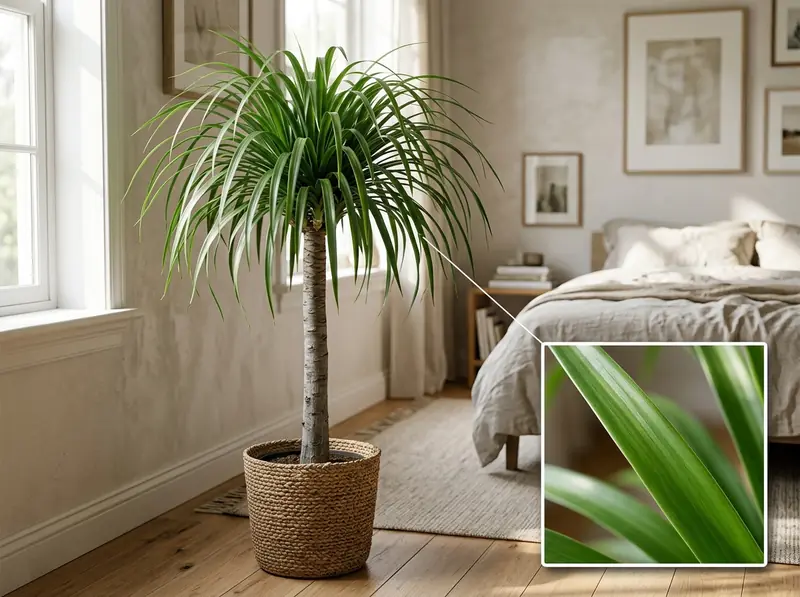
Umbrella Dracaena
Dracaena umbraculifera
- Medium to bright, indirect light
- Moderate watering
Toxic to cats and dogs AI-generated
 AI-generated
 AI-generated