
 AI-generated
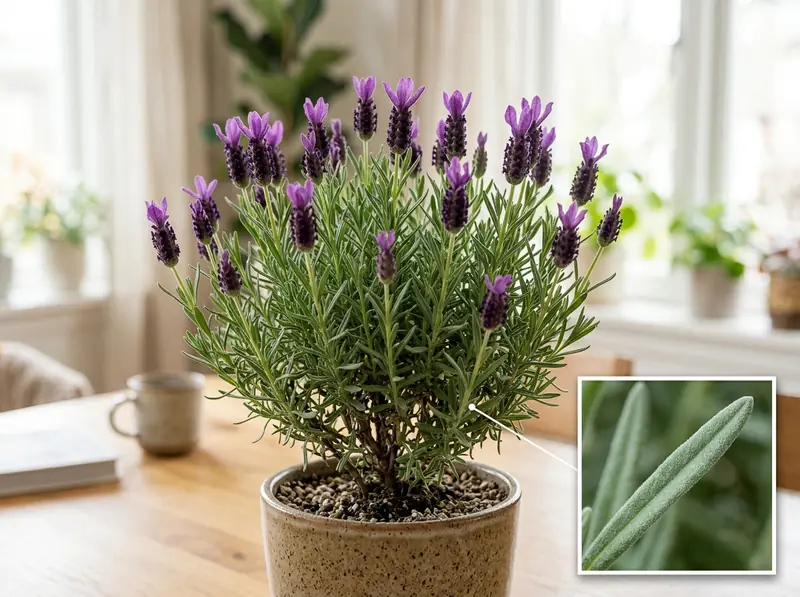
Spanish Lavender
Lavandula stoechas
Spanish lavender is a compact, bushy, sun-loving plant with grey-green leaves and pineapple-shaped flower spikes topped with petal-like bracts. Indoors it needs a very bright sunny window, gritty soil and a thorough dry-out between waterings. A cool winter rest helps it last and bloom again, but it is often short-lived indoors.
Saving is free with a KinClub account, and it works here and in the KinClub app. Sign up free
Care profile
- Light
- Direct sunLow → direct sun
- Water
- Let it dry outAbout every 14 days
- Difficulty
- ModerateTricky → easy
- Coldest it tolerates
- 30°F
- Humidity
- Low
- Mature size
- MediumSmall → tree-size
- Growth rate
- Moderate
- How common
- CommonRare → everywhere
- Plant family
- Lamiaceae
Pets and toxicity
Cats and dogs: not yet checked
Not yet checked against ASPCA — don't assume it's safe for pets.
No toxicity source on record for this plant yet. If a pet eats any houseplant, call your vet or an animal poison helpline.
How to care for Spanish Lavender
Light
Give it at least 6 hours of direct sun daily, ideally in an unshaded south-facing window. Without strong light it becomes leggy and flowers poorly; a grow light can help in winter.
Watering
Water deeply, then let the soil dry out almost completely before watering again, roughly every 10-14 days in summer. In winter, water only about every 3-4 weeks.
Soil
Use a gritty, fast-draining mix, such as cactus mix with extra perlite or coarse sand added. Use a terracotta pot with a drainage hole so the soil dries quickly.
Feeding
Feed lightly, if at all: a half-strength balanced fertilizer once in spring and once in early summer. Too much fertilizer gives soft growth and fewer flowers.
Repotting
Repot every 2-3 years in spring into a pot only 1-2 inches wider. It prefers being a little snug, and handle the roots gently.
Propagation
Take 3-4 inch semi-ripe cuttings from non-flowering shoots in late summer, strip the lower leaves, and root them in gritty mix. Rooting takes several weeks and not every cutting succeeds.
Common problems
- Leggy, floppy growth: move to a sunnier spot or add a grow light, and trim lightly after flowering.
- Root rot and yellowing: water less often, use a gritty mix, and empty the saucer after watering.
- Sudden collapse in winter: usually caused by warm, wet, humid conditions; give a cool, bright spot and water sparingly.
- Woody, bare centre: prune lightly every year after flowering, never cutting into old leafless wood.
- Whiteflies or aphids on new growth: rinse off with water or use insecticidal soap, and improve air circulation.
Similar plants
Same light needs and difficulty.
 AI-generated
 AI-generated
 AI-generated
 AI-generated