
 AI-generated
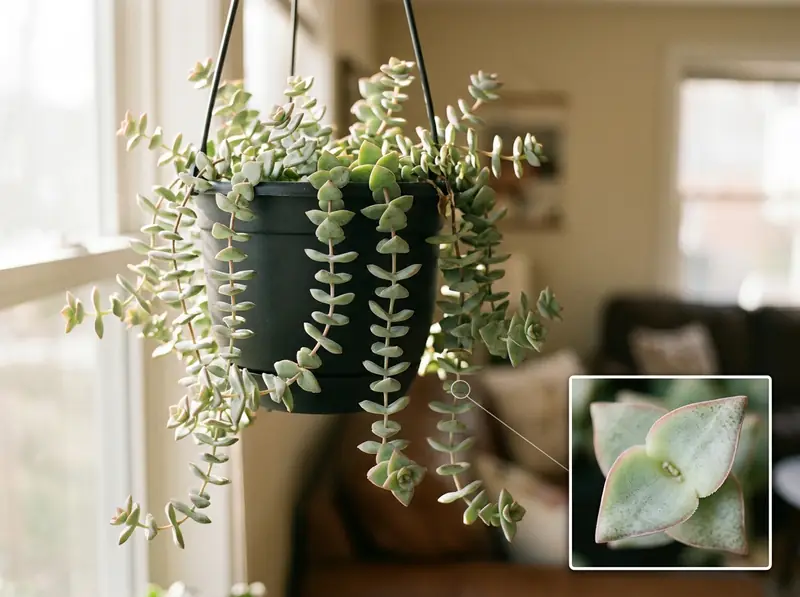
String of Buttons
Crassula perforata
String of Buttons is a small South African succulent with stacked, triangular grey-green leaves that form tight columns, which trail as they lengthen. It is easy to grow in a sunny window with gritty soil and infrequent watering. Give it plenty of light and let the soil dry out fully between waterings.
Saving is free with a KinClub account, and it works here and in the KinClub app. Sign up free
Care profile
- Light
- Direct sunLow → direct sun
- Water
- Let it dry outAbout every 14 days
- Difficulty
- EasyTricky → easy
- Coldest it tolerates
- 45°F
- Humidity
- Low
- Mature size
- SmallSmall → tree-size
- Growth rate
- Moderate
- How common
- CommonRare → everywhere
- Plant family
- Crassulaceae
Pets and toxicity
Cats and dogs: not yet checked
Not yet checked against ASPCA — don't assume it's safe for pets.
No toxicity source on record for this plant yet. If a pet eats any houseplant, call your vet or an animal poison helpline.
How to care for String of Buttons
Light
Give it several hours of bright light, including some direct sun from an east, south or west window. Gradually acclimate it to strong afternoon sun to avoid scorching.
Watering
Soak the soil thoroughly, then let it dry out completely before watering again, about every 2 weeks in summer. In winter water only every 4-6 weeks, just enough to keep the leaves from wrinkling.
Soil
Use a gritty cactus or succulent mix, ideally with extra perlite or pumice added. The pot must have a drainage hole.
Feeding
Feed with a balanced fertiliser diluted to half strength once a month in spring and summer. Do not feed in autumn and winter.
Repotting
Repot every 2-3 years in spring, only when crowded, into a pot one size larger. A shallow pot suits its small root system.
Propagation
Snip a stem piece or pull off a few leaves and let the cut ends callus for a few days. Lay them on or insert them in dry gritty mix and water lightly once roots form.
Common problems
- Mushy, translucent leaves or a blackened stem base are caused by overwatering; cut off healthy tops, let them callus and re-root in dry mix.
- Stems stretching with wide gaps between leaf pairs means too little light; move to a sunnier window and trim leggy growth.
- White cottony patches in the leaf joints are mealybugs; dab them with cotton swabs dipped in rubbing alcohol.
- Wrinkled, shriveled lower leaves mean it is too dry; give a thorough soak, then resume the normal schedule.
Similar plants
Same light needs and difficulty.
 AI-generated
 AI-generated
 AI-generated
 AI-generated