
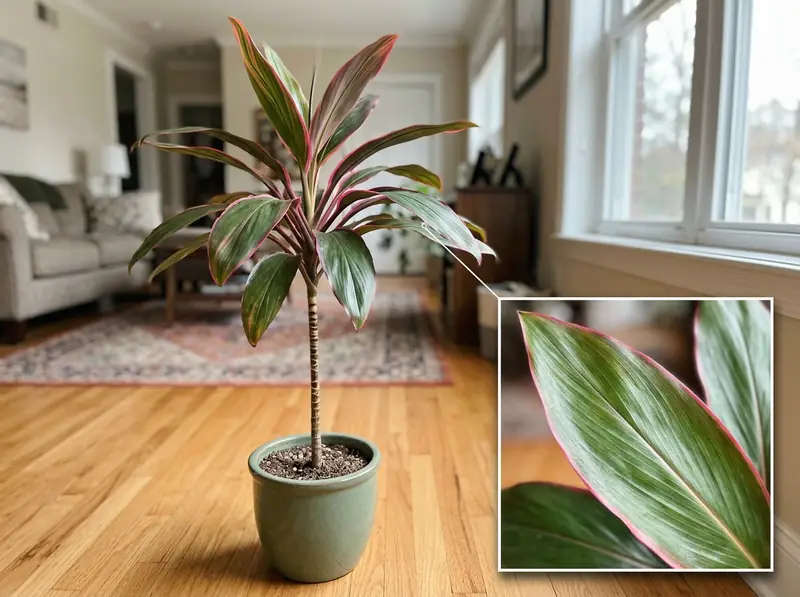
 AI-generated
Ti Plant
Cordyline fruticosa
Also known as Baby Doll Ti Plant, Ti-Plant, Good-Luck Plant, Hawaiian Ti Plant, Cordyline terminalis
Ti plant is a tropical foliage plant with glossy, long leaves in green, pink, red, or purple. It grows well in bright, indirect light, evenly watered but not soggy soil, and fairly humid air. Good water quality and humidity keep the leaf tips from browning.
Saving is free with a KinClub account, and it works here and in the KinClub app. Sign up free
Care profile
- Light
- Bright, indirect lightLow → direct sun
- Water
- Moderate to moist wateringAbout every 7 days
- Difficulty
- ModerateTricky → easy
- Coldest it tolerates
- 55°F
- Humidity
- High
- Mature size
- LargeSmall → tree-size
- Growth rate
- Moderate
- How common
- Very commonRare → everywhere
- Plant family
- Asparagaceae
Pets and toxicity
Toxic to cats
Keep away from cats. Call your vet or a pet poison helpline if a cat chews it.
Toxic to dogs
Keep away from dogs. Call your vet or a pet poison helpline if a dog chews it.
Source: ASPCA toxic and non-toxic plants. If a pet eats any houseplant, call your vet or an animal poison helpline.
How to care for Ti Plant
Light
Give bright, indirect light, such as a spot near an east or filtered south or west window. A little gentle morning sun is fine, but hot midday sun scorches the leaves. Colorful varieties need more light to keep their color.
Watering
Water when the top inch of soil is dry, giving enough that water drains from the holes, then empty the saucer. Expect about once a week in summer and less in winter. Use low-fluoride water such as rainwater or distilled if leaf tips brown.
Soil
Use a well-draining, peat- or coir-based potting mix with some perlite added, about one part perlite to three parts mix. A slightly acidic mix (pH about 6 to 6.5) suits it best. The pot must have drainage holes.
Feeding
Feed monthly in spring and summer with a balanced liquid houseplant fertilizer diluted to half strength. Skip feeding in fall and winter. Choose a low-fluoride, low-salt feed where possible.
Repotting
Repot every 2 to 3 years in spring, moving up only 1 to 2 inches in pot diameter. Top-dress with fresh mix in between if the plant is large enough that repotting is hard.
Propagation
Cut a cane into 3 to 4 inch sections, or take a tip cutting, and lay sections horizontally or push them upright in moist mix, keeping them warm at 70 to 75°F. Roots and shoots form in about 4 to 8 weeks.
Common problems
- Brown leaf tips: usually fluoride or salts in tap water or dry air. Switch to rainwater or distilled water and mist or use a humidifier.
- Lower leaves yellow and drop: a normal few leaves shed as it grows, but many means overwatering or cold drafts. Let the soil dry more and keep the plant above 55°F.
- Faded, plain green leaves: not enough light. Move it closer to a bright window.
- Spider mites (fine webbing, stippled leaves): wipe leaves, rinse the plant, and treat with insecticidal soap weekly for 3 weeks.
- Leggy, bare stem: prune the cane back in spring to 6 inches above the soil to encourage new shoots, and root the cut top.
Similar plants
Same light needs and difficulty.
 AI-generated
 AI-generated
 AI-generated
 AI-generated