
 AI-generated
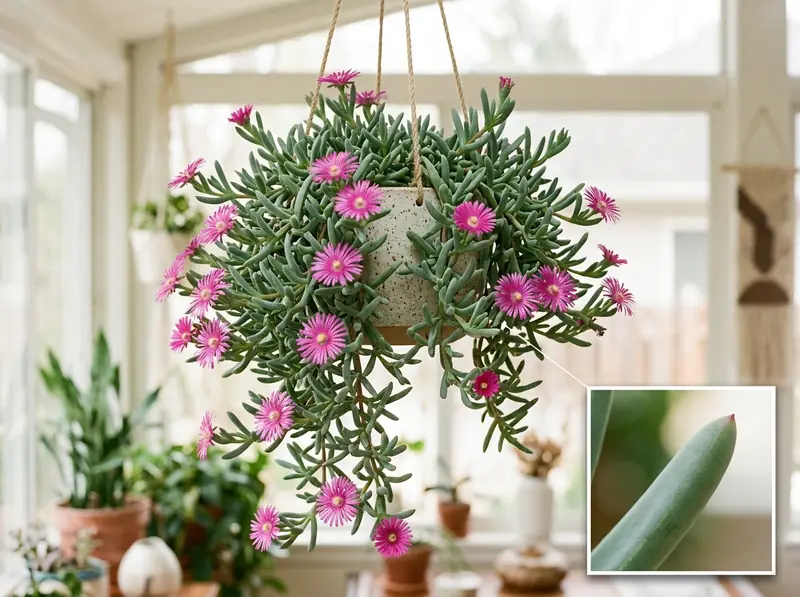
Trailing Ice Plant
Lampranthus spectabilis
Trailing Ice Plant is a low, spreading succulent with fleshy, finger-like leaves that bursts into bright magenta-pink daisy-like flowers in spring and early summer. It needs a lot of direct sun, gritty fast-draining soil, and a cool, dry winter rest to bloom well. It suits a hanging basket or sunny windowsill and is easy to multiply from cuttings.
Saving is free with a KinClub account, and it works here and in the KinClub app. Sign up free
Care profile
- Light
- Direct sunLow → direct sun
- Water
- Let it dry outAbout every 14 days
- Difficulty
- Easy to moderateTricky → easy
- Coldest it tolerates
- 35°F
- Humidity
- Low
- Mature size
- SmallSmall → tree-size
- Growth rate
- Moderate to fast
- How common
- EnthusiastRare → everywhere
- Plant family
- Aizoaceae
Pets and toxicity
Cats and dogs: not yet checked
Not yet checked against ASPCA — don't assume it's safe for pets.
No toxicity source on record for this plant yet. If a pet eats any houseplant, call your vet or an animal poison helpline.
How to care for Trailing Ice Plant
Light
Needs at least 6 hours of direct sun daily, so use a south- or west-facing window or set it outdoors in summer. Flowers only open in strong sun and close on dull days.
Watering
Soak thoroughly, then let the soil dry out almost completely before watering again, about every 10-14 days in summer. In winter water only about once a month, just enough to keep the leaves from shriveling.
Soil
Use a gritty cactus and succulent mix, or ordinary potting mix with about one-third perlite or coarse sand. Always use a pot with drainage holes, ideally unglazed terracotta.
Feeding
Feed with a half-strength balanced or low-nitrogen fertilizer once a month in spring and summer. Do not feed in autumn and winter.
Repotting
Repot every 2-3 years in spring, only into a pot one size larger, since it flowers well when slightly root-bound. Handle gently as the brittle stems snap easily.
Propagation
Take 3-4 inch stem cuttings in spring or summer, let them callus for a day or two, then push into gritty mix. They root in 2-4 weeks with very little water.
Common problems
- Leggy growth with few flowers: move it to a sunnier spot and trim stems back by about a third after flowering.
- Stem rot or mushy leaves: reduce watering, cut away rotted parts, and repot into dry gritty mix.
- No blooms in spring: give a cool winter rest (45-55°F) and strong direct sun.
- Aphids or mealybugs on new growth: wipe with rubbing alcohol on a cotton swab or spray with insecticidal soap.
Similar plants
Same light needs and difficulty.
 AI-generated
 AI-generated
 AI-generated
 AI-generated