
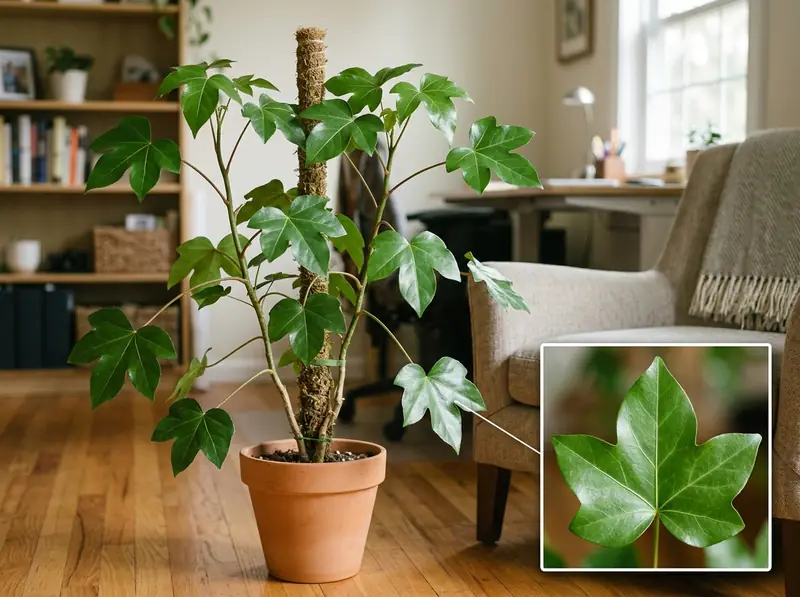
 AI-generated
Tree Ivy
× Fatshedera lizei
Tree ivy is a hybrid of Japanese fatsia and English ivy, with glossy, lobed leaves on upright stems that eventually need support. It is fast-growing and forgiving, and it does best in a cool, bright room with evenly watered soil. It is a good choice for a beginner with a bright hallway or a cool room.
Saving is free with a KinClub account, and it works here and in the KinClub app. Sign up free
Care profile
- Light
- Bright, indirect lightLow → direct sun
- Water
- Moderate wateringAbout every 8 days
- Difficulty
- EasyTricky → easy
- Coldest it tolerates
- 30°F
- Humidity
- Medium
- Mature size
- LargeSmall → tree-size
- Growth rate
- Moderate to fast
- How common
- CommonRare → everywhere
- Plant family
- Araliaceae
Pets and toxicity
Cats and dogs: not yet checked
Not yet checked against ASPCA — don't assume it's safe for pets.
No toxicity source on record for this plant yet. If a pet eats any houseplant, call your vet or an animal poison helpline.
How to care for Tree Ivy
Light
Give it bright indirect light or light shade, such as a spot a few feet from an east or north window. It tolerates some gentle morning sun but scorches in hot afternoon sun. Plain green forms cope with dimmer light than variegated ones.
Watering
Water thoroughly when the top inch of soil is dry, then empty the saucer. That is roughly every 7 to 10 days in the growing season and every 2 to 3 weeks in winter. Do not let it sit in water.
Soil
Use an ordinary well-draining potting mix. Adding a handful of perlite or bark to every 3 to 4 parts of mix improves drainage. Make sure the pot has drainage holes.
Feeding
Feed every 4 weeks from spring through summer with a balanced liquid houseplant fertilizer at half the label strength. Stop in fall and winter.
Repotting
Repot every 2 years, or when roots circle the pot or poke from the drainage holes. Go up only 1 to 2 inches in pot diameter, and do it in spring. Use a heavy pot because the plant gets top-heavy.
Propagation
Take 4 to 6 inch stem cuttings with at least 2 leaves in spring or summer. Root them in water or moist potting mix, and they usually root in 3 to 5 weeks.
Common problems
- Leggy, sparse stems: move it to brighter light and pinch the tips regularly to encourage branching.
- Brown crispy leaf edges: water more consistently and keep it away from heaters and hot, dry drafts.
- Yellow, dropping lower leaves: usually overwatering, so let the soil dry more between waterings and check the drainage.
- Fine webbing and stippled leaves: spider mites, which thrive in warm, dry air. Rinse the foliage and treat with insecticidal soap weekly.
Similar plants
Same light needs and difficulty.
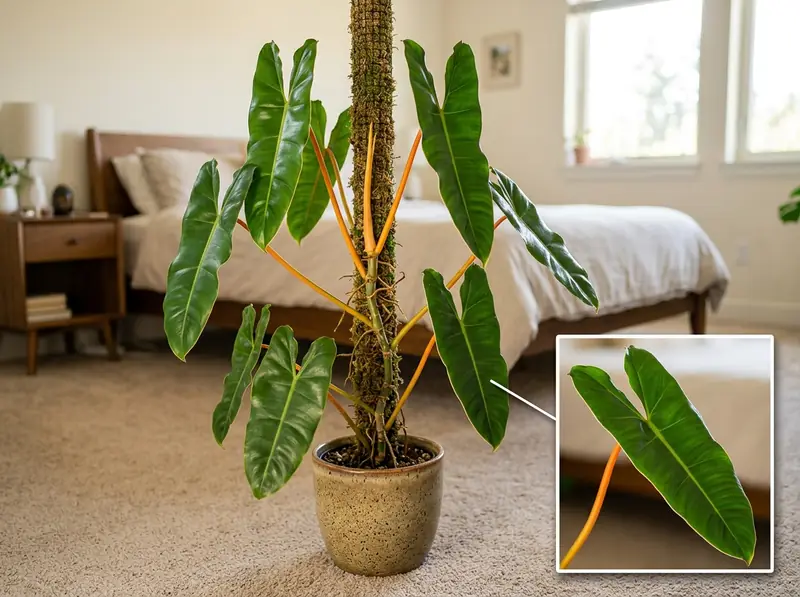 AI-generated
Billietiae Philodendron
Philodendron billietiae
- Bright, indirect light
- Moderate watering
Toxic to cats and dogs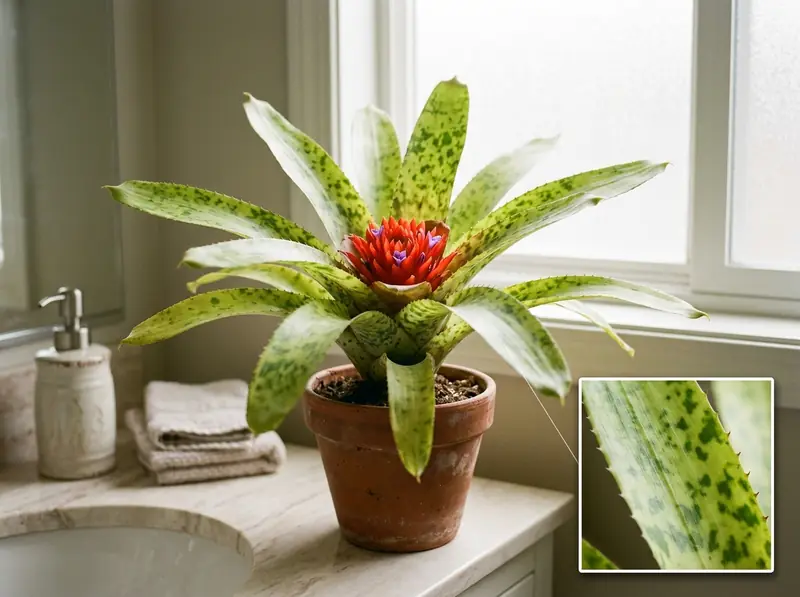 AI-generated
Bird's Nest Bromeliad
Nidularium fulgens
- Medium to bright, indirect light
- Moderate watering
Pets: not yet checked AI-generated
Chinese Money Plant
Pilea peperomioides
- Bright, indirect light
- Dry to moderate watering
Pets: not yet checked AI-generated
Christmas Cactus
Schlumbergera × buckleyi
- Bright, indirect light
- Moderate watering
Pets: not yet checked