
 AI-generated
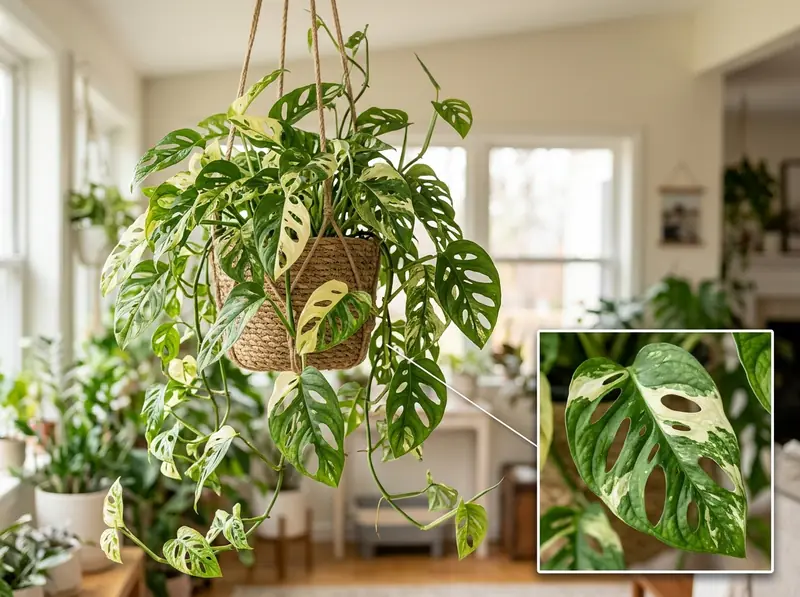
Variegated Adansonii
Monstera adansonii 'Variegata'
Variegated adansonii is a Swiss cheese vine with creamy white splashes across holey leaves. It is slower than the plain green form and needs brighter, gentler light, but otherwise the care is the same.
Saving is free with a KinClub account, and it works here and in the KinClub app. Sign up free
Care profile
- Light
- Bright, indirect lightLow → direct sun
- Water
- Moderate wateringAbout every 8 days
- Difficulty
- ModerateTricky → easy
- Coldest it tolerates
- 55°F
- Humidity
- Medium to high
- Mature size
- LargeSmall → tree-size
- Growth rate
- Moderate
- How common
- RareRare → everywhere
- Plant family
- Araceae
Pets and toxicity
Cats and dogs: not yet checked
Not yet checked against ASPCA — don't assume it's safe for pets.
No toxicity source on record for this plant yet. If a pet eats any houseplant, call your vet or an animal poison helpline.
How to care for Variegated Adansonii
Light
Prefers bright, indirect light, such as near an east window, because white-variegated areas lack chlorophyll and need more light to keep the plant growing. Direct sun scorches the white parts quickly.
Watering
Water when the top 1 to 2 in of soil are dry, about every 8 days in the growing season and every 2 weeks in winter. Slightly slower growth means it uses less water than the green form.
Soil
Use a chunky, well-draining aroid mix, such as 2 parts potting soil to 1 part orchid bark and 1 part perlite, in a pot with drainage holes.
Feeding
Fertilize every 4 to 6 weeks in spring and summer with a balanced houseplant fertilizer at half strength. Skip in winter.
Repotting
Repot every 1 to 2 years in spring, one size up. Slow growth means it doesn't need frequent repotting.
Propagation
Cut below a node that has some white and some green, and root in water or moist moss in 3 to 5 weeks. All-white cuttings usually fail.
Common problems
- All-green growth should be trimmed back to the variegated node or the green will take over.
- Brown crispy white patches signal sun scorch or low humidity; move away from the glass.
- Spider mites and thrips cause speckling; rinse and spray with insecticidal soap.
- Slow or stalled growth usually means low light; move closer to a bright window.
Similar plants
Same light needs and difficulty.
 AI-generated
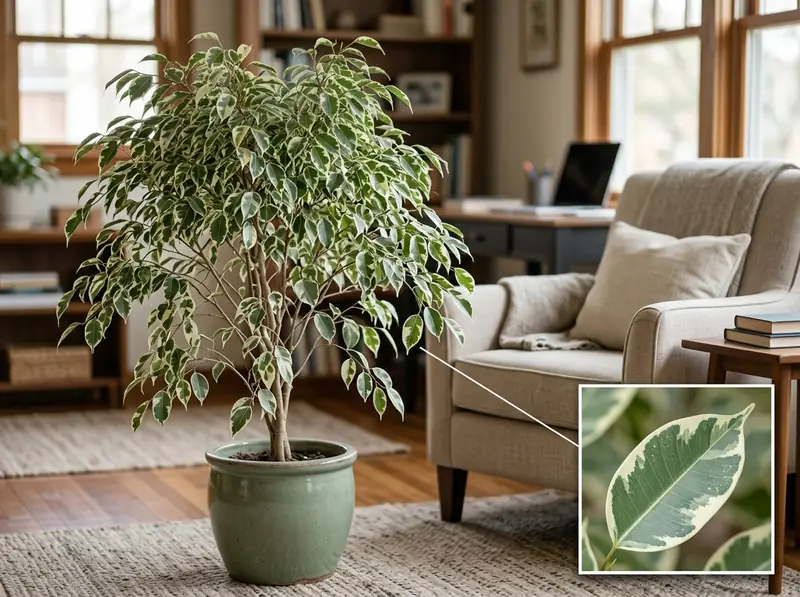
Variegated Weeping Fig
Ficus benjamina 'Variegata'
- Bright, indirect light
- Moderate watering
Toxic to cats and dogs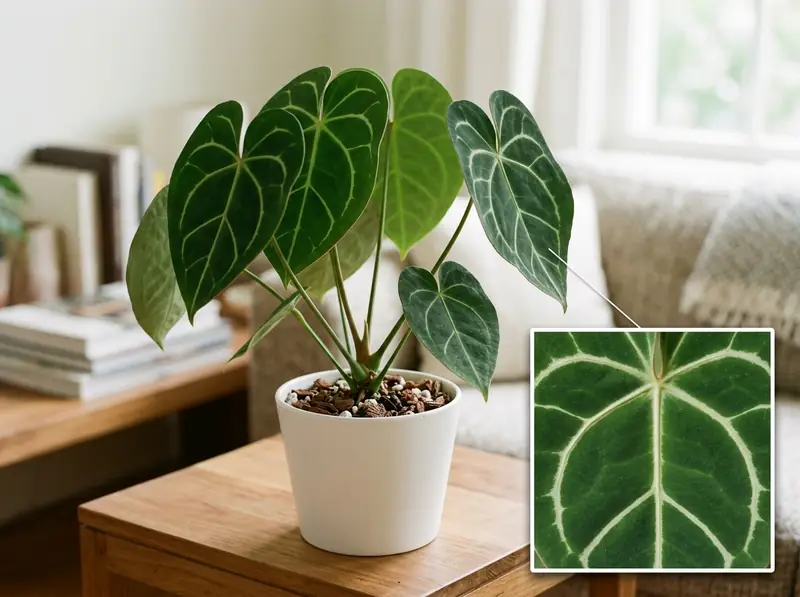 AI-generated
Velvet Cardboard Anthurium
Anthurium clarinervium
- Bright, indirect light
- Moderate watering
Pets: not yet checked AI-generated
 AI-generated