
 AI-generated
Ventrata Pitcher Plant
Nepenthes 'Ventrata'
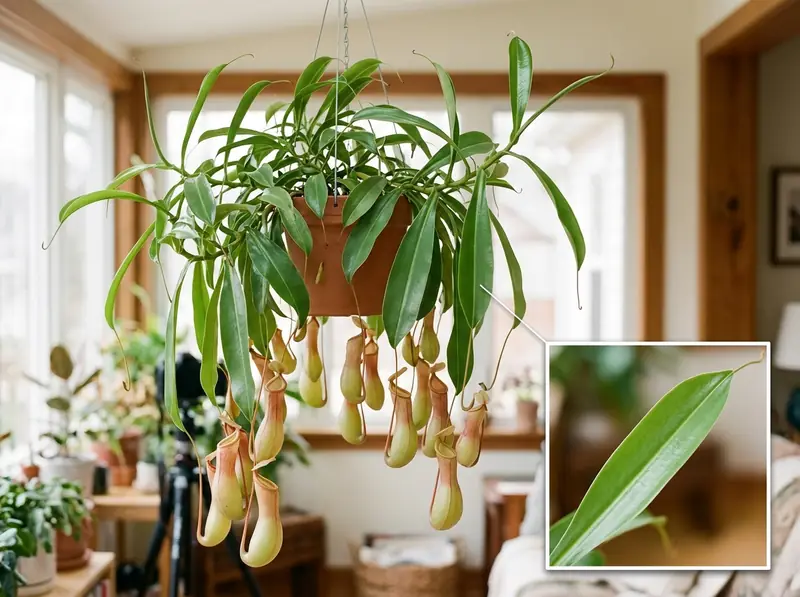
Nepenthes 'Ventrata' is a hardy hybrid tropical pitcher plant that makes cream and green ribbed pitchers on the tendrils at the tips of its leaves. It is one of the easiest Nepenthes, but it still needs pure water, bright light and moderate humidity. Hang it or train the vine on a support so the pitchers can dangle freely.
Saving is free with a KinClub account, and it works here and in the KinClub app. Sign up free
Care profile
- Light
- Bright, indirect lightLow → direct sun
- Water
- Keep moistAbout every 4 days
- Difficulty
- ModerateTricky → easy
- Coldest it tolerates
- 55°F
- Humidity
- Medium to high
- Mature size
- MediumSmall → tree-size
- Growth rate
- Moderate to fast
- How common
- EnthusiastRare → everywhere
Pets and toxicity
Cats and dogs: not yet checked
Not yet checked against ASPCA — don't assume it's safe for pets.
No toxicity source on record for this plant yet. If a pet eats any houseplant, call your vet or an animal poison helpline.
How to care for Ventrata Pitcher Plant
Light
Give bright, indirect light, such as an east window or a spot a few feet from a south or west window; a couple of hours of gentle morning sun is fine. Under grow lights, about 12 hours a day works well.
Watering
Keep the medium evenly damp, never dried out, using rainwater, distilled or reverse-osmosis water. Water when the surface just starts to feel barely damp, often every 3-5 days in the growing season. Let water run through the pot.
Soil
Use a nutrient-poor, airy mix such as long-fibre sphagnum moss with perlite, or peat with perlite and orchid bark (about 1:1). Avoid regular potting soil and added fertilizer granules.
Feeding
Feeding is usually unnecessary. If desired, mist leaves with a quarter-strength orchid fertilizer once a month, and never put fertilizer in the soil. Pitchers will catch the occasional insect on their own.
Repotting
Repot every 1-2 years in spring when roots fill the pot, moving up only one size in a plastic pot or hanging basket. Handle the roots gently, as they are fine and easily damaged.
Propagation
Take stem cuttings with 2-3 leaves in spring or summer and set them in damp sphagnum in high humidity; rooting takes weeks to a few months. Rooting hormone can help, and success is uneven.
Common problems
- Pitchers do not form: raise humidity to about 50-60% and give brighter light; pitchers appear at the tips of the tendrils on mature growth.
- Brown leaf tips: usually dry air or mineral-heavy water, so switch to distilled or rainwater and raise humidity.
- Pitchers turn brown: each one lasts a few months, which is normal; trim it only when fully brown.
- Leggy, sprawling vine: prune the stem back to a few leaves in spring to encourage side shoots, and support it on a trellis or let it hang.
Similar plants
Same light needs and difficulty.
 AI-generated
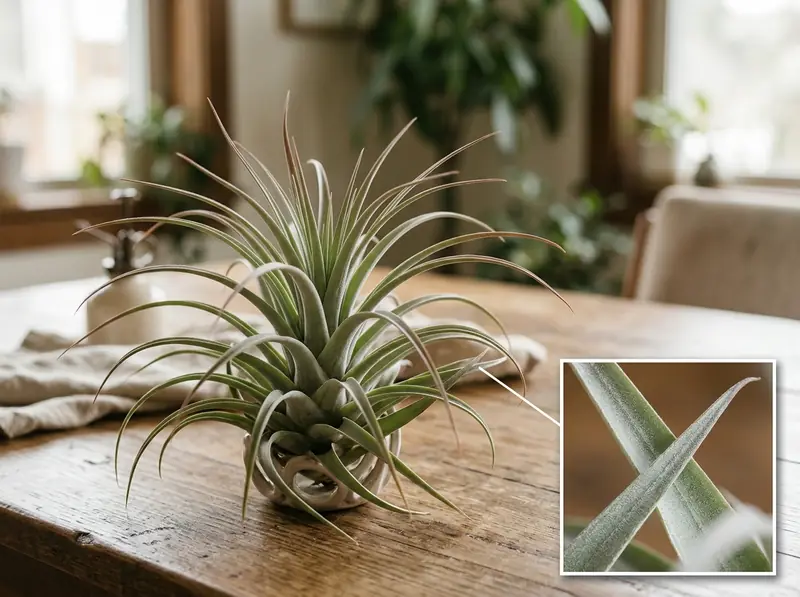
Geminiflora Air Plant
Tillandsia geminiflora
- Bright, indirect light
- Dry to moderate watering
Pets: not yet checked AI-generated
 AI-generated
 AI-generated