
 AI-generated
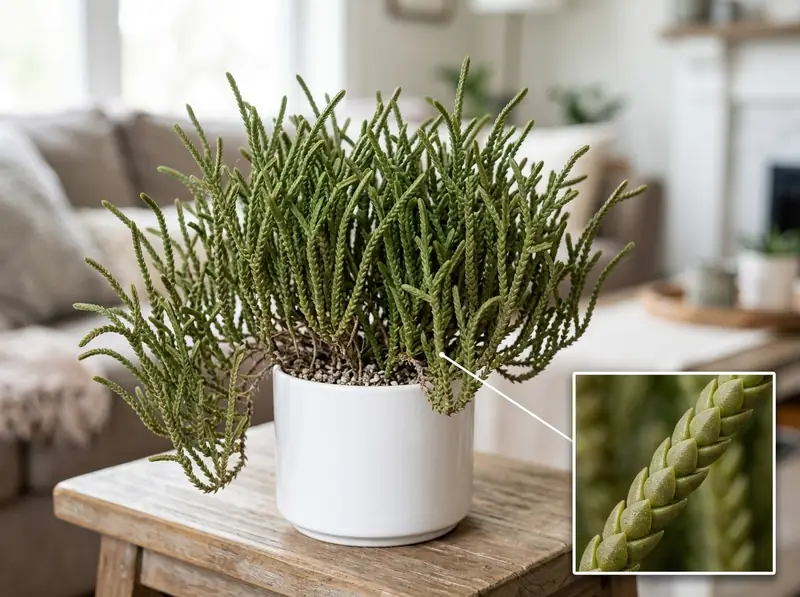
Watch Chain
Crassula muscosa
Watch chain is a small succulent from South Africa with tightly packed, scale-like leaves stacked along stems that look like braided cords. It is easy to grow if given lots of sun and a gritty, fast-draining mix, and it is very easy to propagate from cuttings. Err on the side of dry, since overwatering is the main way it is lost.
Saving is free with a KinClub account, and it works here and in the KinClub app. Sign up free
Care profile
- Light
- Direct sunLow → direct sun
- Water
- Let it dry outAbout every 14 days
- Difficulty
- EasyTricky → easy
- Coldest it tolerates
- 40°F
- Humidity
- Low
- Mature size
- SmallSmall → tree-size
- Growth rate
- Moderate to fast
- How common
- CommonRare → everywhere
- Plant family
- Crassulaceae
Pets and toxicity
Cats and dogs: not yet checked
Not yet checked against ASPCA — don't assume it's safe for pets.
No toxicity source on record for this plant yet. If a pet eats any houseplant, call your vet or an animal poison helpline.
How to care for Watch Chain
Light
Give it several hours of bright light, ideally a south or west window with some direct sun. Acclimate it gradually to stronger sun to avoid scorching.
Watering
Soak thoroughly, then let the soil dry out completely before watering again, about every 2 to 3 weeks in summer. In winter, water only about once a month or less.
Soil
Use a gritty cactus or succulent mix, or add about one-third perlite or pumice to ordinary potting soil. The pot must have drainage holes.
Feeding
Feed with a half-strength balanced or cactus fertilizer about once a month in spring and summer. Do not feed in fall and winter.
Repotting
Repot every 2 to 3 years in spring into a shallow pot only slightly larger. Let the soil stay dry for a few days after repotting before watering.
Propagation
Snip a stem section 2 to 3 inches long, let the cut end callus for a few days, then lay it on or push it into dry gritty mix. Water lightly once roots form in a few weeks.
Common problems
- Leggy, sparse stems: too little light. Move to a sunnier window and trim back to encourage branching.
- Soft, blackened stems at the base: root rot from overwatering. Cut off healthy tips, let them callus, and replant in fresh dry mix.
- White cottony clusters in stem joints: mealybugs. Dab with rubbing alcohol on a cotton swab and repeat weekly.
- Shriveled, brown lower stems: prolonged dryness or natural aging. Give a thorough soak and trim dead stems.
Similar plants
Same light needs and difficulty.
 AI-generated
 AI-generated
 AI-generated
 AI-generated