
 AI-generated
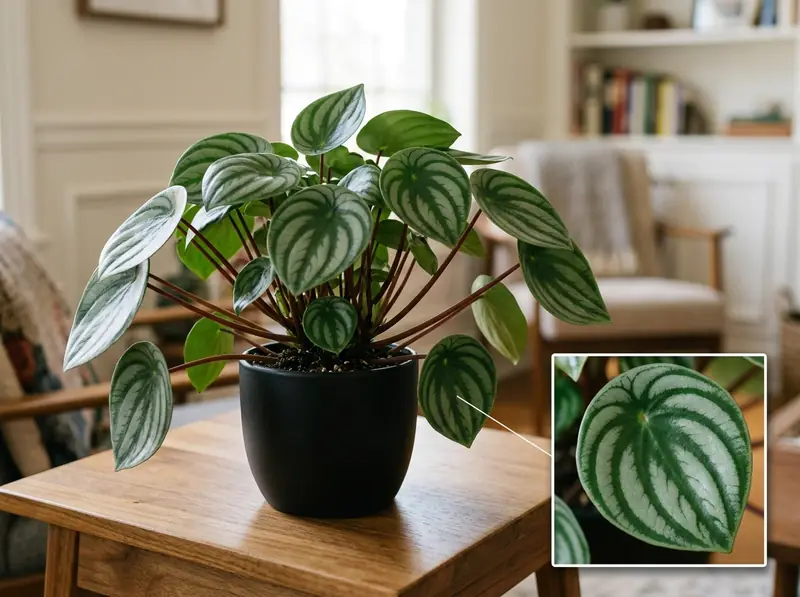
Watermelon Peperomia
Peperomia argyreia
Also known as Peperomia sandersii, Watermelon Begonia
Watermelon peperomia is a compact plant with rounded, silver-striped leaves on reddish stems, growing to about 8 to 12 inches. It likes bright, indirect light and needs little water, which makes it a good beginner plant for a shelf or desk. Its main risk is overwatering, so let the soil dry between drinks.
Saving is free with a KinClub account, and it works here and in the KinClub app. Sign up free
Care profile
- Light
- Medium to bright, indirect lightLow → direct sun
- Water
- Dry to moderate wateringAbout every 10 days
- Difficulty
- Easy to moderateTricky → easy
- Coldest it tolerates
- 55°F
- Humidity
- Medium
- Mature size
- SmallSmall → tree-size
- Growth rate
- Slow to moderate
- How common
- Very commonRare → everywhere
- Plant family
- Piperaceae
Pets and toxicity
Non-toxic to cats
Listed as non-toxic to cats by the ASPCA.
Non-toxic to dogs
Listed as non-toxic to dogs by the ASPCA.
Source: ASPCA toxic and non-toxic plants. If a pet eats any houseplant, call your vet or an animal poison helpline.
How to care for Watermelon Peperomia
Light
Give bright, filtered light or a spot a few feet from a window. It tolerates medium light, but direct sun scorches the leaves.
Watering
Water thoroughly when the top 1 to 2 inches of soil are dry, roughly every 7 to 14 days, and empty the saucer. Water less in winter, since the leaves store some moisture.
Soil
Use a light, airy potting mix, such as standard houseplant mix with about one-third perlite or orchid bark. The pot must have drainage holes.
Feeding
Feed monthly in spring and summer with a balanced houseplant fertilizer diluted to half strength. Skip feeding in fall and winter.
Repotting
Repot every 2 to 3 years, or when roots fill the pot, into a container only 1 inch wider. It has a small root system and prefers being snug.
Propagation
Take a leaf with a 1 to 2 inch piece of stem in spring or summer, and root it in moist mix or water. Stem cuttings also root in 3 to 6 weeks.
Common problems
- Leaf drop or mushy stems: usually overwatering, so let the soil dry more between waterings and check the pot drains.
- Curling or wrinkled leaves: the plant is too dry, so water deeply and then keep to a steadier routine.
- Leggy growth with faded leaves: move it to brighter indirect light and pinch back the tips to encourage bushiness.
- Brown, crispy leaf edges or bleached patches: move it out of direct sun and away from heaters or drafts.
- Fine webbing or speckled leaves: likely spider mites, so wipe the leaves and treat with insecticidal soap weekly.
Similar plants
Same light needs and difficulty.
 AI-generated
 AI-generated
 AI-generated
 AI-generated