
 AI-generated
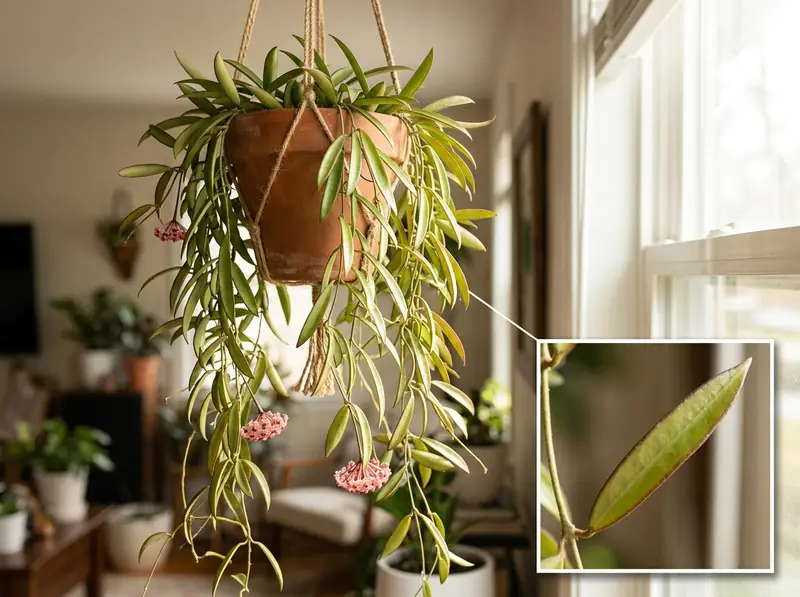
Wayetii Hoya
Hoya wayetii
Hoya wayetii is a trailing vine with narrow, fleshy, pointed leaves and round clusters of small, sweet-scented pink and red flowers. It is easy to grow if you give it bright light and let the soil dry between waterings. It does best in a hanging basket or on a high shelf where its stems can trail.
Saving is free with a KinClub account, and it works here and in the KinClub app. Sign up free
Care profile
- Light
- Bright, indirect lightLow → direct sun
- Water
- Let it dry outAbout every 14 days
- Difficulty
- EasyTricky → easy
- Coldest it tolerates
- 55°F
- Humidity
- Medium
- Mature size
- Medium to largeSmall → tree-size
- Growth rate
- Moderate
- How common
- CommonRare → everywhere
- Plant family
- Apocynaceae
Pets and toxicity
Cats and dogs: not yet checked
Not yet checked against ASPCA — don't assume it's safe for pets.
No toxicity source on record for this plant yet. If a pet eats any houseplant, call your vet or an animal poison helpline.
How to care for Wayetii Hoya
Light
Give it bright, indirect light, such as a spot near an east or south window with a sheer curtain. A few hours of gentle morning sun encourages flowering and deeper leaf color.
Watering
Water thoroughly, then let the soil dry out almost completely before watering again, usually every 10 to 16 days in the growing season. Water much less in winter, about every 3 to 4 weeks.
Soil
Use a chunky, fast-draining mix, such as 2 parts orchid bark, 1 part perlite and 1 part regular potting mix. The pot must have drainage holes.
Feeding
Feed every 3 to 4 weeks in spring and summer with a balanced houseplant fertilizer at half the label strength. Stop feeding in fall and winter.
Repotting
Hoya wayetii likes being slightly root-bound, so repot only every 2 to 3 years into a pot one size larger, in spring. Terracotta or a pot with plenty of holes works well.
Propagation
Take 4 to 6 inch stem cuttings with at least 2 nodes and 2 to 3 leaves. Root them in water, damp perlite or a bark mix in bright indirect light, which takes about 3 to 6 weeks.
Common problems
- Yellow, mushy leaves: the soil is staying wet, so let it dry out fully, check the drainage holes, and repot into chunkier mix if roots are brown and soft.
- Long bare stems and no blooms: the light is too low, so move it to a brighter spot and trim back leggy growth.
- Cottony white clusters in the leaf joints are mealybugs: dab them with cotton swabs dipped in rubbing alcohol and repeat weekly until gone.
- Wrinkled, limp leaves: the plant is thirsty or has damaged roots, so water deeply and check the roots if it doesn't recover in a week.
Similar plants
Same light needs and difficulty.
 AI-generated
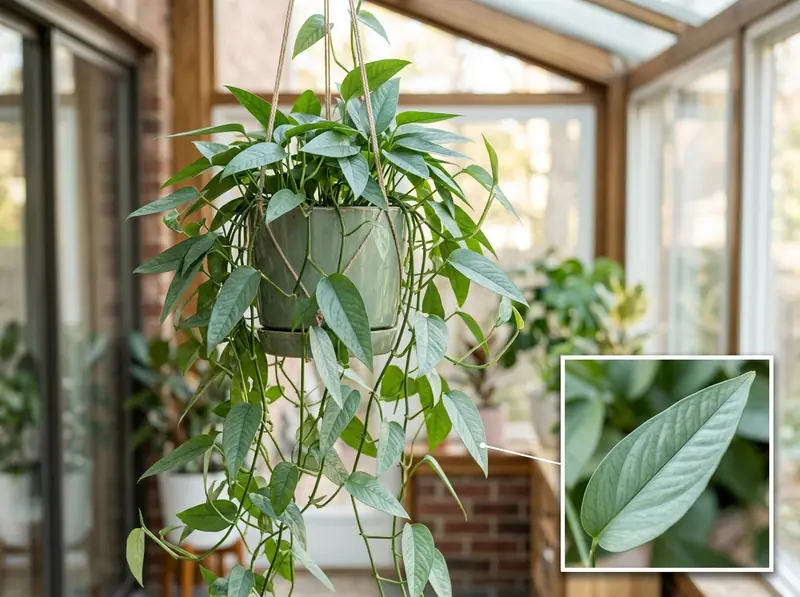
Cebu Blue Pothos
Epipremnum pinnatum 'Cebu Blue'
- Bright, indirect light
- Moderate watering
Toxic to cats and dogs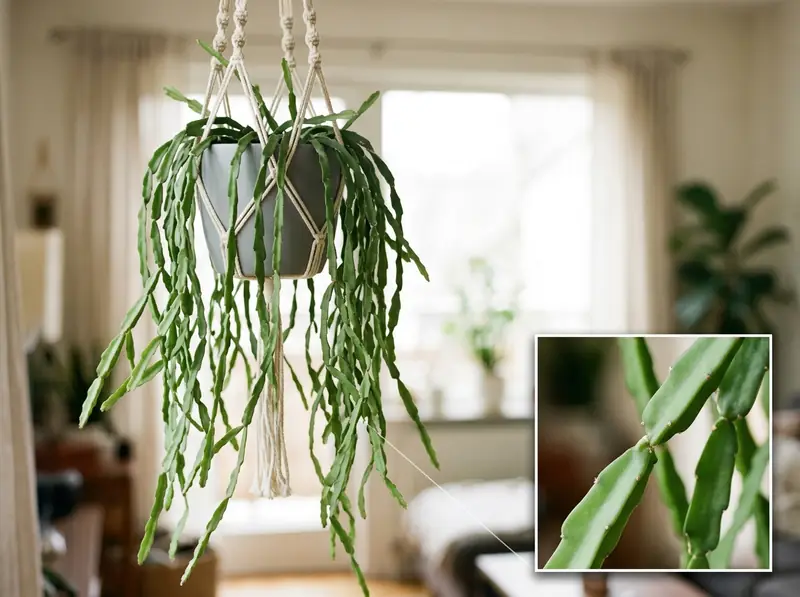 AI-generated
 AI-generated
Chinese Money Plant
Pilea peperomioides
- Bright, indirect light
- Dry to moderate watering
Pets: not yet checked AI-generated
Christmas Cactus
Schlumbergera × buckleyi
- Bright, indirect light
- Moderate watering
Pets: not yet checked