
 AI-generated
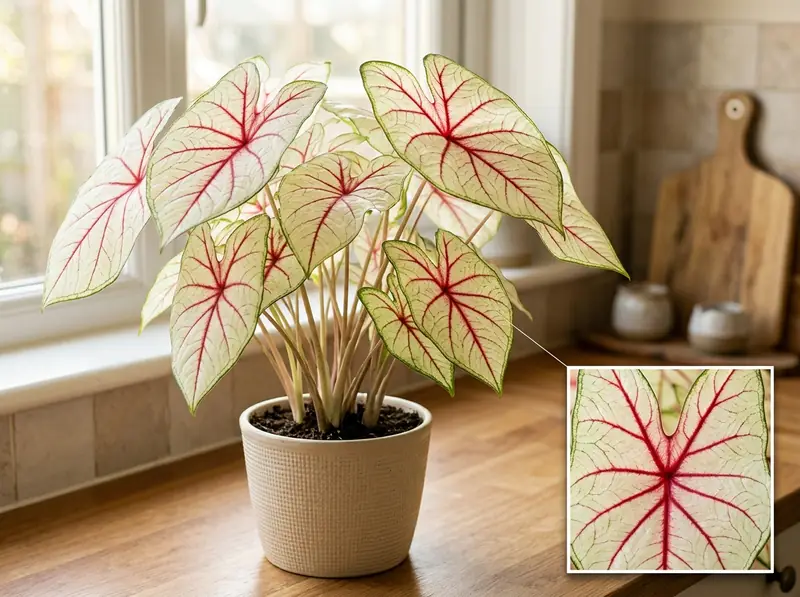
White Queen Caladium
Caladium 'White Queen'
A caladium with bright white leaves traced in crimson veins and a green edge, growing from a tuber. It likes warmth and humidity and does best in bright shade, resting dry in winter.
Saving is free with a KinClub account, and it works here and in the KinClub app. Sign up free
Care profile
- Light
- Bright, indirect lightLow → direct sun
- Water
- Keep moistAbout every 5 days
- Difficulty
- ModerateTricky → easy
- Coldest it tolerates
- 60°F
- Humidity
- High
- Mature size
- MediumSmall → tree-size
- Growth rate
- Fast
- How common
- EnthusiastRare → everywhere
Pets and toxicity
Cats and dogs: not yet checked
Not yet checked against ASPCA — don't assume it's safe for pets.
No toxicity source on record for this plant yet. If a pet eats any houseplant, call your vet or an animal poison helpline.
How to care for White Queen Caladium
Light
Bright indirect light, such as an east window or a few feet from a south one. Hot midday sun scorches the thin leaves and a dim spot fades the color.
Watering
Keep the mix evenly moist but not soggy while it is in leaf, about every 4 to 6 days. Reduce watering as leaves yellow in fall, then stop and let the tuber rest.
Soil
Use a rich, airy potting mix with plenty of perlite or bark so it holds moisture but still drains well.
Feeding
Feed with a half-strength balanced fertilizer every 2 to 3 weeks while the plant is in active growth. Stop when leaves begin to die back.
Repotting
Plant tubers knobby side up about 2 inches deep in spring, at 70 to 75 degrees F. Divide offset tubers at that time.
Propagation
Cut the tuber into pieces, each with at least one growing eye, let the cuts dry a day, then plant them in warm, moist mix.
Common problems
- Leaves yellow and die back in fall: normal dormancy. Stop watering, then store the tuber dry at 60 degrees F or above until spring.
- Tuber rot: planted in cold or soggy soil. Plant only in warm mix and keep it moist, never wet.
- Brown edges and webbing: dry air and spider mites. Raise humidity and wipe leaves with insecticidal soap.
Similar plants
Same light needs and difficulty.
 AI-generated
 AI-generated
 AI-generated
 AI-generated