
 AI-generated
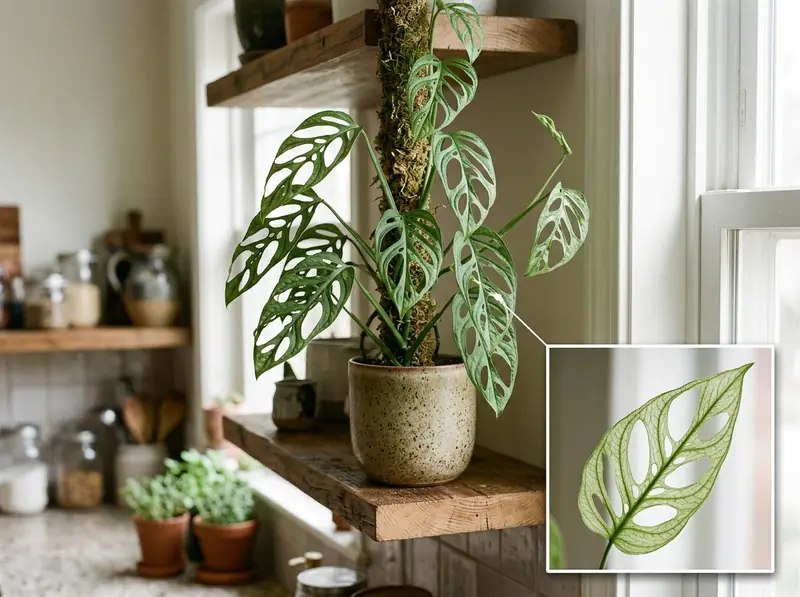
Window Leaf Monstera
Monstera obliqua
Window Leaf Monstera is a rare climbing aroid with very thin, heavily perforated leaves. It is much fussier than common Monstera deliciosa and needs steady warmth, high humidity and evenly moist soil. It suits experienced growers who can give it a humid case or a dedicated humid spot.
Saving is free with a KinClub account, and it works here and in the KinClub app. Sign up free
Care profile
- Light
- Bright, indirect lightLow → direct sun
- Water
- Keep moistAbout every 7 days
- Difficulty
- ChallengingTricky → easy
- Coldest it tolerates
- 60°F
- Humidity
- High
- Mature size
- Medium to largeSmall → tree-size
- Growth rate
- Slow to moderate
- How common
- CommonRare → everywhere
- Plant family
- Araceae
Pets and toxicity
Cats and dogs: not yet checked
Not yet checked against ASPCA — don't assume it's safe for pets.
No toxicity source on record for this plant yet. If a pet eats any houseplant, call your vet or an animal poison helpline.
How to care for Window Leaf Monstera
Light
Give bright, indirect light, such as a few feet from an east or lightly shaded south window. Avoid direct midday sun, which scorches the thin leaves.
Watering
Keep the mix lightly and evenly damp, watering when the top half inch feels barely dry, about every 5 to 8 days in the growing season. Never let it dry out fully or sit in standing water.
Soil
Use a chunky, airy mix such as 2 parts aroid potting mix, 1 part orchid bark and 1 part perlite. It should hold some moisture but drain freely.
Feeding
Feed every 2 to 4 weeks from spring to early autumn with a balanced liquid fertilizer at half strength. Skip feeding in winter.
Repotting
Repot every 1 to 2 years in spring, going up only 1 to 2 inches in pot diameter. Handle the fine roots gently and provide a moss pole or trellis.
Propagation
Take a stem cutting with at least one node and a leaf, and root it in damp sphagnum moss or water in a warm, humid spot. Rooting can be slow, so keep it in a closed container.
Common problems
- Crispy, curling leaf edges: humidity is too low, so move it into a cabinet or terrarium or use a humidifier to reach 60% or more.
- Yellow leaves with wet soil: overwatering or poor drainage, so let the top dry slightly and repot into a chunkier mix.
- Stippled leaves with fine webbing: spider mites, so rinse the leaves gently and treat with insecticidal soap every 5 to 7 days.
- Silvery streaks or distorted new growth: thrips, so isolate the plant and treat with insecticidal soap or spinosad.
- Small leaves and long stems: light is too low or there is no support, so brighten the spot and add a moss pole.
Similar plants
Same light needs and difficulty.
 AI-generated
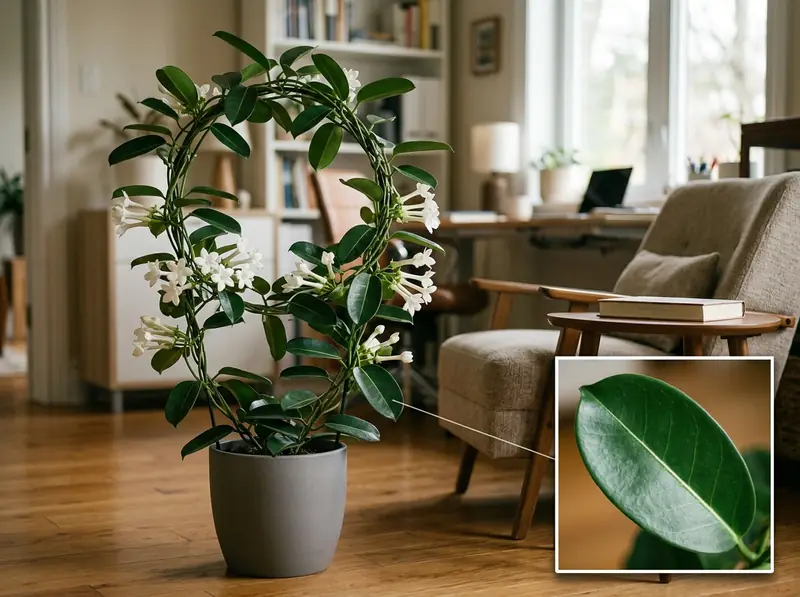
Madagascar Jasmine
Stephanotis floribunda
- Bright, indirect light
- Moderate watering
Non-toxic to cats and dogs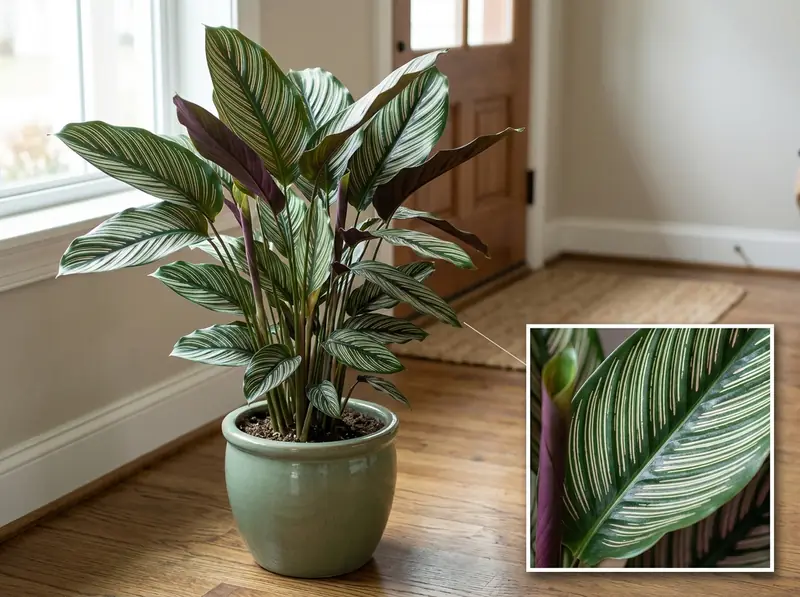 AI-generated
Majestica Calathea
Goeppertia majestica
- Medium to bright, indirect light
- Keep moist
Pets: not yet checked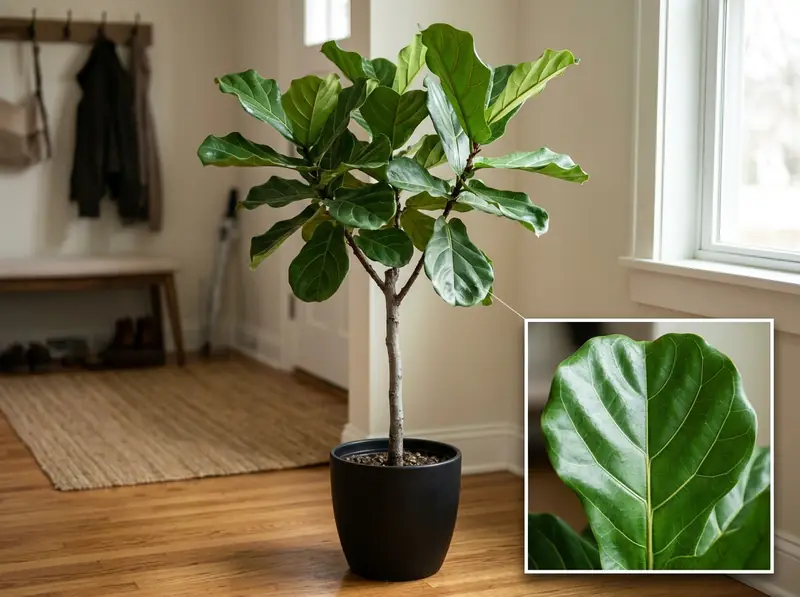 AI-generated
 AI-generated
Calathea Orbifolia
Goeppertia orbifolia
- Medium to bright, indirect light
- Keep moist
Pets: not yet checked