
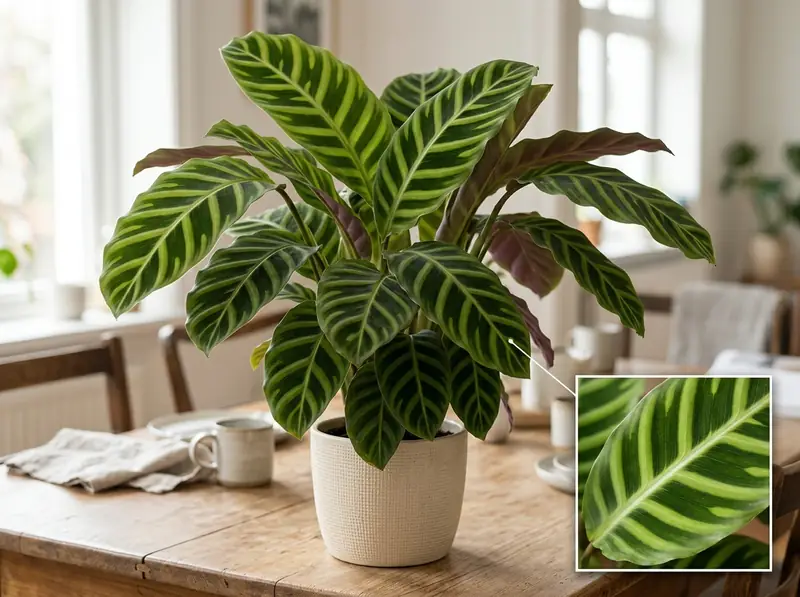
 AI-generated
Zebra Calathea
Goeppertia zebrina
Also known as Calathea binotii, Calathea pulchella, Calathea zebrina
Zebra Calathea is grown for its large, velvety leaves with bold light-green striping and purple undersides. It likes steady warmth, even moisture, high humidity and gentle light, and it can be fussy about water quality and dry air. Give it those conditions and it forms a full, attractive clump.
Saving is free with a KinClub account, and it works here and in the KinClub app. Sign up free
Care profile
- Light
- Medium to bright, indirect lightLow → direct sun
- Water
- Keep moistAbout every 7 days
- Difficulty
- ChallengingTricky → easy
- Coldest it tolerates
- 60°F
- Humidity
- High
- Mature size
- MediumSmall → tree-size
- Growth rate
- Moderate
- How common
- CommonRare → everywhere
- Plant family
- Marantaceae
Pets and toxicity
Cats and dogs: not yet checked
Not yet checked against ASPCA — don't assume it's safe for pets.
Source: ASPCA toxic and non-toxic plants. If a pet eats any houseplant, call your vet or an animal poison helpline.
How to care for Zebra Calathea
Light
Give bright, filtered light or medium light, such as a few feet back from an east window. Keep it out of direct sun, which bleaches and scorches the leaves.
Watering
Keep the soil evenly damp but never soggy, usually watering when the top inch feels barely dry, about every 5 to 8 days in summer. Use distilled, rain or filtered water, and empty the saucer after watering.
Soil
Use a peat- or coir-based potting mix with about one-third perlite for moisture retention and good drainage. A pot with drainage holes is essential.
Feeding
Feed every 3 to 4 weeks in spring and summer with a balanced liquid fertilizer at half the label strength. Skip feeding in winter.
Repotting
Repot every 1 to 2 years in spring when roots fill the pot, moving up only 1 to 2 inches in pot diameter. Divide the clump at the same time if you want more plants.
Propagation
Divide the clump at repotting, making sure each section has roots and several leaves. Keep the divisions warm, humid and evenly moist until they settle. Stem cuttings do not work.
Common problems
- Crispy brown leaf edges: usually dry air or minerals in tap water. Raise the humidity to 50% or more and switch to distilled or filtered water.
- Leaves curling and dull: the plant is too dry or the air is too dry. Water thoroughly and check the soil more often.
- Fine webbing and speckled leaves: spider mites. Rinse the leaves, wipe the undersides, and treat with insecticidal soap weekly for 3 weeks.
- Yellowing lower leaves: often overwatering or poor drainage. Let the top inch dry slightly, and make sure the pot drains freely.
- Leaf loss from cold drafts: keep the plant above 60°F and away from vents and cold windows.
Similar plants
Same light needs and difficulty.
 AI-generated
 AI-generated
 AI-generated
Calathea Orbifolia
Goeppertia orbifolia
- Medium to bright, indirect light
- Keep moist
Pets: not yet checked AI-generated