
 AI-generated
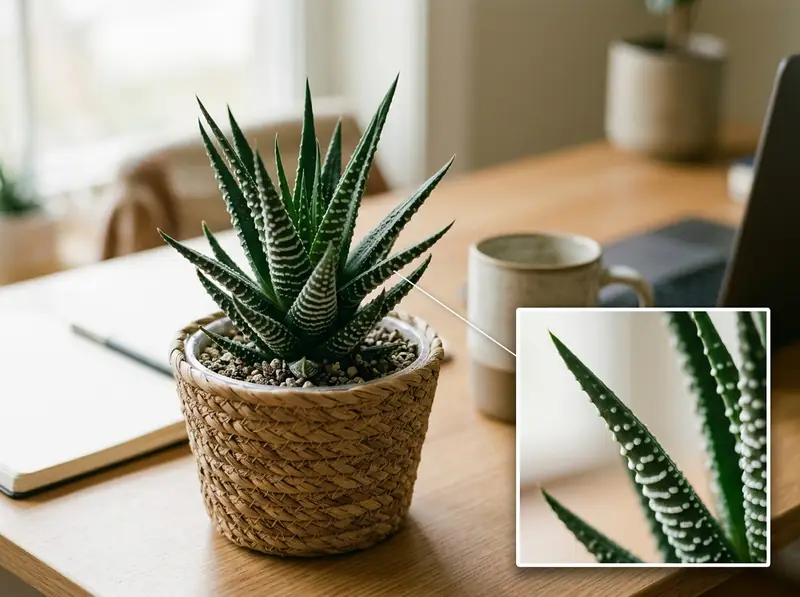
Zebra Haworthia
Haworthiopsis fasciata
Also known as Haworthia fasciata
Zebra Haworthia is a small, slow-growing succulent with dark green, pointed leaves banded with raised white stripes. It is very forgiving and suits a windowsill or desk. Its main need is gritty, fast-draining soil and infrequent watering.
Saving is free with a KinClub account, and it works here and in the KinClub app. Sign up free
Care profile
- Light
- Bright, indirect lightLow → direct sun
- Water
- Let it dry outAbout every 18 days
- Difficulty
- EasyTricky → easy
- Coldest it tolerates
- 45°F
- Humidity
- Low
- Mature size
- SmallSmall → tree-size
- Growth rate
- Slow
- How common
- Very commonRare → everywhere
- Plant family
- Asphodelaceae
Pets and toxicity
Non-toxic to cats
Listed as non-toxic to cats by the ASPCA.
Non-toxic to dogs
Listed as non-toxic to dogs by the ASPCA.
Source: ASPCA toxic and non-toxic plants. If a pet eats any houseplant, call your vet or an animal poison helpline.
How to care for Zebra Haworthia
Light
Give it bright, indirect light, such as a spot near an east or west window. It tolerates a few hours of gentle morning sun but can scorch in strong midday sun.
Watering
Water thoroughly, then let the soil dry out completely before watering again, usually every 2 to 3 weeks in the growing season. Water only about once a month in winter.
Soil
Use a gritty cactus or succulent mix, ideally with extra perlite or pumice added. Use a pot with a drainage hole, and terracotta helps the soil dry faster.
Feeding
Feed with a diluted cactus or succulent fertilizer at half strength about once a month in spring and summer. Do not fertilize in fall and winter.
Repotting
Repot every 2 to 3 years, in spring, when pups crowd the pot. Choose a shallow pot only slightly larger than the current one.
Propagation
Gently separate offsets (pups) with some roots attached in spring and pot them in gritty mix. Wait a week before watering so any cuts can callus.
Common problems
- Mushy, translucent leaves at the base mean root rot from overwatering. Unpot, cut away the rotted parts, and repot in dry gritty mix.
- Stretched, pale growth means too little light. Move it to a brighter window.
- Brown, dry leaf tips or scorched patches mean too much direct sun. Move it back from the glass.
- Cottony white clusters at the leaf bases are mealybugs. Dab them with cotton swabs dipped in rubbing alcohol.
Similar plants
Same light needs and difficulty.
 AI-generated
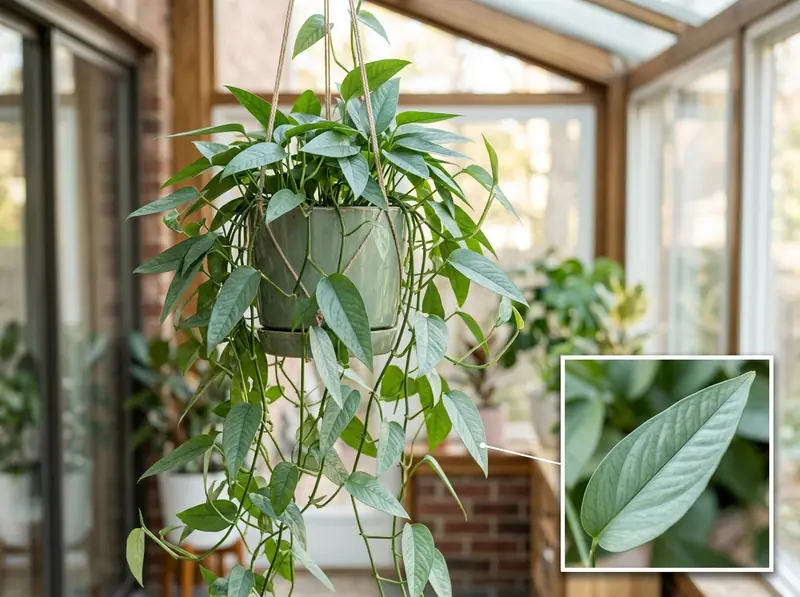
Cebu Blue Pothos
Epipremnum pinnatum 'Cebu Blue'
- Bright, indirect light
- Moderate watering
Toxic to cats and dogs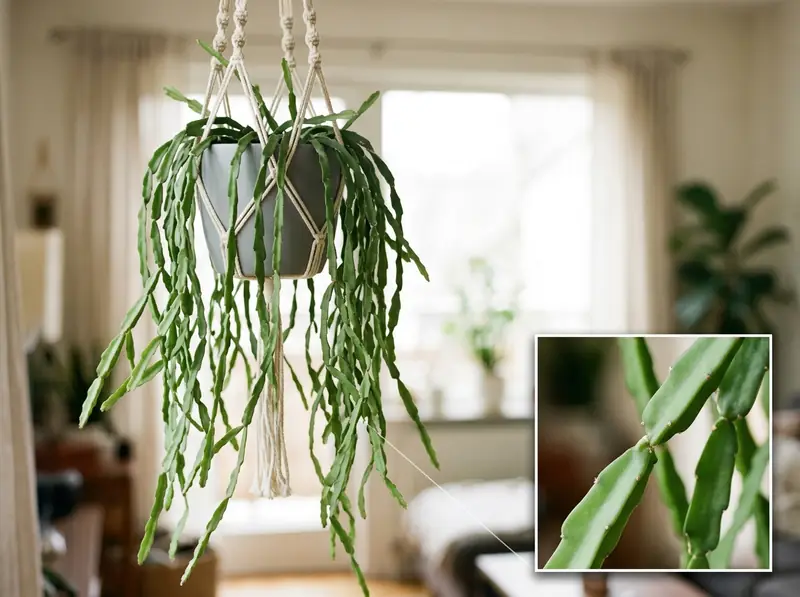 AI-generated
 AI-generated
Chinese Money Plant
Pilea peperomioides
- Bright, indirect light
- Dry to moderate watering
Pets: not yet checked AI-generated
Christmas Cactus
Schlumbergera × buckleyi
- Bright, indirect light
- Moderate watering
Pets: not yet checked