
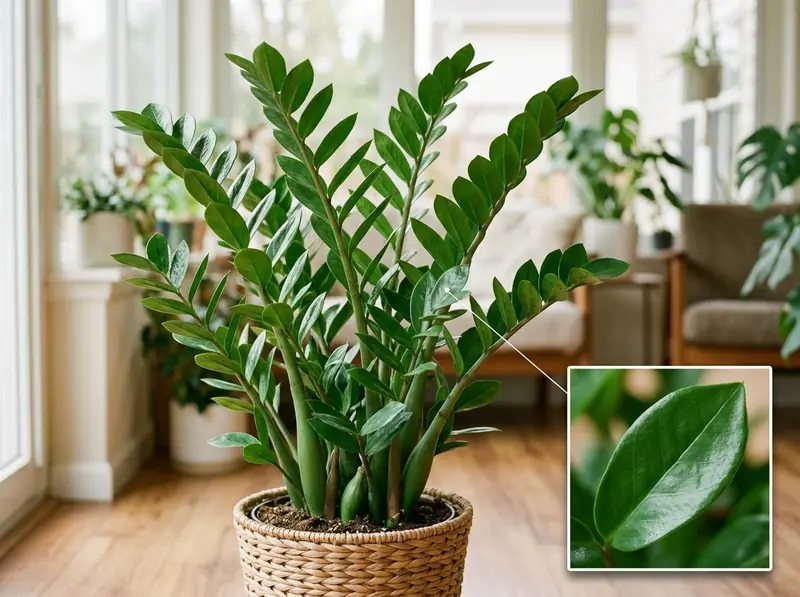
 AI-generated
ZZ Plant
Zamioculcas zamiifolia
The ZZ plant is a tough, slow-growing foliage plant with glossy, dark green leaves on arching stems. It copes well with low light, dry air, and neglect, making it ideal for beginners. The main way to harm it is by watering too often, so let the soil dry fully between waterings.
Saving is free with a KinClub account, and it works here and in the KinClub app. Sign up free
Care profile
- Light
- Low lightLow → direct sun
- Water
- Let it dry outAbout every 18 days
- Difficulty
- EasyTricky → easy
- Coldest it tolerates
- 45°F
- Humidity
- Low
- Mature size
- MediumSmall → tree-size
- Growth rate
- Slow
- How common
- EverywhereRare → everywhere
- Plant family
- Araceae
Pets and toxicity
Cats and dogs: not yet checked
Not yet checked against ASPCA — don't assume it's safe for pets.
No toxicity source on record for this plant yet. If a pet eats any houseplant, call your vet or an animal poison helpline.
How to care for ZZ Plant
Light
Does best in medium to bright indirect light but tolerates low light, including dim offices. Keep it out of hot direct afternoon sun, which can scorch the leaves.
Watering
Let the soil dry out completely, then water thoroughly until it drains. This is usually every 2 to 3 weeks in the growing season and every 4 to 6 weeks in winter.
Soil
Use a fast-draining mix, such as cactus and succulent mix or regular potting mix with about a third perlite or coarse sand. Always use a pot with drainage holes.
Feeding
Feed with a balanced houseplant fertilizer at half strength about once a month from spring through summer. Skip feeding in fall and winter.
Repotting
Repot every 2 to 3 years, in spring, when the thick rhizomes crowd the pot or push the soil up. Go up only one pot size, as the rhizomes can even crack a plastic pot.
Propagation
Divide the rhizomes when repotting, or root single leaf or stem cuttings in barely moist gritty mix. Cuttings work but take several months to form rhizomes.
Common problems
- Yellowing, mushy stems are usually from overwatering or rot: unpot, cut away soft rhizomes, and repot in dry gritty mix.
- Brown, crispy leaflet tips or edges suggest very dry soil for too long or scorching sun; water deeply and move out of direct sun.
- Long, leggy stems with few leaves mean too little light; move to a brighter spot.
- Cottony white mealybugs or bumpy scale on stems: dab with rubbing alcohol on a cotton swab and repeat weekly.
Similar plants
Same light needs and difficulty.
 AI-generated
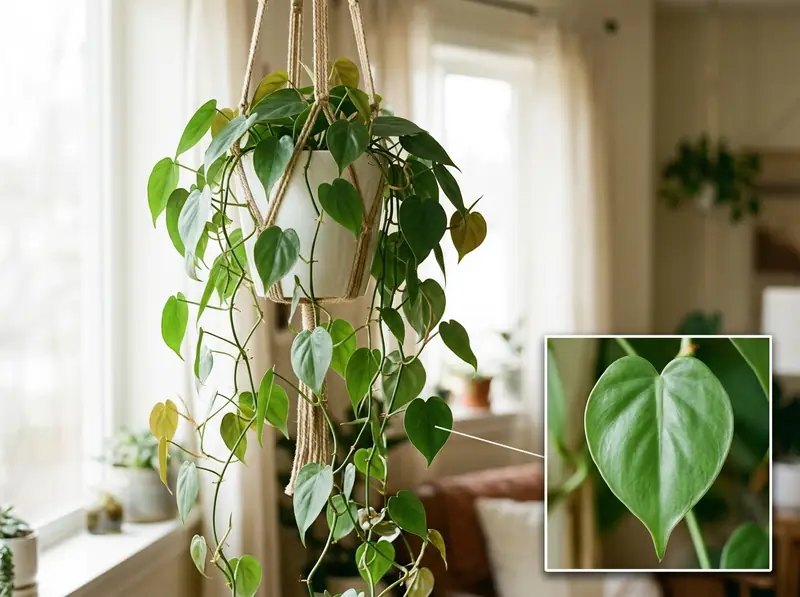 AI-generated
Heartleaf Philodendron
Philodendron hederaceum
- Low to medium light
- Moderate watering
Toxic to cats and dogs AI-generated
 AI-generated
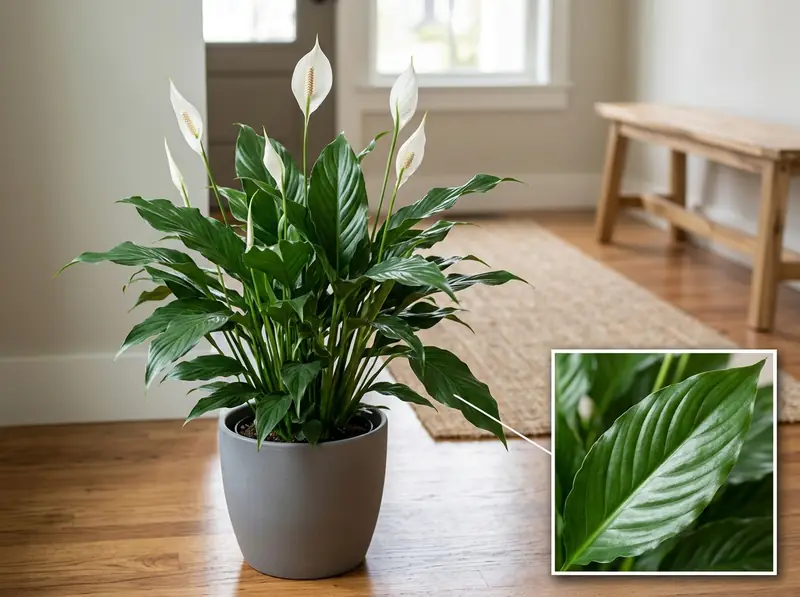
Peace Lily
Spathiphyllum wallisii
- Low to medium light
- Moderate to moist watering
Toxic to cats and dogs