
 AI-generated
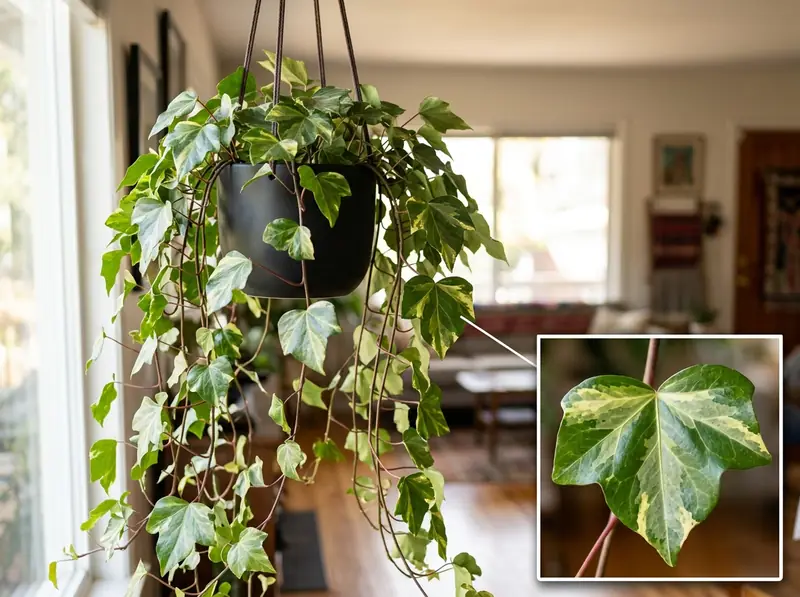
Algerian Ivy
Hedera canariensis
Algerian ivy is a fast-growing, vigorous evergreen vine with large, glossy, lightly lobed leaves, often variegated with cream. It suits hanging baskets, shelves, or a trellis in a bright, cool room. It dislikes hot, dry air, so keep it out of warm spots and watch for spider mites.
Saving is free with a KinClub account, and it works here and in the KinClub app. Sign up free
Care profile
- Light
- Bright, indirect lightLow → direct sun
- Water
- Moderate wateringAbout every 7 days
- Difficulty
- Easy to moderateTricky → easy
- Coldest it tolerates
- 35°F
- Humidity
- Medium
- Mature size
- LargeSmall → tree-size
- Growth rate
- Fast
- How common
- CommonRare → everywhere
- Plant family
- Araliaceae
Pets and toxicity
Cats and dogs: not yet checked
Not yet checked against ASPCA — don't assume it's safe for pets.
No toxicity source on record for this plant yet. If a pet eats any houseplant, call your vet or an animal poison helpline.
How to care for Algerian Ivy
Light
Give it bright indirect light, such as a spot near an east or north window or a few feet back from a south window. Variegated forms need brighter light to keep their pale markings; avoid hot afternoon sun through glass.
Watering
Water thoroughly when the top inch of soil feels dry, about every 7 days in the growing season, and let excess drain away. Water less often in winter, and never leave the pot standing in water.
Soil
Use a standard well-draining potting mix, ideally with a handful of perlite or bark added per few quarts for aeration. Choose a pot with drainage holes.
Feeding
Feed every 4 weeks in spring and summer with a balanced liquid houseplant fertilizer at half the label strength. Skip feeding in fall and winter.
Repotting
Repot every 1 to 2 years in spring when roots fill the pot, moving up only 1 to 2 inches in pot diameter. Established plants can also be refreshed by trimming and topping up fresh soil.
Propagation
Take 4 to 6 inch stem cuttings with at least 2 nodes and remove the lowest leaves. Root them in water or moist potting mix in about 3 to 4 weeks; several cuttings per pot give a fuller plant.
Common problems
- Webbing and stippled, dull leaves mean spider mites: rinse the plant, wipe leaves, raise humidity, and treat with insecticidal soap every 5 to 7 days.
- Brown crispy leaf edges usually mean dry air or irregular watering: move away from heaters and water when the top inch is dry.
- Leggy growth with sparse leaves needs more light: move brighter and prune stems back to encourage branching.
- Yellowing leaves and mushy stems point to overwatering or poor drainage: let the soil dry more and check that the pot drains.
- Sticky residue or small brown bumps on stems suggest scale or aphids: wipe off with soapy water or rubbing alcohol on a cotton swab.
Similar plants
Same light needs and difficulty.
 AI-generated
 AI-generated
 AI-generated
 AI-generated