
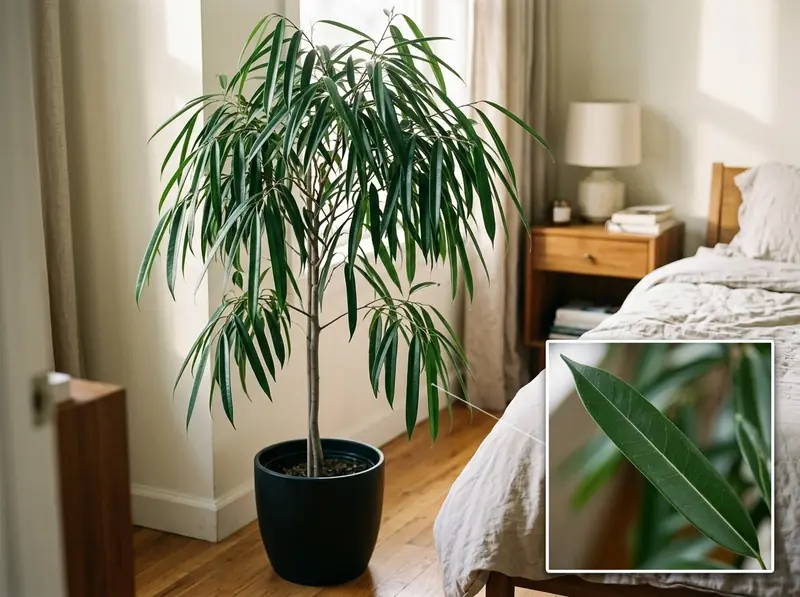
 AI-generated
Alii Fig
Ficus binnendijkii 'Alii'
Alii fig is a sturdy, upright form of Ficus binnendijkii with long, slim, dark green leaves that hang gracefully from a straight trunk. It is more forgiving than a fiddle-leaf fig but still dislikes being moved or sitting in cold drafts. Give it a steady bright spot and it can grow into a floor-standing indoor tree.
Saving is free with a KinClub account, and it works here and in the KinClub app. Sign up free
Care profile
- Light
- Bright, indirect lightLow → direct sun
- Water
- Moderate wateringAbout every 10 days
- Difficulty
- ModerateTricky → easy
- Coldest it tolerates
- 55°F
- Humidity
- Medium
- Mature size
- Tree-sizeSmall → tree-size
- Growth rate
- Moderate
- How common
- CommonRare → everywhere
- Plant family
- Moraceae
Pets and toxicity
Toxic to cats
Keep away from cats. Call your vet or a pet poison helpline if a cat chews it.
Toxic to dogs
Keep away from dogs. Call your vet or a pet poison helpline if a dog chews it.
Source: ASPCA toxic and non-toxic plants. If a pet eats any houseplant, call your vet or an animal poison helpline.
How to care for Alii Fig
Light
Give it bright, indirect light near an east or lightly shaded south or west window. A couple of hours of gentle morning sun is fine, but avoid hot midday sun.
Watering
Water thoroughly when the top 1–2 inches of soil are dry, usually every 7–14 days in the growing season, until water drains out. Empty the saucer and water less in winter.
Soil
Use a well-draining potting mix, such as standard indoor mix with about 20–30% perlite or bark added. The pot must have drainage holes.
Feeding
Feed monthly from spring to early autumn with a balanced liquid houseplant fertilizer at half the label strength. Do not feed in winter.
Repotting
Repot every 2 years in spring, going up 1–2 inches in pot diameter. Once it is large, refresh the top 2 inches of soil each year instead.
Propagation
Take 6-inch stem cuttings with a couple of leaves in spring or summer. Let the milky sap dry, then root in warm water or moist mix with bright light; rooting can be slow. Wear gloves, as the sap can irritate skin.
Common problems
- Leaf drop after a move or draught: keep it in one bright spot away from vents and doors, and it will usually regrow leaves.
- Yellow lower leaves: usually overwatering, so let the soil dry more between waterings and check the drainage.
- Brown crispy leaf edges: caused by dry soil or very dry air, so water more consistently and keep away from heaters.
- Sticky residue or small bumps on stems: scale or mealybugs; wipe with rubbing alcohol on a cotton swab and repeat weekly.
- Fine webbing and stippled leaves: spider mites; rinse the foliage and spray with insecticidal soap every 5–7 days.
Similar plants
Same light needs and difficulty.
 AI-generated
 AI-generated
 AI-generated
 AI-generated