
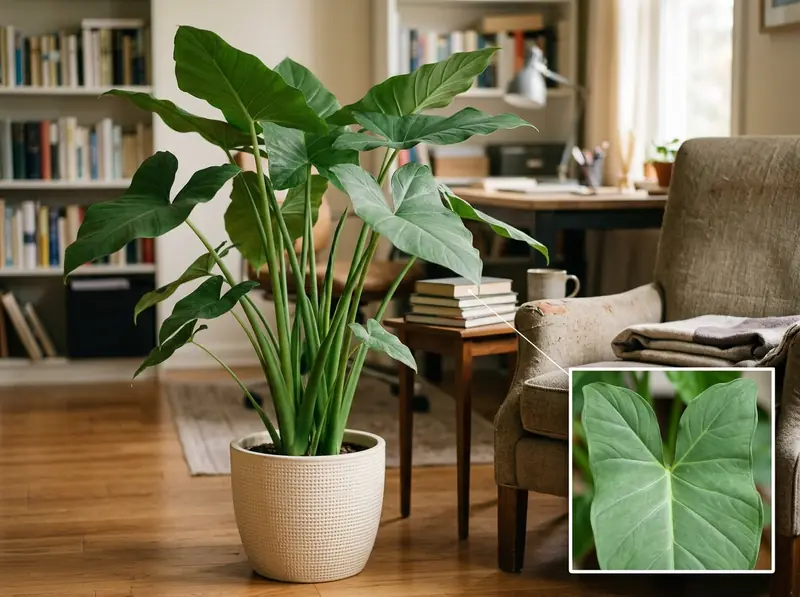
 AI-generated
Arrowleaf Elephant Ear
Xanthosoma sagittifolium
Also known as Alocasia alboviolacea, Alocasia talihan, Philodendron nigrum
Arrowleaf Elephant Ear is a fast-growing tropical with large, arrow-shaped green leaves on tall stems, making a bold floor plant. It likes bright indirect light, steady moisture, and warm, humid air. It may go partly dormant in winter, so ease off watering then.
Saving is free with a KinClub account, and it works here and in the KinClub app. Sign up free
Care profile
- Light
- Bright, indirect lightLow → direct sun
- Water
- Keep moistAbout every 5 days
- Difficulty
- ModerateTricky → easy
- Coldest it tolerates
- 55°F
- Humidity
- High
- Mature size
- LargeSmall → tree-size
- Growth rate
- Fast
- How common
- CommonRare → everywhere
- Plant family
- Araceae
Pets and toxicity
Toxic to cats
Keep away from cats. Call your vet or a pet poison helpline if a cat chews it.
Toxic to dogs
Keep away from dogs. Call your vet or a pet poison helpline if a dog chews it.
Source: ASPCA toxic and non-toxic plants. If a pet eats any houseplant, call your vet or an animal poison helpline.
How to care for Arrowleaf Elephant Ear
Light
Give it bright, indirect light, such as a spot near an east or filtered south or west window. A few hours of gentle morning sun is fine, but avoid harsh midday sun, which scorches the big leaves.
Watering
Keep the soil evenly damp but never soggy during spring and summer, usually watering every 4 to 6 days. In winter, water less often and let the top inch or two dry between waterings.
Soil
Use a rich, loose, peat- or coir-based potting mix with some perlite or bark added for drainage. Use a pot with drainage holes.
Feeding
Feed every 2 to 4 weeks in spring and summer with a balanced liquid fertilizer at half strength. Stop feeding in fall and winter.
Repotting
Repot every year or two in spring when roots fill the pot, moving up 2 to 3 inches in pot diameter. Handle the tubers gently and keep them just below the soil surface.
Propagation
Divide the plant in spring by separating offsets or tuber sections that have their own roots and a shoot. Pot them in moist mix and keep warm until new leaves grow.
Common problems
- Yellowing lower leaves: usually overwatering or winter dormancy, so let the top inch dry out and reduce watering in cool months.
- Brown crispy leaf edges: low humidity or dry soil, so raise humidity with a humidifier or pebble tray and water more consistently.
- Spider mites (fine webbing, speckled leaves): wipe leaves, rinse the plant, and treat with insecticidal soap every 7 days for 3 weeks.
- Leaf drop in winter: cool temperatures or short days can trigger dormancy, so keep it above 55°F and water sparingly until spring.
Similar plants
Same light needs and difficulty.
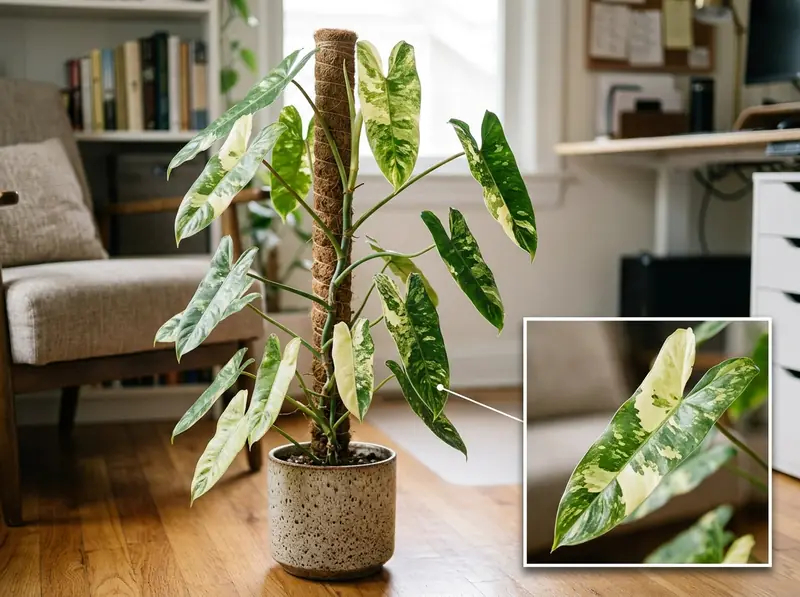 AI-generated
Ilsemanii Philodendron
Philodendron ilsemanii
- Bright, indirect light
- Moderate watering
Toxic to cats and dogs AI-generated
 AI-generated
 AI-generated