
 AI-generated
Imperial Hoya
Hoya imperialis
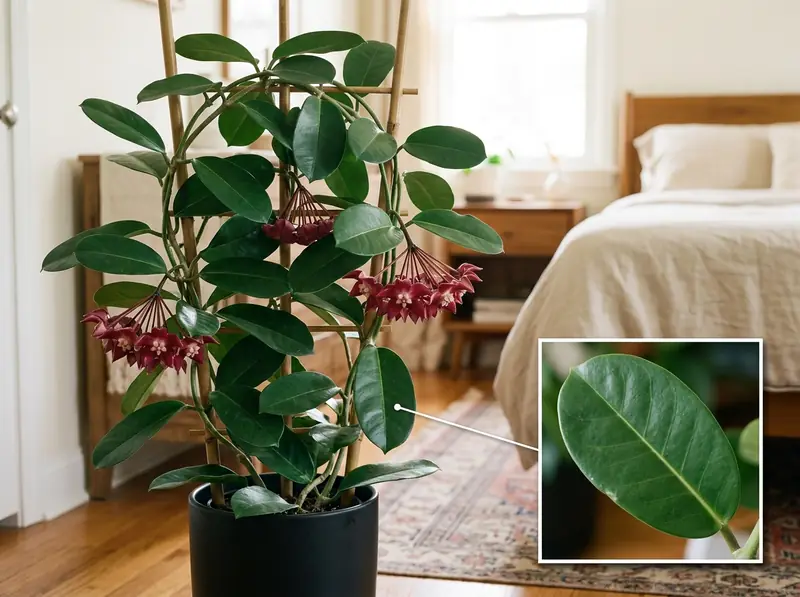
Hoya imperialis is a vigorous climber with large, thick leaves and some of the biggest flowers in the genus, deep burgundy-pink and waxy. It likes warmth, humidity and a sturdy trellis. Patience is rewarded: blooms come on mature vines.
Saving is free with a KinClub account, and it works here and in the KinClub app. Sign up free
Care profile
- Light
- Bright, indirect lightLow → direct sun
- Water
- Moderate wateringAbout every 8 days
- Difficulty
- ModerateTricky → easy
- Coldest it tolerates
- 60°F
- Humidity
- High
- Mature size
- LargeSmall → tree-size
- Growth rate
- Moderate to fast
- How common
- EnthusiastRare → everywhere
- Plant family
- Apocynaceae
Pets and toxicity
Cats and dogs: not yet checked
Not yet checked against ASPCA — don't assume it's safe for pets.
No toxicity source on record for this plant yet. If a pet eats any houseplant, call your vet or an animal poison helpline.
How to care for Imperial Hoya
Light
Bright, indirect light with a couple of hours of gentle morning sun. The large leaves scorch in strong afternoon sun, so filter it with a sheer curtain.
Watering
Water when the top inch or two of mix has dried, about every 7-10 days in summer. It is thirstier than most hoyas thanks to its big leaves and fast growth, but never leave it soggy.
Soil
Airy mix of orchid bark, perlite and potting soil with plenty of drainage. Use a heavy pot, since the top-heavy vines tip lightweight containers.
Feeding
Feed every 3-4 weeks in spring and summer with a balanced fertilizer at half strength; skip it in winter. A bloom-booster with more phosphorus helps flowering.
Repotting
Repot every 2 years in spring as vines fill the pot; move up one size and add a sturdy support at the same time.
Propagation
Take a 4-6 inch stem cutting with at least two nodes. Root it in water, moist perlite or sphagnum moss; roots appear in 3-6 weeks.
Common problems
- Dropping buds usually follow a draft, a move or a sudden dry spell. Keep it steady once buds form.
- Brown leaf tips come from dry air or a salt buildup. Run a humidifier and flush the pot with plain water now and then.
- Mealybugs hide in leaf axils on the thick stems. Treat with alcohol swabs and check weekly.
Similar plants
Same light needs and difficulty.
 AI-generated
 AI-generated
 AI-generated
 AI-generated