
 AI-generated
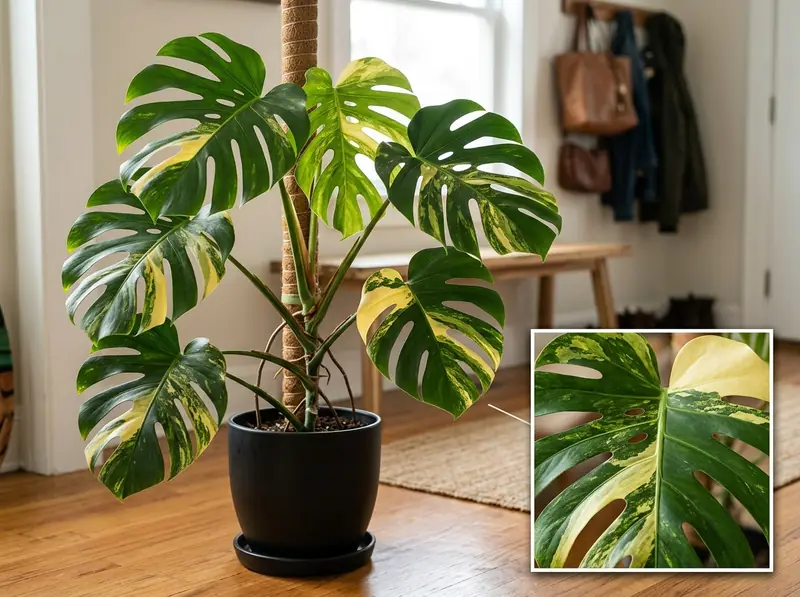
Aurea Monstera
Monstera deliciosa 'Aurea'
Monstera deliciosa 'Aurea' is a rare variegated form of the Swiss cheese plant with bold splashes of creamy yellow across its large, split leaves. The variegated tissue makes less energy, so it grows more slowly than the species and needs steady bright indirect light without harsh sun. It is a bit fussier than the green monstera, but otherwise is cared for in much the same way.
Saving is free with a KinClub account, and it works here and in the KinClub app. Sign up free
Care profile
- Light
- Bright, indirect lightLow → direct sun
- Water
- Moderate wateringAbout every 10 days
- Difficulty
- ModerateTricky → easy
- Coldest it tolerates
- 55°F
- Humidity
- Medium to high
- Mature size
- LargeSmall → tree-size
- Growth rate
- Moderate
- How common
- CommonRare → everywhere
- Plant family
- Araceae
Pets and toxicity
Toxic to cats
Keep away from cats. Call your vet or a pet poison helpline if a cat chews it.
Toxic to dogs
Keep away from dogs. Call your vet or a pet poison helpline if a dog chews it.
Source: ASPCA toxic and non-toxic plants. If a pet eats any houseplant, call your vet or an animal poison helpline.
How to care for Aurea Monstera
Light
Give it bright indirect light, such as a spot 1 to 3 feet from an east window or set back from a south or west window behind a sheer curtain. The pale variegated areas make less food and scorch easily, so avoid direct midday sun, but too little light makes new leaves revert to green.
Watering
Water thoroughly when the top 2 inches of soil are dry, usually every 7 to 14 days in the growing season, until water drains from the bottom. Empty the saucer. Water less often in winter.
Soil
Use a chunky, well-draining potting mix, such as standard potting soil mixed with about one-third orchid bark or perlite. The pot must have drainage holes.
Feeding
Feed every 4 weeks from spring through summer with a balanced liquid houseplant fertilizer at half the label strength. Skip feeding in fall and winter.
Repotting
Repot every 1 to 2 years in spring when roots circle the pot or come out of the drainage holes. Move up only 2 inches in pot diameter.
Propagation
Take a stem cutting just below a node that has a variegated leaf and ideally an aerial root. Root it in water or moist potting mix in a warm, bright spot; roots usually form in 3 to 5 weeks, a little slower than plain green monstera.
Common problems
- Yellow lower leaves: usually overwatering. Let the top 2 inches dry out between waterings and check drainage.
- Brown crispy leaf edges or patches: dry air, underwatering or sun scorch. Water consistently and move it out of direct sun and away from heaters or vents.
- Leaves turning all green: too little light or natural reversion. Move it to brighter light and cut stems back to a well-variegated node.
- No splits in new leaves: usually too little light or a young plant. Move it to brighter light and add a support pole.
- Webbing or stippled leaves: spider mites. Wipe leaves with a damp cloth and treat with insecticidal soap weekly for several weeks.
- Floppy, sprawling stems: the plant needs support. Tie stems to a moss pole or stake.
Similar plants
Same light needs and difficulty.
 AI-generated
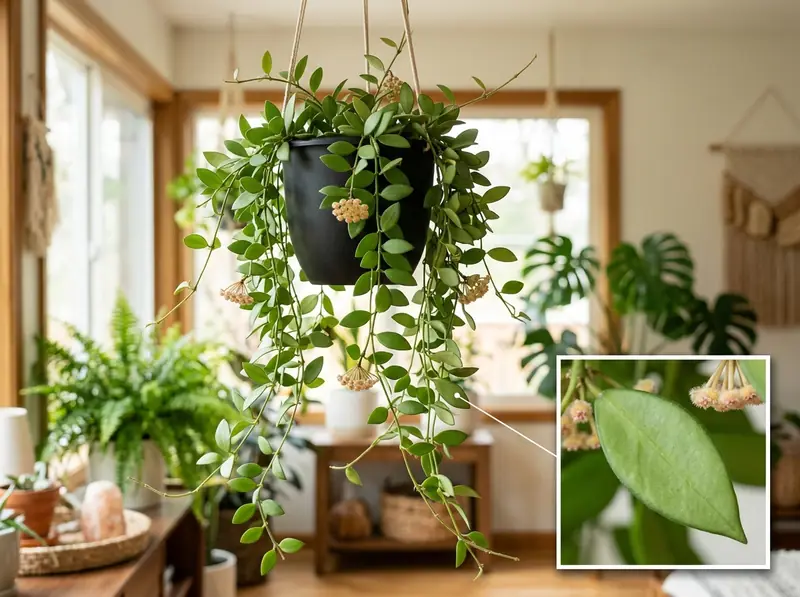
Heuschkeliana Hoya
Hoya heuschkeliana
- Bright, indirect light
- Dry to moderate watering
Pets: not yet checked AI-generated
 AI-generated
 AI-generated