
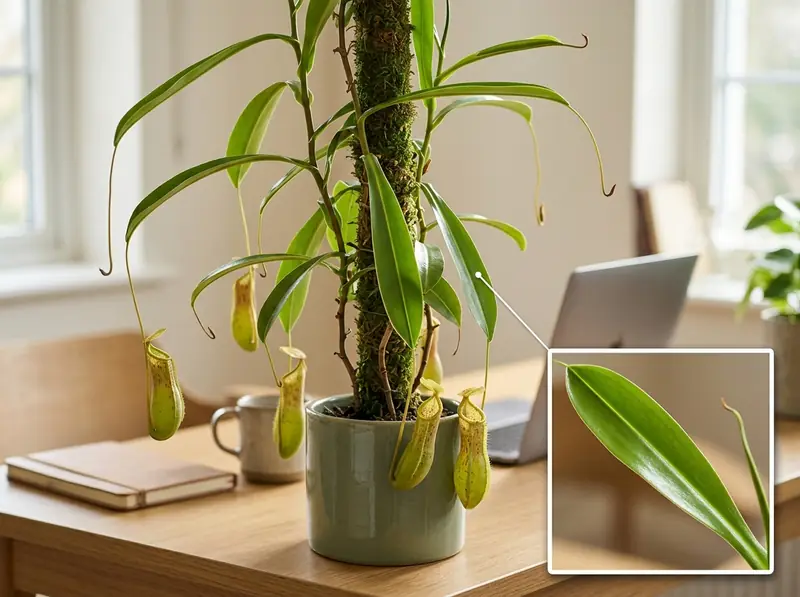
 AI-generated
Highland Pitcher Plant
Nepenthes alata
Highland Pitcher Plant (Nepenthes alata) is a climbing carnivorous plant from the Philippines that hangs jug-shaped pitchers from the tips of its leaves. It grows well in bright, indirect light with high humidity and pure water. It copes with typical home temperatures better than many other pitcher plants.
Saving is free with a KinClub account, and it works here and in the KinClub app. Sign up free
Care profile
- Light
- Bright, indirect lightLow → direct sun
- Water
- Keep moistAbout every 4 days
- Difficulty
- ModerateTricky → easy
- Coldest it tolerates
- 55°F
- Humidity
- High
- Mature size
- MediumSmall → tree-size
- Growth rate
- Moderate
- How common
- CommonRare → everywhere
- Plant family
- Nepenthaceae
Pets and toxicity
Cats and dogs: not yet checked
Not yet checked against ASPCA — don't assume it's safe for pets.
No toxicity source on record for this plant yet. If a pet eats any houseplant, call your vet or an animal poison helpline.
How to care for Highland Pitcher Plant
Light
Give bright, indirect light, such as an east window or a spot a few feet back from a south or west window. Gentle morning sun is fine. A grow light about 6 to 12 inches above the plant for 12 hours a day also works.
Watering
Keep the medium evenly damp and never let it dry out fully. Water with rain, distilled or reverse-osmosis water. Water when the surface starts to feel barely moist, usually every 3 to 5 days. Drain the excess, but a shallow tray of water is fine.
Soil
Use a low-nutrient, airy mix that holds moisture. A common blend is equal parts long-fibre sphagnum moss, perlite and orchid bark. Avoid regular potting soil and fertilised mixes.
Feeding
Feeding is usually unnecessary. If growth is poor, apply a quarter-strength orchid fertiliser to the leaves about once a month. A small insect in a pitcher now and then is also enough.
Repotting
Repot every 1 to 2 years in spring, or when the medium breaks down. Use a pot 1 to 2 inches wider, preferably plastic or glazed, and handle the fine roots gently.
Propagation
Take stem cuttings with 2 or 3 leaves in spring or summer. Root them in damp sphagnum moss in a humid, bright spot, which can take 1 to 3 months. Seed is slow.
Common problems
- Pitchers don't form: humidity is usually too low or light too dim. Raise humidity to 50 percent or more and increase light.
- Brown leaf tips: mineral buildup from tap water or dry air. Switch to pure water and flush the pot.
- Pitchers turn brown: each pitcher ages naturally after a few months. Trim it off once fully brown.
- Mealybugs or aphids on new growth: wipe with rubbed alcohol on a cotton swab or spray with insecticidal soap.
Similar plants
Same light needs and difficulty.
 AI-generated
 AI-generated
 AI-generated
 AI-generated