
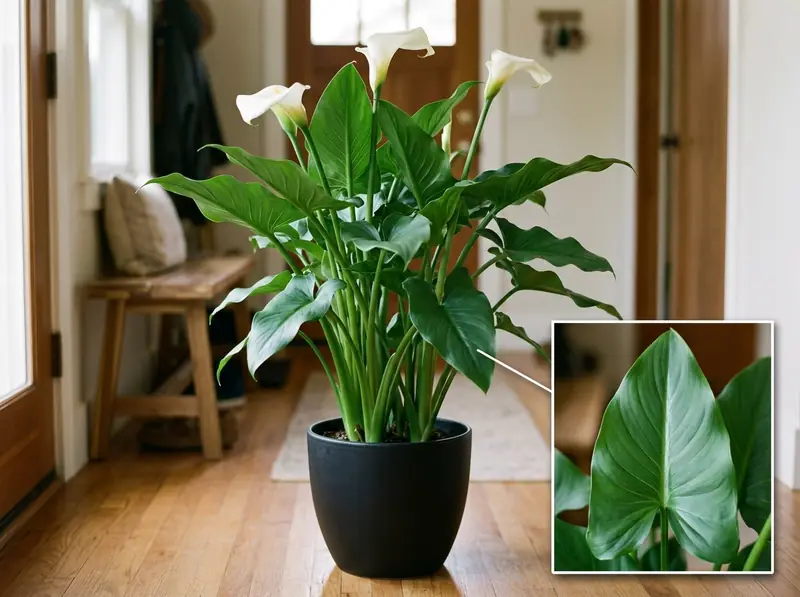
 AI-generated
Calla Lily
Zantedeschia aethiopica
Also known as Arum Lily, Pig Lily, White Arum, Trumpet Lily, Florist's Calla, Garden Calla
Calla lily is a clumping plant with glossy arrow-shaped leaves and elegant white funnel-like flowers. Unlike many houseplants it loves steady moisture and cooler rooms, and it may rest for a while after blooming. Give it bright light, rich damp soil, and a cool spot to flower well indoors.
Saving is free with a KinClub account, and it works here and in the KinClub app. Sign up free
Care profile
- Light
- Bright, indirect lightLow → direct sun
- Water
- Keep moistAbout every 5 days
- Difficulty
- ModerateTricky → easy
- Coldest it tolerates
- 40°F
- Humidity
- Medium
- Mature size
- MediumSmall → tree-size
- Growth rate
- Moderate to fast
- How common
- EnthusiastRare → everywhere
- Plant family
- Araceae
Pets and toxicity
Toxic to cats
Keep away from cats. Call your vet or a pet poison helpline if a cat chews it.
Toxic to dogs
Keep away from dogs. Call your vet or a pet poison helpline if a dog chews it.
Source: ASPCA toxic and non-toxic plants. If a pet eats any houseplant, call your vet or an animal poison helpline.
How to care for Calla Lily
Light
Give bright light with a few hours of gentle morning sun, such as an east or south window with a sheer curtain. Avoid hot midday sun through glass, which scorches the leaves.
Watering
Keep the soil evenly moist during growth and flowering, watering when the top half inch feels barely damp, about every 4-6 days. Never let it dry out fully while it is in leaf. Reduce watering when it goes dormant after flowering.
Soil
Use a rich, moisture-retentive potting mix with plenty of organic matter, such as standard potting soil with some compost. The pot must have drainage holes.
Feeding
Feed every 2-3 weeks in spring and summer with a balanced liquid fertilizer at half strength. A formula slightly higher in potassium supports flowering. Stop feeding during dormancy.
Repotting
Repot in late winter or early spring when the rhizomes crowd the pot, usually every 2-3 years. Choose a pot 2 inches wider and set the rhizome about 2 inches below the soil surface.
Propagation
Divide the fleshy rhizomes in early spring, making sure each piece has at least one growing eye. Plant the divisions in moist mix and keep them warm until shoots appear.
Common problems
- Yellowing leaves: often from dormancy, overwatering, or underwatering; check soil moisture and cut back old leaves if the plant is resting.
- No flowers: usually too little light or no cool rest; move to a brighter window and feed regularly during growth.
- Brown leaf edges: dry air or irregular watering; water evenly and keep it away from heaters.
- Spider mites or aphids: rinse the leaves with water and treat with insecticidal soap every 7 days until clear.
- Rotting rhizome: caused by cold, waterlogged soil; unpot, cut away soft tissue, and replant in fresh mix.
Similar plants
Same light needs and difficulty.
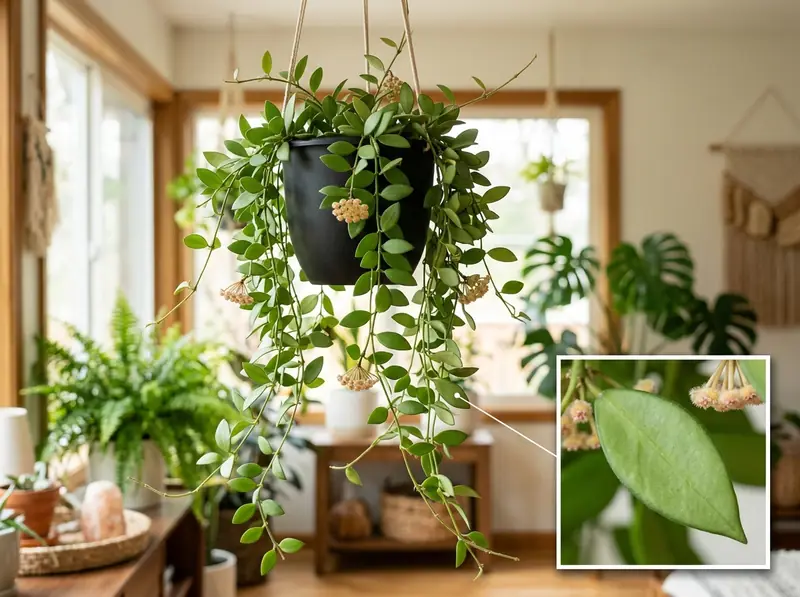 AI-generated
Heuschkeliana Hoya
Hoya heuschkeliana
- Bright, indirect light
- Dry to moderate watering
Pets: not yet checked AI-generated
 AI-generated
 AI-generated