
 AI-generated
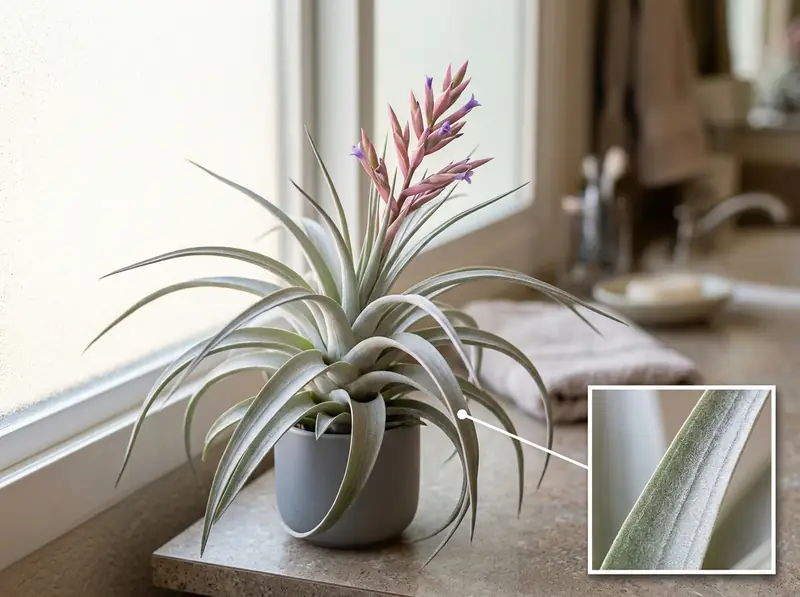
Cacticola Air Plant
Tillandsia cacticola
Tillandsia cacticola is a small, slow-growing air plant with silvery, stiff, curved leaves that grow in a rosette. It takes its moisture through its leaves, so weekly soaking and quick drying matter more than potting. It does well in a bright room with good airflow and can produce a pinkish-purple flower spike.
Saving is free with a KinClub account, and it works here and in the KinClub app. Sign up free
Care profile
- Light
- Bright, indirect lightLow → direct sun
- Water
- Let it dry outAbout every 7 days
- Difficulty
- Easy to moderateTricky → easy
- Coldest it tolerates
- 45°F
- Humidity
- Low to medium
- Mature size
- SmallSmall → tree-size
- Growth rate
- Slow
- How common
- EnthusiastRare → everywhere
- Plant family
- Bromeliaceae
Pets and toxicity
Cats and dogs: not yet checked
Not yet checked against ASPCA — don't assume it's safe for pets.
No toxicity source on record for this plant yet. If a pet eats any houseplant, call your vet or an animal poison helpline.
How to care for Cacticola Air Plant
Light
Give bright, indirect light, such as near an east or south window with a sheer curtain. A few hours of gentle morning sun is fine, but avoid harsh midday sun through glass.
Watering
Soak in room-temperature water for 15-30 minutes or rinse thoroughly about once a week, more often in hot dry spells. Shake off excess water and let it dry fully within 4 hours.
Soil
It needs no soil, as it grows on its roots' grip alone. Mount it on cork bark, driftwood or a rock, or set it loosely on a shelf, and never bury it in potting mix.
Feeding
Feed once a month in the growing season with a bromeliad or air plant fertilizer at quarter strength, added to the soaking water. Skip feeding in winter.
Repotting
It does not need repotting. If you mount it, use non-copper wire or a dab of adhesive made for plants, and keep the base uncovered so it can dry.
Propagation
Separate pups when they reach about one third to half the size of the parent, by gently twisting or cutting them free. Offsets appear after blooming and take many months to form. Seed is very slow.
Common problems
- Brown, crispy leaf tips mean it is too dry, so soak for longer and more often.
- Mushy black base means rot, so remove the plant from the water, let it dry and soak less often with better airflow.
- Silvery scales on leaves may be normal, but if it is sticky or has cottony clusters, wipe off mealybugs or scale with rubbery alcohol on a cotton swab.
- No growth or fading color means low light, so move it closer to a bright window.
Similar plants
Same light needs and difficulty.
 AI-generated
 AI-generated
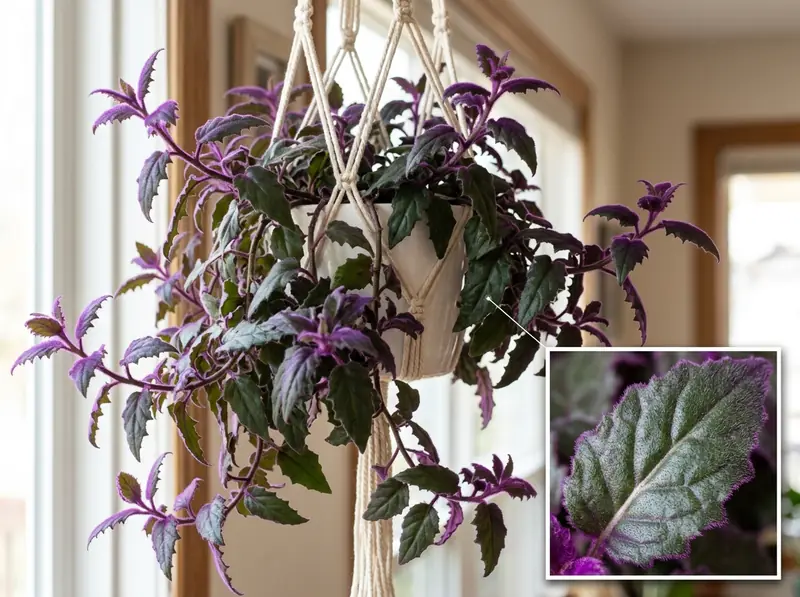
Purple Passion Plant
Gynura aurantiaca
- Bright, indirect light
- Moderate to moist watering
Toxic to cats and dogs AI-generated
Chinese Money Plant
Pilea peperomioides
- Bright, indirect light
- Dry to moderate watering
Pets: not yet checked AI-generated
Christmas Cactus
Schlumbergera × buckleyi
- Bright, indirect light
- Moderate watering
Pets: not yet checked