
 AI-generated
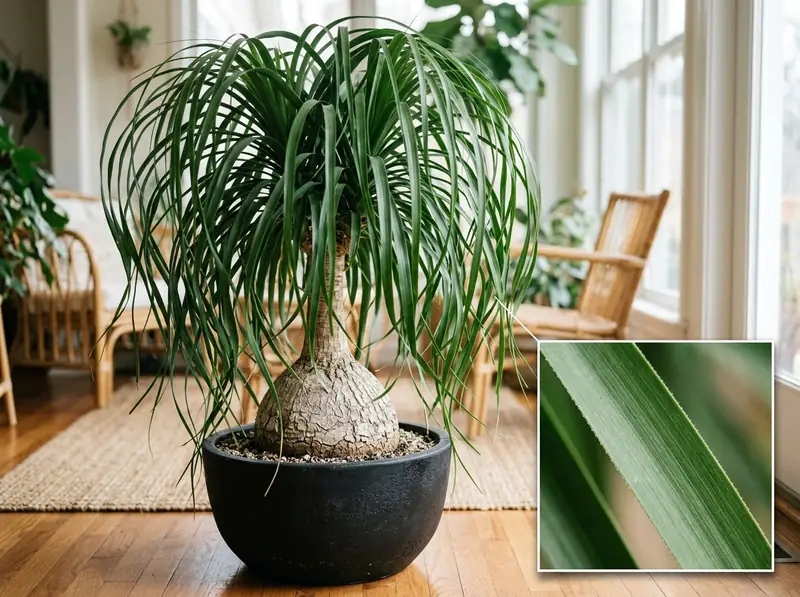
Ponytail Palm
Beaucarnea recurvata
Also known as Bottle Palm, Elephant-foot Tree, Pony Tail Plant, Bottle Palm 2, Pony Tail, Nolina tuberculata
Ponytail palm is a slow-growing succulent-like plant with a swollen, water-storing trunk and a fountain of long, curly leaves. It is very forgiving of missed waterings and dry air, but it rots easily if kept wet. Give it bright light and a fast-draining mix, and it can live for decades.
Saving is free with a KinClub account, and it works here and in the KinClub app. Sign up free
Care profile
- Light
- Bright, indirect lightLow → direct sun
- Water
- Let it dry outAbout every 21 days
- Difficulty
- EasyTricky → easy
- Coldest it tolerates
- 45°F
- Humidity
- Low
- Mature size
- LargeSmall → tree-size
- Growth rate
- Slow
- How common
- Very commonRare → everywhere
- Plant family
- Asparagaceae
Pets and toxicity
Non-toxic to cats
Listed as non-toxic to cats by the ASPCA.
Non-toxic to dogs
Listed as non-toxic to dogs by the ASPCA.
Source: ASPCA toxic and non-toxic plants. If a pet eats any houseplant, call your vet or an animal poison helpline.
How to care for Ponytail Palm
Light
Give it bright light, including a few hours of direct sun from a south or west window if possible. It tolerates medium light but grows more slowly and leaves become thinner.
Watering
Water thoroughly until it drains, then let the soil dry out completely before watering again, usually every 2 to 4 weeks in summer. Water even less in winter, about every 4 to 6 weeks.
Soil
Use a gritty cactus or succulent mix, ideally with extra perlite or pumice. Always use a pot with drainage holes; unglazed terracotta helps the soil dry faster.
Feeding
Feed with a half-strength balanced fertilizer about once a month in spring and summer. Do not feed in fall and winter.
Repotting
Repot only every 3 to 4 years, in spring, when the plant is crowded. Choose a pot only 1 to 2 inches wider than the trunk base, since it prefers being snug.
Propagation
Offsets (pups) sometimes form at the base; separate them in spring with roots attached and pot them in gritty mix. Seed is very slow, and the trunk cannot be propagated from cuttings.
Common problems
- Brown leaf tips: usually dry soil for too long or dry salts from fertilizer; water deeply, flush the soil, and trim only the brown tip.
- Soft, mushy trunk base: overwatering and rot; stop watering, and if the base is soft throughout, the plant is unlikely to recover.
- Sticky residue and cottony clumps: mealybugs or scale; wipe with rubbing-alcohol-dampened cotton swabs and repeat weekly.
- Fine webbing and speckled leaves: spider mites; rinse leaves and apply insecticidal soap every 5 to 7 days for a few weeks.
- Leaning or stretching growth: not enough light; move to a brighter window and rotate the pot regularly.
Similar plants
Same light needs and difficulty.
 AI-generated
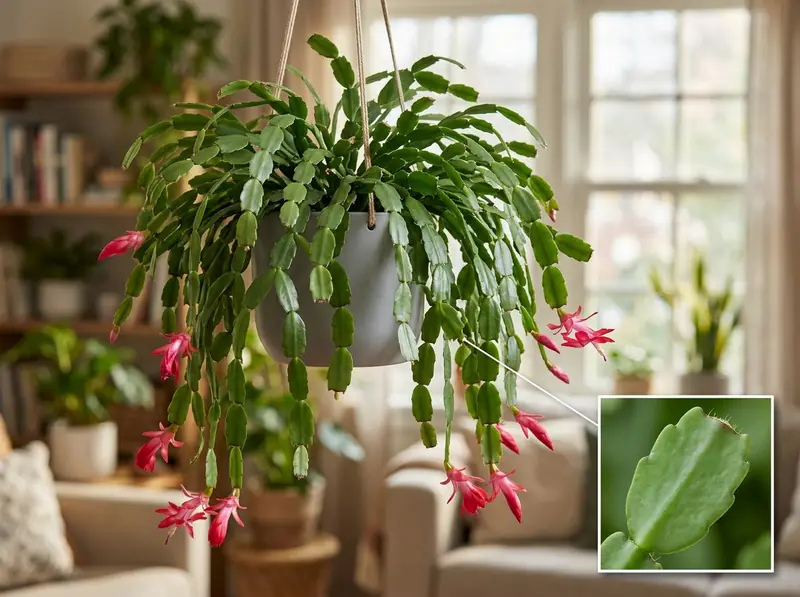
Spring Cactus
Schlumbergera russelliana
- Bright, indirect light
- Moderate watering
Non-toxic to cats and dogs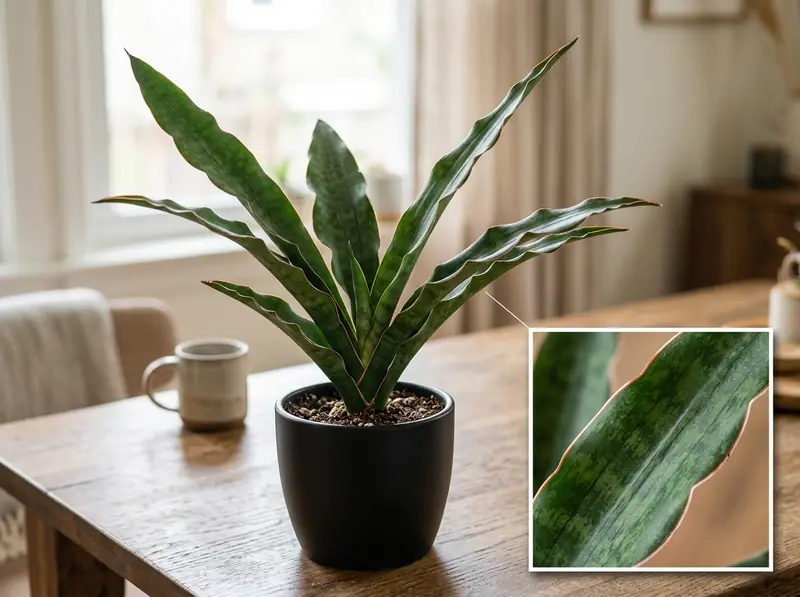 AI-generated
 AI-generated
Chinese Money Plant
Pilea peperomioides
- Bright, indirect light
- Dry to moderate watering
Pets: not yet checked AI-generated
Christmas Cactus
Schlumbergera × buckleyi
- Bright, indirect light
- Moderate watering
Pets: not yet checked