
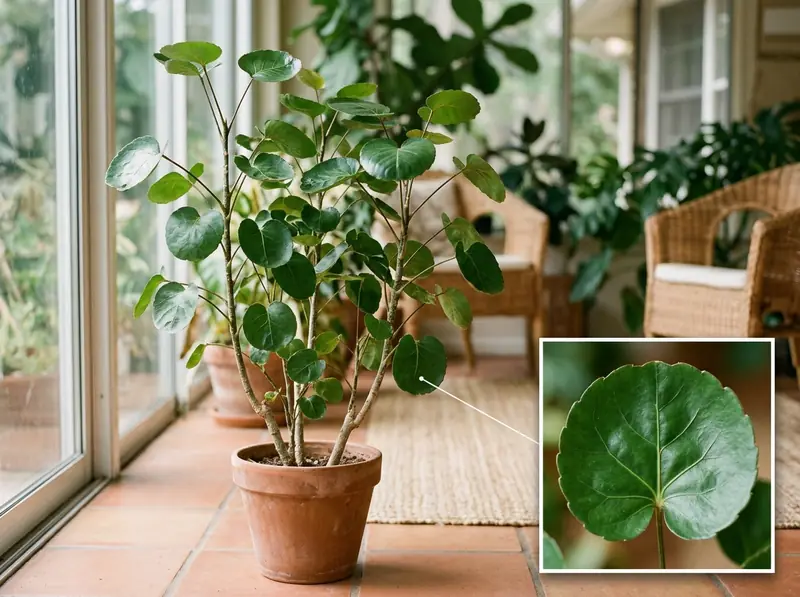
 AI-generated
Balfour Aralia
Polyscias scutellaria
Balfour aralia is an upright, woody-stemmed indoor shrub with rounded, scalloped leaves that can reach 3 to 5 feet indoors. It likes bright indirect light, steady moisture, and average humidity, and it dislikes drafts and being moved. It can be fussy, but a stable spot and consistent watering keep it looking full.
Saving is free with a KinClub account, and it works here and in the KinClub app. Sign up free
Care profile
- Light
- Bright, indirect lightLow → direct sun
- Water
- Moderate wateringAbout every 7 days
- Difficulty
- ModerateTricky → easy
- Coldest it tolerates
- 55°F
- Humidity
- Medium to high
- Mature size
- LargeSmall → tree-size
- Growth rate
- Moderate
- How common
- CommonRare → everywhere
- Plant family
- Araliaceae
Pets and toxicity
Cats and dogs: not yet checked
Not yet checked against ASPCA — don't assume it's safe for pets.
No toxicity source on record for this plant yet. If a pet eats any houseplant, call your vet or an animal poison helpline.
How to care for Balfour Aralia
Light
Give it bright, indirect light, such as a spot a few feet from an east or south window or right beside an east window. Gentle morning sun is fine, but avoid hot midday sun.
Watering
Water thoroughly when the top inch of soil feels dry, usually about once a week in the growing season, and let excess drain away. Never leave it standing in water, and water a little less in winter.
Soil
Use a well-draining, peat- or coir-based potting mix with some perlite or bark added. The pot must have drainage holes.
Feeding
Feed every 4 weeks in spring and summer with a balanced liquid houseplant fertilizer diluted to half strength. Stop or reduce feeding in fall and winter.
Repotting
Repot every 2 to 3 years in spring, moving up only 1 to 2 inches in pot diameter. It grows well slightly root-bound, so don't hurry.
Propagation
Take 4 to 6 inch stem tip cuttings in spring or summer, dip them in rooting hormone, and set them in moist perlite and peat mix. Keep them warm and humid; rooting can take several weeks and is not always reliable.
Common problems
- Leaf drop after a move or draft: keep it in a steady spot away from vents and cold windows, and it should regrow.
- Brown leaf edges from dry air: mist occasionally, use a pebble tray or humidifier, and keep it away from heaters.
- Spider mites show as fine webbing and stippled leaves: rinse the plant, then wipe leaves and use insecticidal soap weekly.
- Leggy, sparse growth: move it to brighter light and prune stems back in spring to encourage branching.
- Root rot from soggy soil: let the soil dry more between waterings and repot into fresh mix if roots are mushy.
Similar plants
Same light needs and difficulty.
 AI-generated
 AI-generated
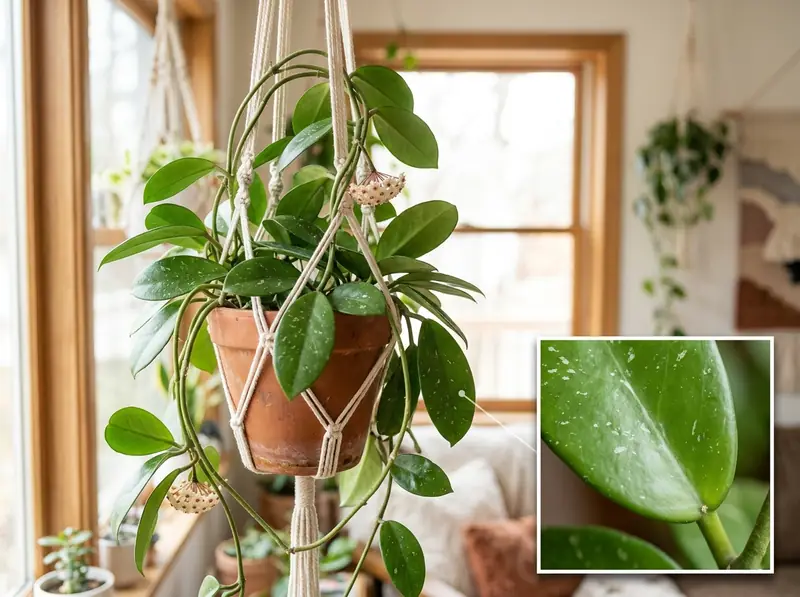
Crassipetiolata Hoya
Hoya crassipetiolata
- Bright, indirect light
- Dry to moderate watering
Pets: not yet checked AI-generated
 AI-generated