
 AI-generated
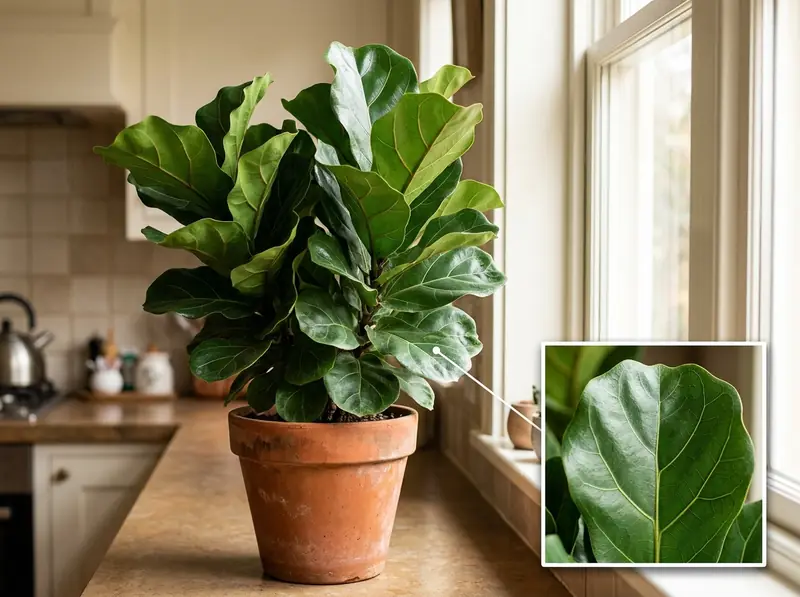
Bambino Fiddle-Leaf Fig
Ficus lyrata 'Bambino'
Bambino is a compact, dwarf form of the fiddle-leaf fig with the same large, glossy, violin-shaped leaves on a shorter, bushier plant. It usually tops out around 2 to 4 feet indoors, so it suits a tabletop or a spot beside a chair. It is just as fussy as the species about steady light, even watering and being left in one place.
Saving is free with a KinClub account, and it works here and in the KinClub app. Sign up free
Care profile
- Light
- Bright, indirect lightLow → direct sun
- Water
- Moderate wateringAbout every 10 days
- Difficulty
- Moderate to challengingTricky → easy
- Coldest it tolerates
- 50°F
- Humidity
- Medium
- Mature size
- MediumSmall → tree-size
- Growth rate
- Slow
- How common
- CommonRare → everywhere
- Plant family
- Moraceae
Pets and toxicity
Toxic to cats
Keep away from cats. Call your vet or a pet poison helpline if a cat chews it.
Toxic to dogs
Keep away from dogs. Call your vet or a pet poison helpline if a dog chews it.
Source: ASPCA toxic and non-toxic plants. If a pet eats any houseplant, call your vet or an animal poison helpline.
How to care for Bambino Fiddle-Leaf Fig
Light
Give it bright, indirect light, ideally within a few feet of an east-facing window or a bright south or west window with a sheer curtain. A couple of hours of gentle morning sun is fine, but hot midday sun can scorch the leaves.
Watering
Water thoroughly when the top 2 inches of soil are dry, until water runs out of the drainage holes, then empty the saucer. This is usually every 7 to 14 days in the growing season, and less often in winter.
Soil
Use a chunky, well-draining potting mix, such as standard indoor mix with about a quarter perlite or bark added. The pot must have drainage holes.
Feeding
Feed every 2 to 4 weeks in spring and summer with a balanced liquid houseplant fertilizer at half the label strength. Stop or reduce feeding in fall and winter.
Repotting
Repot every 1 to 2 years in spring, moving up only 2 inches in pot diameter. Once it is very large, refresh the top few inches of soil each year instead.
Propagation
Take a stem cutting with at least one or two leaves and a node in spring or summer. Root it in water or moist mix in a warm, bright spot, which can take 4 to 8 weeks or longer.
Common problems
- Brown spots spreading from the leaf centre are usually root rot from overwatering: let the soil dry, check the roots, and repot into fresh mix if they are mushy.
- Sudden leaf drop after a move or draught: keep it in one spot, away from vents and cold doors, and it will usually stabilise.
- Dry brown leaf edges mean low humidity or irregular watering: water deeply on a steady schedule and keep it away from heaters.
- Dusty leaves reduce light uptake: wipe them every few weeks with a damp cloth, which also helps you spot pests.
- Tiny webbing or stippling on leaves points to spider mites: wipe the leaves, rinse the plant, and treat with insecticidal soap weekly.
Similar plants
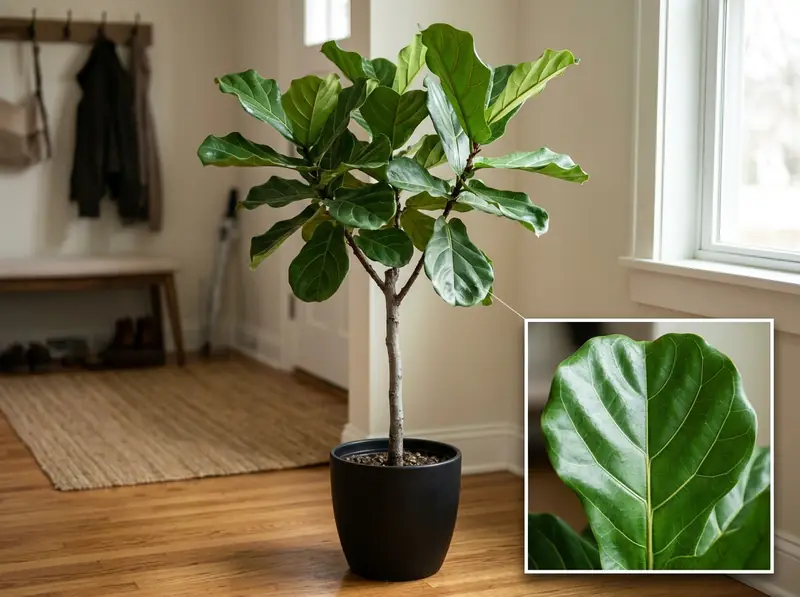
Same light needs and difficulty.
 AI-generated
 AI-generated
Calathea Orbifolia
Goeppertia orbifolia
- Medium to bright, indirect light
- Keep moist
Pets: not yet checked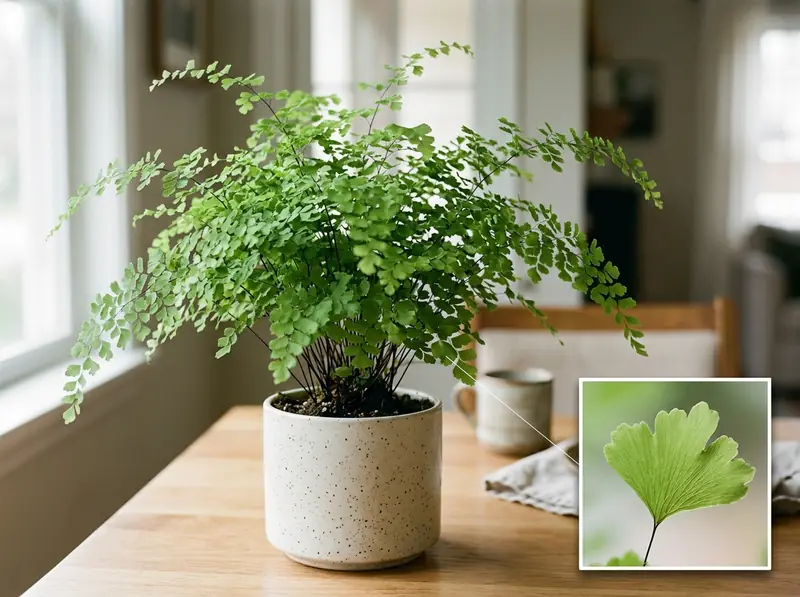 AI-generated
 AI-generated