
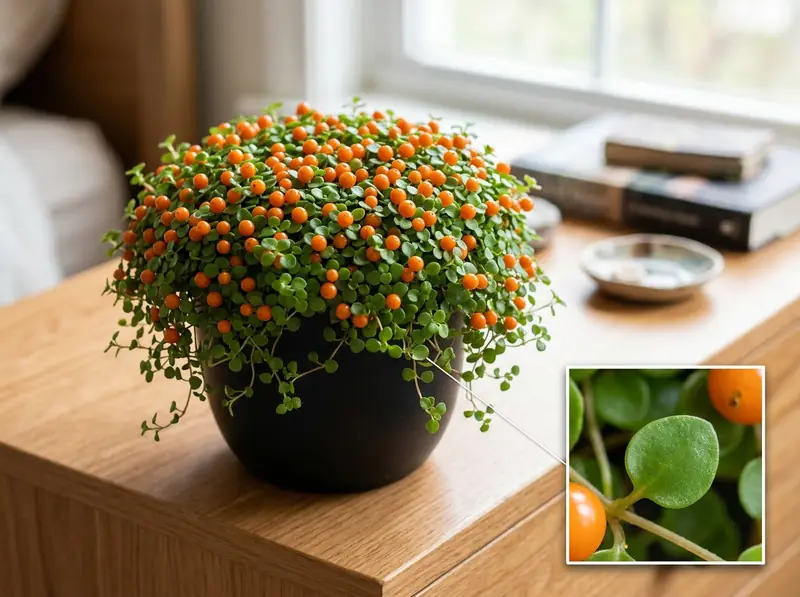
 AI-generated
Bead Plant
Nertera granadensis
Bead plant is a low, creeping mat of tiny green leaves that is grown for its bright orange berries, which last for months. It is often sold as a short-term display plant, but it can be kept for years with bright light, steady moisture and a cool winter rest. It dislikes hot, dry rooms.
Saving is free with a KinClub account, and it works here and in the KinClub app. Sign up free
Care profile
- Light
- Bright, indirect lightLow → direct sun
- Water
- Keep moistAbout every 4 days
- Difficulty
- ChallengingTricky → easy
- Coldest it tolerates
- 40°F
- Humidity
- Medium to high
- Mature size
- SmallSmall → tree-size
- Growth rate
- Moderate
- How common
- CommonRare → everywhere
- Plant family
- Rubiaceae
Pets and toxicity
Cats and dogs: not yet checked
Not yet checked against ASPCA — don't assume it's safe for pets.
No toxicity source on record for this plant yet. If a pet eats any houseplant, call your vet or an animal poison helpline.
How to care for Bead Plant
Light
Give it bright light without hot midday sun, such as an east window or a spot a few feet from a south window. Bright light helps flowering and berry colour.
Watering
Keep the soil evenly damp but never soggy, usually watering every 3-5 days when growing. Water from below or at the soil, since wet foliage and berries can rot, and let excess drain away.
Soil
Use a light, well-draining peat-based potting mix with some perlite, about one part perlite to three parts mix. It should hold moisture yet never stay waterlogged.
Feeding
Feed every 2-3 weeks in spring and summer with a balanced liquid fertiliser at half strength. Stop feeding once berries have formed and through the cool winter rest.
Repotting
Repot only when the mat fills the pot, usually in spring, into a shallow pot 1-2 inches wider. Bead plants are shallow-rooted, so a wide, shallow pot suits them better than a deep one.
Propagation
Divide the mat in spring into small clumps with roots attached and pot them up individually. Seed from ripe berries also works but is slow and less reliable.
Common problems
- Berries drop or shrivel after a few months: this is natural after the display, so rest it in a cool spot and keep it lightly moist.
- No flowers or berries: it likely missed a cool winter rest or had too little light, so give it 50-55°F and bright light.
- Brown, collapsing patches: usually overwatering or poor drainage, so cut back watering and remove rotten stems.
- Crisping foliage in a warm, dry room: move it somewhere cooler and raise humidity with a pebble tray.
Similar plants
Same light needs and difficulty.
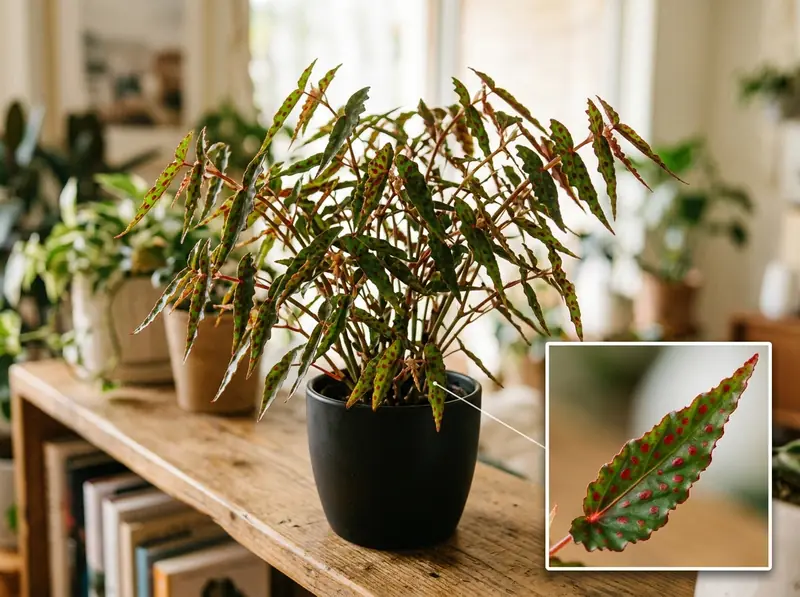 AI-generated
Amphioxus Begonia
Begonia amphioxus
- Medium to bright, indirect light
- Moderate to moist watering
Toxic to cats and dogs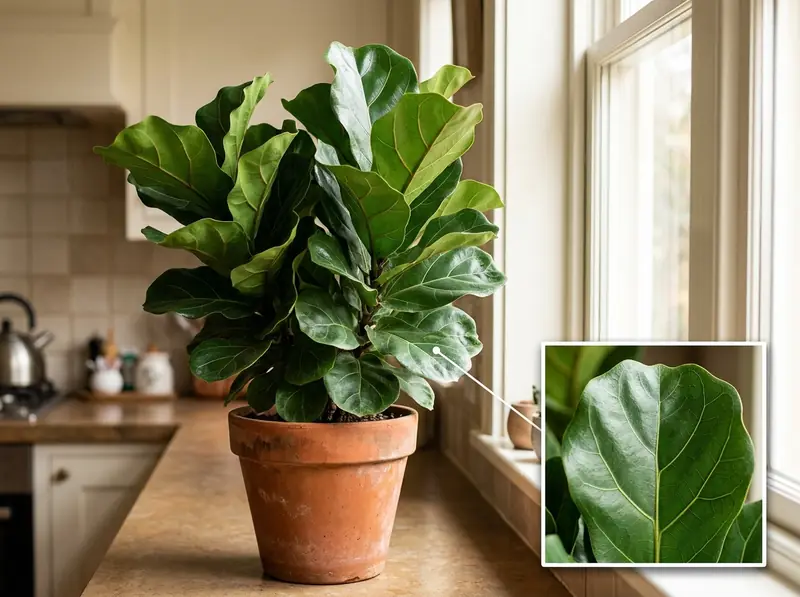 AI-generated
Bambino Fiddle-Leaf Fig
Ficus lyrata 'Bambino'
- Bright, indirect light
- Moderate watering
Toxic to cats and dogs AI-generated
 AI-generated
Calathea Orbifolia
Goeppertia orbifolia
- Medium to bright, indirect light
- Keep moist
Pets: not yet checked