
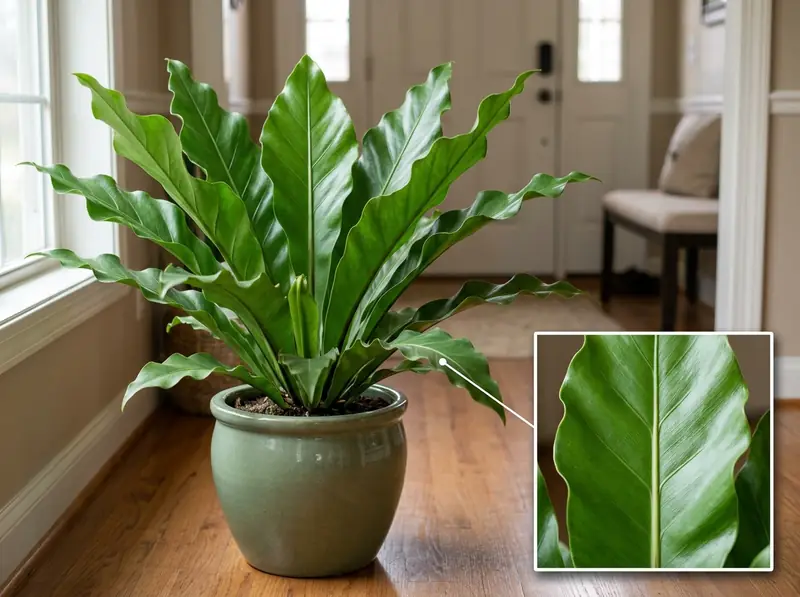
 AI-generated
Bird's Nest Anthurium (Superbum)
Anthurium superbum
Bird's nest anthurium (Superbum) forms a big rosette of long, wavy, leathery leaves that collects debris in the center like a bird's nest. It needs space, warmth, and bright light. It grows slowly and is difficult to propagate.
Saving is free with a KinClub account, and it works here and in the KinClub app. Sign up free
Care profile
- Light
- Bright, indirect lightLow → direct sun
- Water
- Moderate wateringAbout every 7 days
- Difficulty
- ModerateTricky → easy
- Coldest it tolerates
- 60°F
- Humidity
- Medium to high
- Mature size
- Medium to largeSmall → tree-size
- Growth rate
- Slow to moderate
- How common
- EnthusiastRare → everywhere
- Plant family
- Araceae
Pets and toxicity
Cats and dogs: not yet checked
Not yet checked against ASPCA — don't assume it's safe for pets.
No toxicity source on record for this plant yet. If a pet eats any houseplant, call your vet or an animal poison helpline.
How to care for Bird's Nest Anthurium (Superbum)
Light
Bright indirect light supports the long, wavy leaves. Direct hot sun scorches them, and dim rooms make leaves floppy and narrow.
Watering
Water when the top 2 inches are dry, about weekly in summer and every 10 to 14 days in winter. Water around the edge, not into the center of the rosette.
Soil
Use a very chunky, airy mix such as orchid bark, perlite, and coco coir with a little potting soil, in a pot with drainage.
Feeding
Feed every 3 to 4 weeks in spring and summer with balanced fertilizer at half strength; skip it in winter.
Repotting
Repot every 2 to 3 years in spring into a heavy pot only a little larger.
Propagation
Mostly from seed, or by dividing offsets when they form; it is slow and difficult.
Common problems
- Crown rot follows water standing in the center; water at the edges.
- Mealybugs and scale hide between leaf bases; treat with rubbing alcohol.
- Brown tips point to dry air or salt buildup; flush the pot every few months.
Similar plants
Same light needs and difficulty.
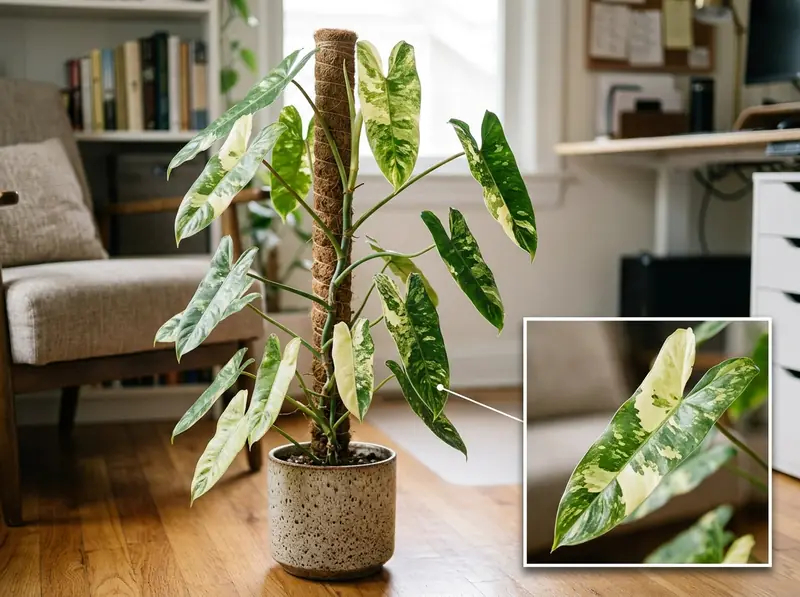 AI-generated
Ilsemanii Philodendron
Philodendron ilsemanii
- Bright, indirect light
- Moderate watering
Toxic to cats and dogs AI-generated
 AI-generated
 AI-generated