
 AI-generated
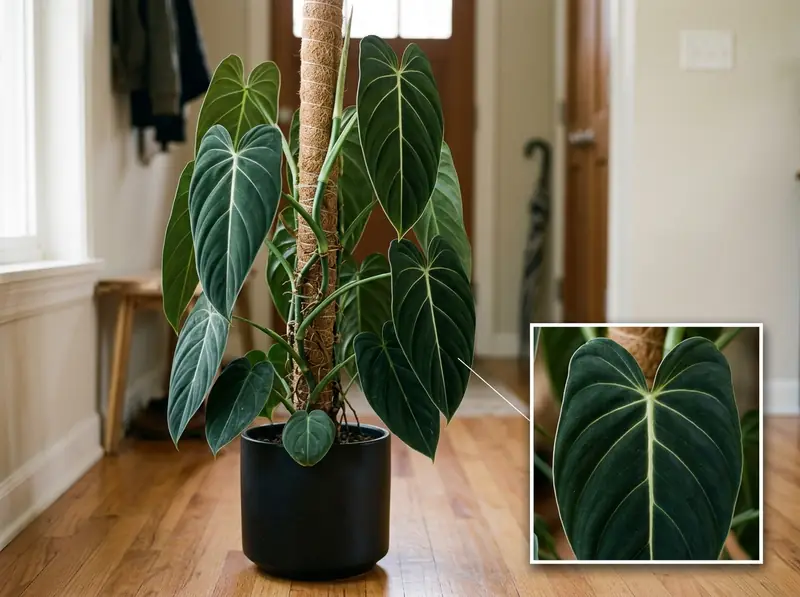
Black Gold Philodendron
Philodendron melanochrysum
Also known as Philodendron andreanum, Philodendron grandidens
Black Gold Philodendron is a climbing aroid from Colombia with velvety, dark green heart-shaped leaves and pale gold veining. It grows best in bright indirect light, with humid air and a moss pole to climb. Water once the top inch or two dries, and it will reward you with bigger leaves as it climbs.
Saving is free with a KinClub account, and it works here and in the KinClub app. Sign up free
Care profile
- Light
- Bright, indirect lightLow → direct sun
- Water
- Moderate wateringAbout every 8 days
- Difficulty
- ModerateTricky → easy
- Coldest it tolerates
- 60°F
- Humidity
- High
- Mature size
- LargeSmall → tree-size
- Growth rate
- Moderate
- How common
- CommonRare → everywhere
- Plant family
- Araceae
Pets and toxicity
Toxic to cats
Keep away from cats. Call your vet or a pet poison helpline if a cat chews it.
Toxic to dogs
Keep away from dogs. Call your vet or a pet poison helpline if a dog chews it.
Source: ASPCA toxic and non-toxic plants. If a pet eats any houseplant, call your vet or an animal poison helpline.
How to care for Black Gold Philodendron
Light
Give it bright, indirect light, such as a few feet back from an east or lightly shaded south or west window. Direct midday sun scorches the velvety leaves, while dim rooms give small leaves and long gaps between them.
Watering
Water thoroughly when the top 1-2 inches of soil feel dry, usually every 7-10 days in the growing season. Empty the saucer afterward and water less often in winter so the roots never sit in soggy soil.
Soil
Use a chunky, airy aroid mix, for example 2 parts potting soil, 1 part orchid bark and 1 part perlite. The mix should hold some moisture but drain freely.
Feeding
Feed every 2-4 weeks from spring to early fall with a balanced liquid fertilizer at half the label strength. Pause feeding in winter.
Repotting
Repot every 1-2 years in spring when roots circle the pot or grow out of the drainage holes. Move up only 1-2 inches in pot diameter and provide a moss pole at the same time.
Propagation
Take a stem cutting with at least one node and a leaf, and root it in water or moist sphagnum moss or perlite. Keep it warm and bright, and roots usually form in 3-6 weeks.
Common problems
- Brown crispy leaf edges: air is too dry or soil is drying out too much. Raise humidity with a humidifier and water more consistently.
- Yellowing lower leaves: usually overwatering or poor drainage. Let the soil dry in the top inch or two and make sure the pot drains.
- Small, leggy growth: light is too low or there is no support. Move to brighter indirect light and add a moss pole.
- Webbing or stippled, dull leaves: spider mites. Wipe leaves, rinse the plant, and treat with insecticidal soap every 5-7 days until gone.
Similar plants
Same light needs and difficulty.
 AI-generated
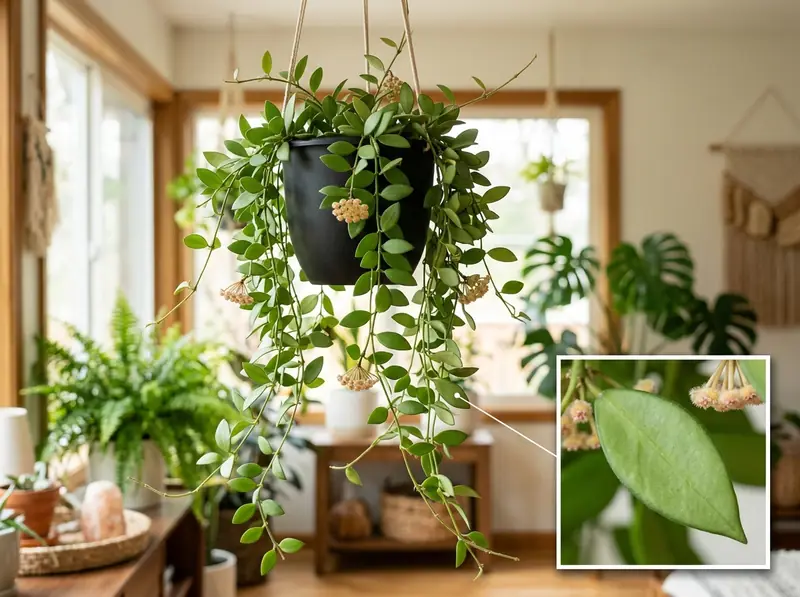
Heuschkeliana Hoya
Hoya heuschkeliana
- Bright, indirect light
- Dry to moderate watering
Pets: not yet checked AI-generated
 AI-generated
 AI-generated