
 AI-generated
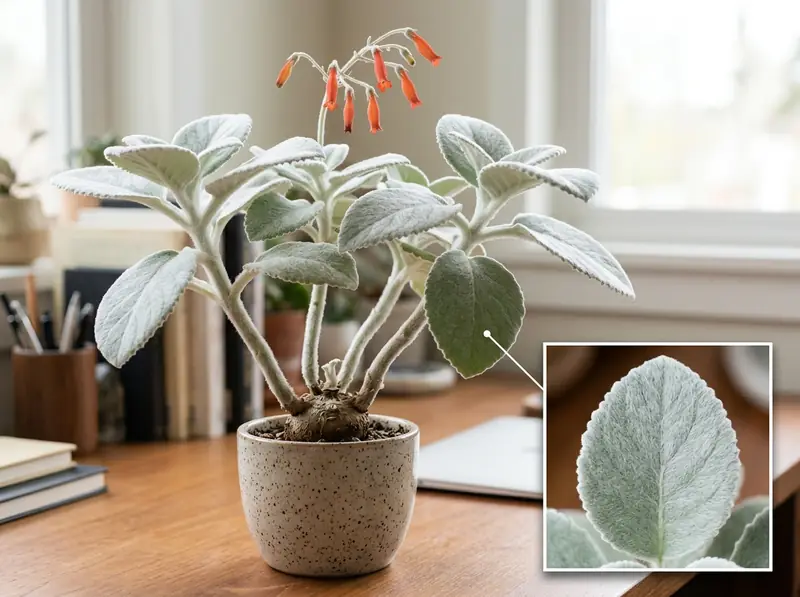
Brazilian Edelweiss
Sinningia leucotricha
Brazilian Edelweiss is a small Sinningia grown for its thick, silvery, velvety leaves and arching stems, with orange-red bell-shaped flowers in summer. It likes bright, indirect light and a gritty, fast-draining mix. Keep water off the leaves, and expect a dormant rest in winter when it may lose its foliage.
Saving is free with a KinClub account, and it works here and in the KinClub app. Sign up free
Care profile
- Light
- Bright, indirect lightLow → direct sun
- Water
- Dry to moderate wateringAbout every 10 days
- Difficulty
- ModerateTricky → easy
- Coldest it tolerates
- 50°F
- Humidity
- Medium
- Mature size
- SmallSmall → tree-size
- Growth rate
- Slow to moderate
- How common
- EnthusiastRare → everywhere
- Plant family
- Gesneriaceae
Pets and toxicity
Cats and dogs: not yet checked
Not yet checked against ASPCA — don't assume it's safe for pets.
No toxicity source on record for this plant yet. If a pet eats any houseplant, call your vet or an animal poison helpline.
How to care for Brazilian Edelweiss
Light
Give bright, indirect light, such as a spot near an east window or a few feet back from a south or west window. Protect it from hot midday sun, which can scorch the leaves.
Watering
Water when the top inch of soil is dry, using lukewarm water applied to the soil or from the bottom. Keep water off the leaves, and let the pot drain completely.
Soil
Use a fast-draining mix, such as African violet mix with about one-third perlite or pumice added. The pot must have drainage holes.
Feeding
Feed every 2 to 4 weeks in spring and summer with a diluted high-phosphorus or balanced houseplant fertilizer at quarter to half strength. Stop feeding in fall and winter.
Repotting
Repot every 1 to 2 years in spring into a pot only slightly larger, ideally a shallow one. Plant the tuber just below or at the soil surface.
Propagation
Take leaf or stem cuttings in spring or summer and root them in a moist, gritty mix with warmth and humidity. Rooting can be slow and leaf cuttings may rot if kept too wet.
Common problems
- Brown or rotting leaves: water has sat on the foliage or the soil is too wet. Water from below and let the soil dry more between waterings.
- Leggy, stretched growth: light is too low. Move it to a brighter spot and rotate the pot regularly.
- Plant dies back in fall and winter: this is normal dormancy. Stop watering and feeding, and keep the tuber in dry soil until new growth appears in spring.
- Mealybugs in the leaf hairs: dab with rubbing alcohol on a cotton swab, and repeat weekly until they are gone.
Similar plants
Same light needs and difficulty.
 AI-generated
 AI-generated
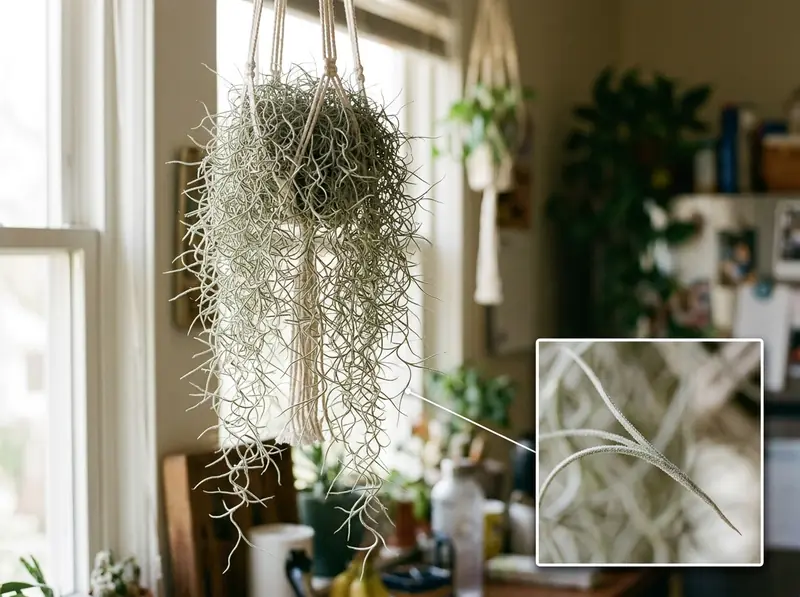
Spanish Moss
Tillandsia usneoides
- Bright, indirect light
- Moderate to moist watering
Pets: not yet checked AI-generated
 AI-generated