
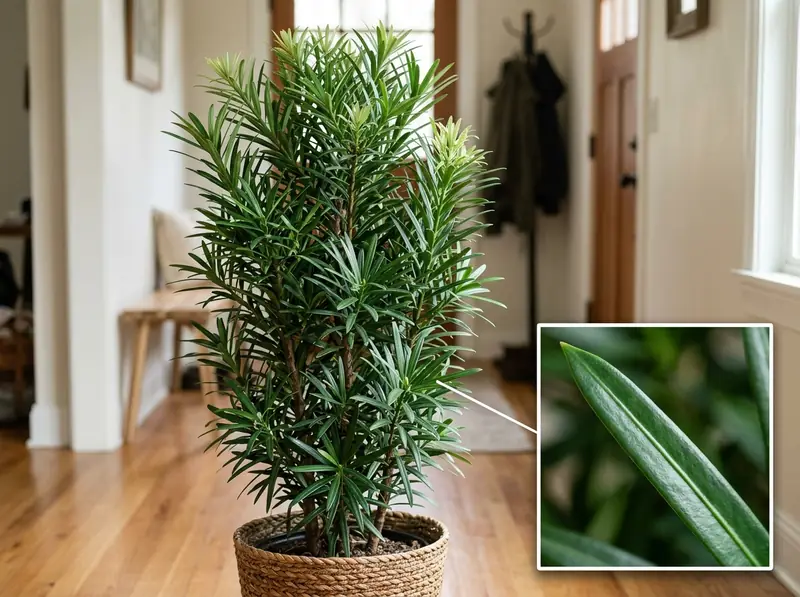
 AI-generated
Buddhist Pine
Podocarpus macrophyllus
A slow-growing, upright evergreen with glossy dark needle-like leaves that suits a bright hallway or sunny corner. It can reach several feet indoors with patience and prefers cooler rooms.
Saving is free with a KinClub account, and it works here and in the KinClub app. Sign up free
Care profile
- Light
- Bright, indirect lightLow → direct sun
- Water
- Moderate wateringAbout every 8 days
- Difficulty
- Easy to moderateTricky → easy
- Coldest it tolerates
- 30°F
- Humidity
- Medium
- Mature size
- Large to tree-sizeSmall → tree-size
- Growth rate
- Slow
- How common
- CommonRare → everywhere
- Plant family
- Podocarpaceae
Pets and toxicity
Cats and dogs: not yet checked
Not yet checked against ASPCA — don't assume it's safe for pets.
No toxicity source on record for this plant yet. If a pet eats any houseplant, call your vet or an animal poison helpline.
How to care for Buddhist Pine
Light
Prefers bright light with a little gentle direct sun in the morning, such as an east window. It tolerates medium light but grows thin there. Avoid hot afternoon sun.
Watering
Water when the top inch or two of soil is dry, about every 8 days in the growing season, and less in winter. Do not let the root ball dry out completely.
Soil
Use a well-draining, slightly acidic potting mix with some perlite. A pot with drainage holes is a must.
Feeding
Feed every 6-8 weeks in spring and summer with a balanced fertilizer for acid-loving plants or evergreens. Stop in winter.
Repotting
Repot every 2-3 years in spring into a pot only 1-2 inches wider. It is slow-growing and dislikes root disturbance.
Propagation
Semi-hardwood cuttings in late summer root slowly in a gritty mix with rooting hormone and need patience.
Common problems
- Brown needle tips: dry air or irregular watering. Keep the soil evenly damp and mist or run a humidifier in winter.
- Scale insects on stems: look for small brown bumps and sticky residue. Scrape off or wipe with alcohol and follow with horticultural oil.
- Yellowing needles from overwatering: let the soil dry slightly and check that the pot drains.
Similar plants
Same light needs and difficulty.
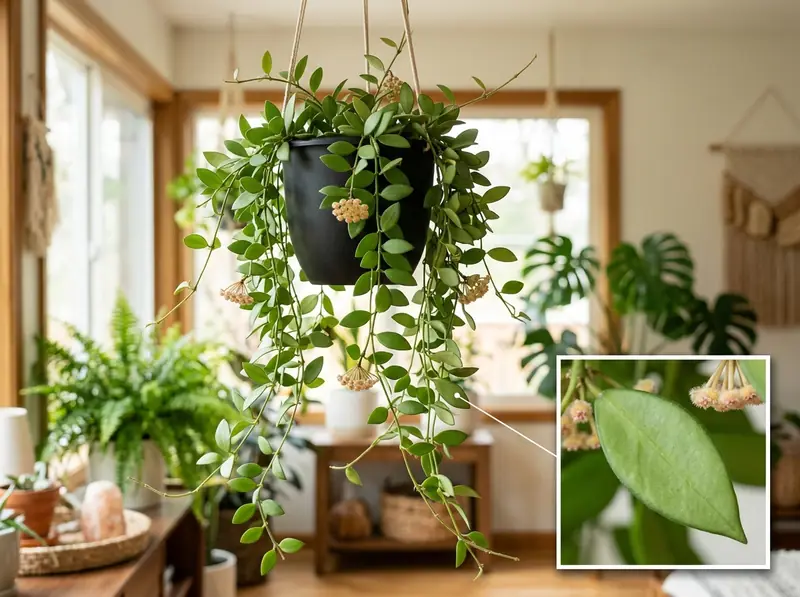 AI-generated
Heuschkeliana Hoya
Hoya heuschkeliana
- Bright, indirect light
- Dry to moderate watering
Pets: not yet checked AI-generated
 AI-generated
 AI-generated