
 AI-generated
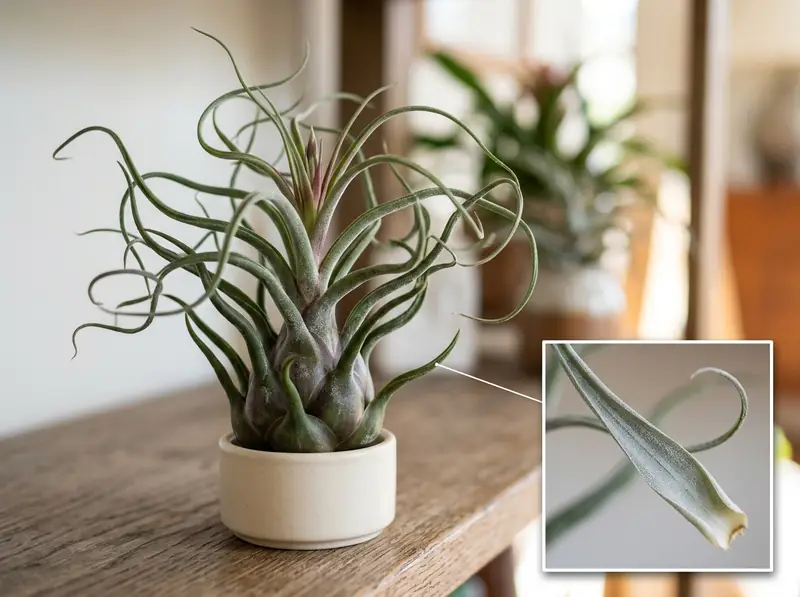
Bulbosa Air Plant
Tillandsia bulbosa
Bulbosa is a small, slow-growing air plant with a swollen base and twisting, curly green leaves. It needs no soil, just bright indirect light, a weekly soak, and good airflow so it dries quickly. It may blush red at the center before it flowers, then produce pups.
Saving is free with a KinClub account, and it works here and in the KinClub app. Sign up free
Care profile
- Light
- Bright, indirect lightLow → direct sun
- Water
- Dry to moderate wateringAbout every 7 days
- Difficulty
- Easy to moderateTricky → easy
- Coldest it tolerates
- 50°F
- Humidity
- Medium to high
- Mature size
- SmallSmall → tree-size
- Growth rate
- Slow
- How common
- CommonRare → everywhere
- Plant family
- Bromeliaceae
Pets and toxicity
Cats and dogs: not yet checked
Not yet checked against ASPCA — don't assume it's safe for pets.
No toxicity source on record for this plant yet. If a pet eats any houseplant, call your vet or an animal poison helpline.
How to care for Bulbosa Air Plant
Light
Give bright, indirect light, such as a spot within 3 feet of an east or south window. Morning sun is fine, but shade it from hot midday sun through glass.
Watering
Soak in room-temperature water for 15-30 minutes about once a week, or mist thoroughly 2-3 times a week in dry air. Shake out water from the base and let it dry within 3-4 hours.
Soil
It needs no soil, as it is an epiphyte. Mount it on wood, cork, or a shell, or set it loose on a shelf, and keep it out of wet potting mix.
Feeding
Once a month in the growing season, add a bromeliad or air plant fertilizer at quarter strength to the soaking water. Skip feeding in winter.
Repotting
It doesn't need repotting. Re-mount it only when a cluster outgrows its holder, using a non-metal, non-treated base and fastening it loosely with fishing line or a dab of adhesive at the base only.
Propagation
Separate pups when they are about one-third to one-half the size of the parent, twisting or cutting them off gently. Mature clumps can also be divided into several sections.
Common problems
- Soft, blackened base from rot: remove the plant from water, dry it fully, and soak less often. Advanced rot is usually fatal.
- Brown, crispy leaf tips: the plant is too dry, so lengthen the soak to 30 minutes and mist between soaks.
- Fuzzy white cottony spots: these are mealybugs, so dab them with rubbing alcohol on a cotton swab and repeat weekly.
- No pups or blooms: give brighter light and monthly feeding, as mature plants usually bloom and offset.
Similar plants
Same light needs and difficulty.
 AI-generated
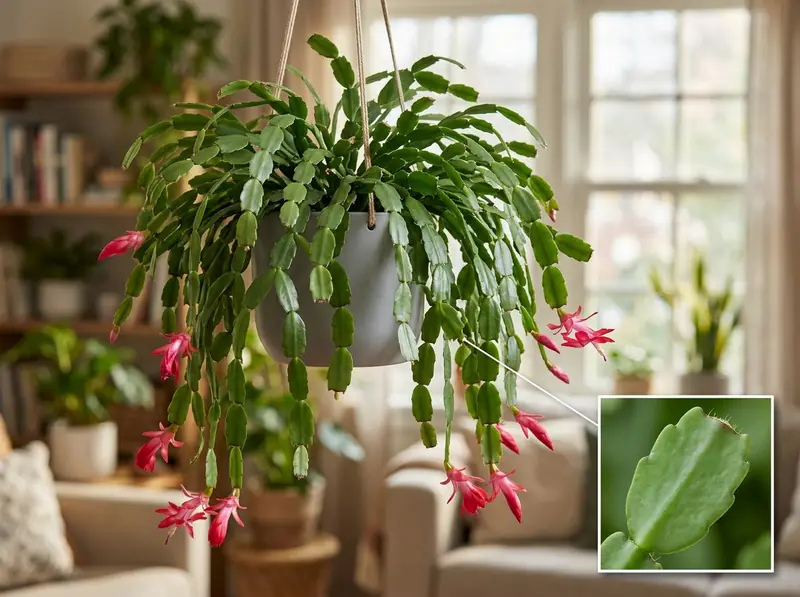
Spring Cactus
Schlumbergera russelliana
- Bright, indirect light
- Moderate watering
Non-toxic to cats and dogs AI-generated
 AI-generated
Chinese Money Plant
Pilea peperomioides
- Bright, indirect light
- Dry to moderate watering
Pets: not yet checked AI-generated
Christmas Cactus
Schlumbergera × buckleyi
- Bright, indirect light
- Moderate watering
Pets: not yet checked