
 AI-generated
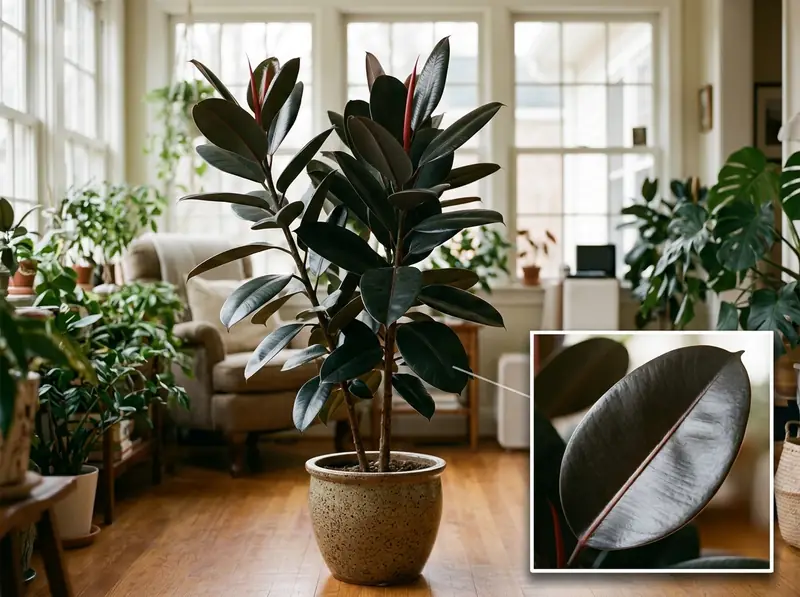
Burgundy Rubber Plant
Ficus elastica 'Burgundy'
Burgundy rubber plant is a Ficus elastica cultivar with thick, glossy, deep maroon-black leaves and a red sheath on each new leaf. It is as easy as the regular rubber plant, and it grows into a tall floor plant over time. Bright, indirect light keeps the dark color rich, and it is best to let the soil dry a little between waterings.
Saving is free with a KinClub account, and it works here and in the KinClub app. Sign up free
Care profile
- Light
- Bright, indirect lightLow → direct sun
- Water
- Moderate wateringAbout every 10 days
- Difficulty
- EasyTricky → easy
- Coldest it tolerates
- 55°F
- Humidity
- Medium
- Mature size
- Tree-sizeSmall → tree-size
- Growth rate
- Moderate
- How common
- Very commonRare → everywhere
- Plant family
- Moraceae
Pets and toxicity
Toxic to cats
Keep away from cats. Call your vet or a pet poison helpline if a cat chews it.
Toxic to dogs
Keep away from dogs. Call your vet or a pet poison helpline if a dog chews it.
Source: ASPCA toxic and non-toxic plants. If a pet eats any houseplant, call your vet or an animal poison helpline.
How to care for Burgundy Rubber Plant
Light
Give it bright, indirect light, such as a few feet from an east or south window or right beside an east one. It tolerates a little gentle direct morning sun but can scorch in strong afternoon sun.
Watering
Water thoroughly when the top 2 inches of soil are dry, until water runs out of the drainage holes, then empty the saucer. That is roughly every 7-14 days in summer and every 2-3 weeks in winter.
Soil
Use a chunky, well-draining potting mix, such as standard houseplant mix with about one-quarter perlite or bark added. The pot must have drainage holes.
Feeding
Feed every 4-6 weeks from spring through summer with a balanced liquid houseplant fertilizer at half the label strength. Stop in fall and winter.
Repotting
Repot every 2 years or when roots circle the pot or poke out of the drainage holes, moving up only 1-2 inches in pot diameter. Spring is the best time.
Propagation
Take a 6-inch tip cutting with at least one leaf, let the milky sap dry, and dip in rooting hormone. Plant in moist mix in warmth and bright light. Air layering works more reliably than stem cuttings, which can be slow to root.
Common problems
- Lower leaves dropping: usually overwatering, cold drafts, or a move to a new spot; check soil moisture and keep the plant away from vents and doors.
- Brown, crispy leaf edges: dry soil or very dry air; water more consistently and keep away from heaters.
- Leggy growth with few leaves: too little light; move to a brighter spot and prune the top to encourage branching.
- Sticky leaves or fine webbing: scale or spider mites; wipe the leaves, then treat with insecticidal soap or neem oil weekly for several weeks.
Similar plants
Same light needs and difficulty.
 AI-generated
 AI-generated
 AI-generated
Chinese Money Plant
Pilea peperomioides
- Bright, indirect light
- Dry to moderate watering
Pets: not yet checked AI-generated
Christmas Cactus
Schlumbergera × buckleyi
- Bright, indirect light
- Moderate watering
Pets: not yet checked