
 AI-generated
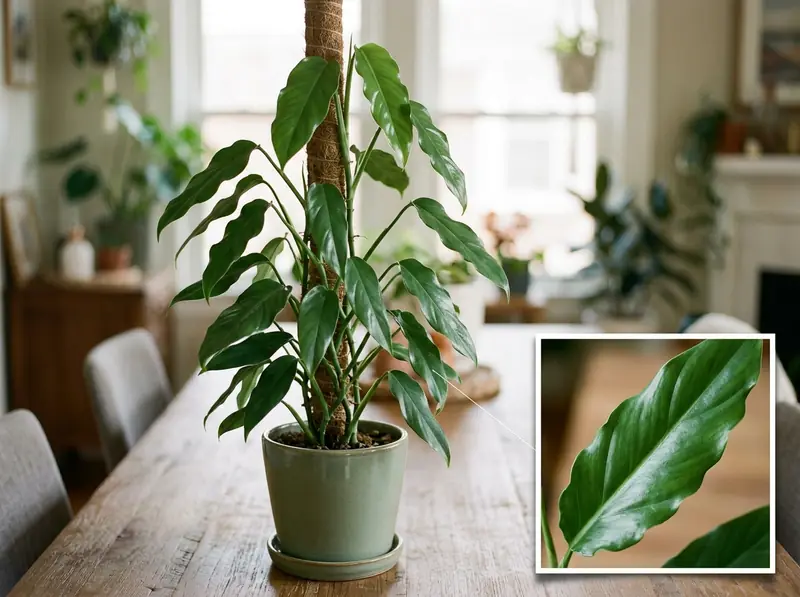
Burle Marx Monstera
Monstera burle-marxii
Burle Marx Monstera is a compact, climbing aroid with narrow, glossy, slightly wavy leaves. It is easy to grow in bright, indirect light, and it grows best with a moss pole to climb. Water when the top inch or two of soil is dry and keep it in an ordinary warm room.
Saving is free with a KinClub account, and it works here and in the KinClub app. Sign up free
Care profile
- Light
- Bright, indirect lightLow → direct sun
- Water
- Moderate wateringAbout every 7 days
- Difficulty
- EasyTricky → easy
- Coldest it tolerates
- 55°F
- Humidity
- Medium to high
- Mature size
- MediumSmall → tree-size
- Growth rate
- Moderate to fast
- How common
- EnthusiastRare → everywhere
- Plant family
- Araceae
Pets and toxicity
Cats and dogs: not yet checked
Not yet checked against ASPCA — don't assume it's safe for pets.
No toxicity source on record for this plant yet. If a pet eats any houseplant, call your vet or an animal poison helpline.
How to care for Burle Marx Monstera
Light
Give it bright, indirect light, such as a spot a few feet from an east or south window. Avoid hours of direct midday sun, which can scorch the leaves.
Watering
Water thoroughly when the top 1–2 inches of soil are dry, usually about once a week in the growing season. Empty the saucer afterward and water less often in winter.
Soil
Use a chunky, well-draining aroid mix, such as potting soil blended with about one third orchid bark and perlite. The mix should stay lightly moist but never soggy.
Feeding
Feed every 4 weeks in spring and summer with a balanced liquid houseplant fertilizer at half the labeled strength. Stop or reduce feeding in winter.
Repotting
Repot every 1–2 years in spring when roots fill the pot, moving up only 1–2 inches in diameter. Add a moss pole or trellis at the same time.
Propagation
Take a stem cutting with at least one node and a leaf, and place it in water or damp moss. Keep it warm and bright, and it should root in 3–6 weeks.
Common problems
- Yellow leaves usually mean overwatering: let the top inch or two of soil dry out and check that the pot drains freely.
- Brown crispy edges point to dry air or underwatering: water more consistently and keep the plant away from heaters and vents.
- Small, sparse leaves suggest low light or no support: move to brighter light and add a moss pole.
- Fine webbing or stippled leaves signal spider mites: rinse the leaves and treat with insecticidal soap every 7 days for several weeks.
Similar plants
Same light needs and difficulty.
 AI-generated
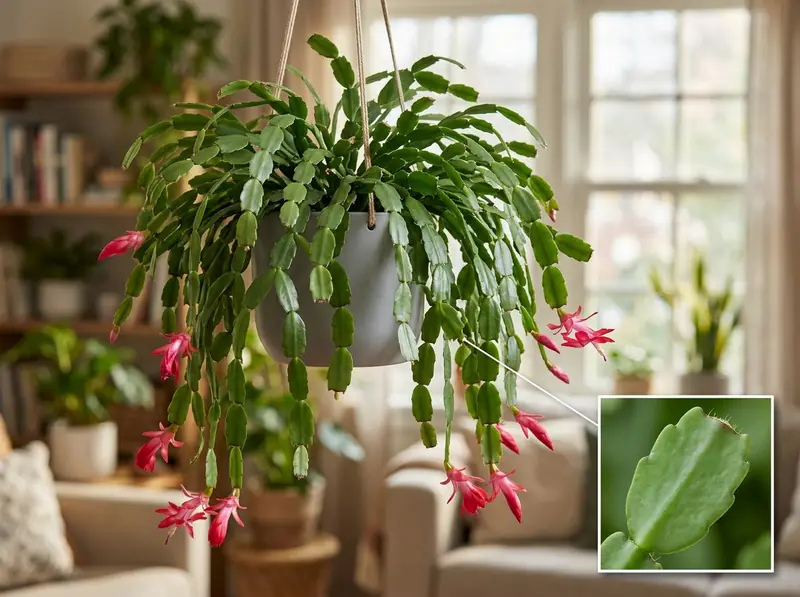
Spring Cactus
Schlumbergera russelliana
- Bright, indirect light
- Moderate watering
Non-toxic to cats and dogs AI-generated
 AI-generated
Chinese Money Plant
Pilea peperomioides
- Bright, indirect light
- Dry to moderate watering
Pets: not yet checked AI-generated
Christmas Cactus
Schlumbergera × buckleyi
- Bright, indirect light
- Moderate watering
Pets: not yet checked