
 AI-generated
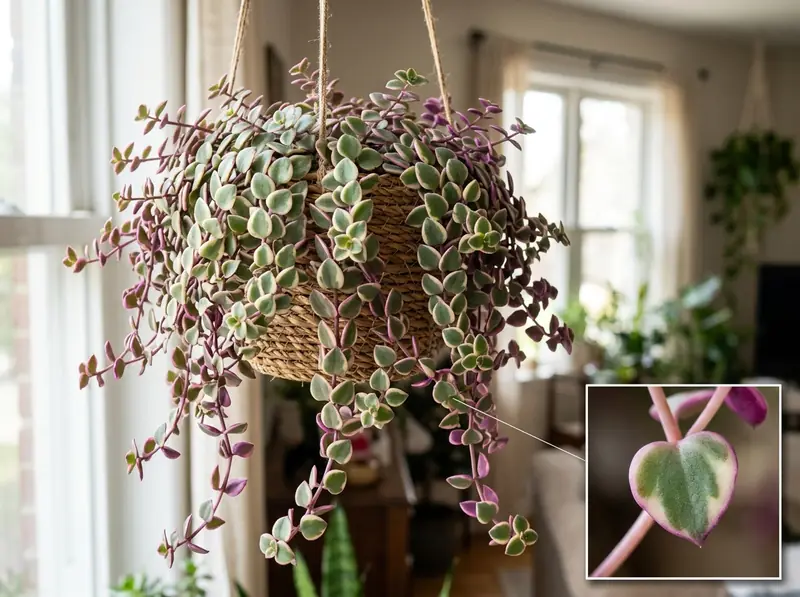
Calico Kitten
Crassula pellucida
Calico Kitten is a small, trailing succulent with heart-shaped green leaves that are often marked with purple-pink undersides and cream edges. It suits a sunny windowsill or a hanging basket and is easy to grow if you let the soil dry between waterings. Stem cuttings root readily, so it is simple to share.
Saving is free with a KinClub account, and it works here and in the KinClub app. Sign up free
Care profile
- Light
- Bright, indirect lightLow → direct sun
- Water
- Let it dry outAbout every 14 days
- Difficulty
- EasyTricky → easy
- Coldest it tolerates
- 50°F
- Humidity
- Low
- Mature size
- SmallSmall → tree-size
- Growth rate
- Moderate
- How common
- CommonRare → everywhere
- Plant family
- Crassulaceae
Pets and toxicity
Cats and dogs: not yet checked
Not yet checked against ASPCA — don't assume it's safe for pets.
No toxicity source on record for this plant yet. If a pet eats any houseplant, call your vet or an animal poison helpline.
How to care for Calico Kitten
Light
Give it bright light, such as an east or south window with a few hours of gentle morning sun. Shield it from strong midday summer sun, which can scorch the leaves.
Watering
Water thoroughly, then let the soil dry out almost completely before watering again, about every 10 to 14 days in summer. Water less often in winter, roughly every 3 to 4 weeks.
Soil
Use a gritty cactus or succulent mix, or regular potting mix blended with about one-third perlite or coarse sand. Use a pot with drainage holes.
Feeding
Feed with a balanced fertilizer diluted to half strength once a month in spring and summer. Do not feed in autumn and winter.
Repotting
Repot every 2 to 3 years in spring, or when the stems crowd the pot, into a container only 1 to 2 inches wider. A shallow pot or hanging basket suits its trailing habit.
Propagation
Snip a stem section or a few leaves, let the cut end dry for a day or two, then lay it on or press it into barely damp gritty mix. Roots usually form in 2 to 4 weeks.
Common problems
- Stretched, leggy stems with few leaves: move to a brighter spot and trim back to encourage bushier growth.
- Mushy, translucent stems from overwatering: cut away the rot, let cuttings dry, and replant in dry gritty mix.
- Mealybugs, which look like small white cotton tufts in the leaf joints: dab with cotton swabs dipped in rubbing alcohol and repeat weekly until gone.
- Shriveled, wrinkled leaves: soak the pot thoroughly and then let it drain, and keep to a regular schedule.
Similar plants
Same light needs and difficulty.
 AI-generated
 AI-generated
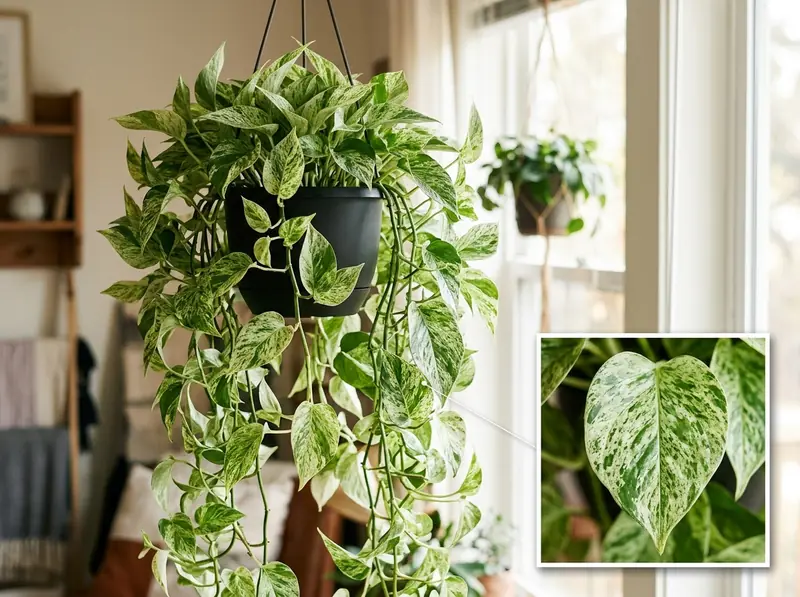
Marble Queen Pothos
Epipremnum aureum 'Marble Queen'
- Bright, indirect light
- Moderate watering
Toxic to cats and dogs AI-generated
Chinese Money Plant
Pilea peperomioides
- Bright, indirect light
- Dry to moderate watering
Pets: not yet checked AI-generated
Christmas Cactus
Schlumbergera × buckleyi
- Bright, indirect light
- Moderate watering
Pets: not yet checked