
 AI-generated
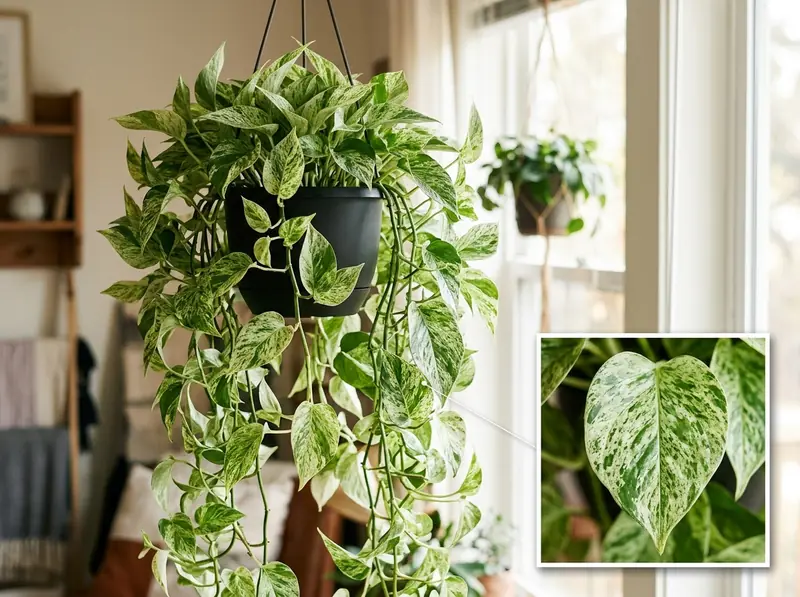
Marble Queen Pothos
Epipremnum aureum 'Marble Queen'
Marble Queen is a pothos with creamy white and green marbled leaves on trailing vines, good for shelves, hanging baskets or a trellis. It needs brighter indirect light than green pothos to keep its variegation and grows a bit slower, but it is still forgiving. Let the top couple of inches of soil dry between waterings.
Saving is free with a KinClub account, and it works here and in the KinClub app. Sign up free
Care profile
- Light
- Bright, indirect lightLow → direct sun
- Water
- Moderate wateringAbout every 10 days
- Difficulty
- EasyTricky → easy
- Coldest it tolerates
- 55°F
- Humidity
- Low to medium
- Mature size
- LargeSmall → tree-size
- Growth rate
- Moderate
- How common
- Very commonRare → everywhere
- Plant family
- Araceae
Pets and toxicity
Toxic to cats
Keep away from cats. Call your vet or a pet poison helpline if a cat chews it.
Toxic to dogs
Keep away from dogs. Call your vet or a pet poison helpline if a dog chews it.
Source: ASPCA toxic and non-toxic plants. If a pet eats any houseplant, call your vet or an animal poison helpline.
How to care for Marble Queen Pothos
Light
Grows best in bright indirect light, such as a few feet from an east window or near a bright north window. Its heavy white and cream marbling needs more light than plain green pothos to stay variegated; low light makes the leaves greener, and direct midday sun can scorch the pale areas.
Watering
Water when the top 1 to 2 inches of soil feel dry, usually every 7 to 14 days in the growing season. Water until it drains from the bottom, then empty the saucer; allow longer between waterings in winter.
Soil
Use a well-draining standard potting mix, ideally with a handful of perlite or bark added for drainage. The pot must have drainage holes.
Feeding
Feed with a balanced liquid houseplant fertilizer at half strength about once a month from spring through summer. Skip feeding in fall and winter.
Repotting
Repot every 2 to 3 years, or when roots circle the pot or poke out of the drainage holes. Move up only 1 to 2 inches in pot diameter, best done in spring.
Propagation
Cut a stem just below a node with 3 to 4 leaves, and put it in water or moist potting mix. Roots usually form in 2 to 4 weeks, sometimes a little slower than green pothos; plant water-rooted cuttings in soil once roots are 1 to 2 inches long.
Common problems
- Yellow leaves, often with soggy soil, usually mean overwatering: let the soil dry more between waterings and check that the pot drains.
- Brown, crispy leaf edges point to underwatering or very dry air: water more regularly and keep the plant away from heaters and vents.
- Long, bare stems with small leaves mean too little light: move it to a brighter spot and trim the stems back to encourage bushier growth.
- Leaves turning mostly green and losing the white marbling is caused by low light: give it brighter indirect light, and trim off any fully green stems.
- Brown, dry patches on the white parts of leaves suggest sun scorch: move the plant out of direct sun.
- Black, mushy stems at the soil line suggest root rot: remove the plant, cut away rotted roots, and repot in fresh dry mix, or take healthy cuttings.
Similar plants
Same light needs and difficulty.
 AI-generated
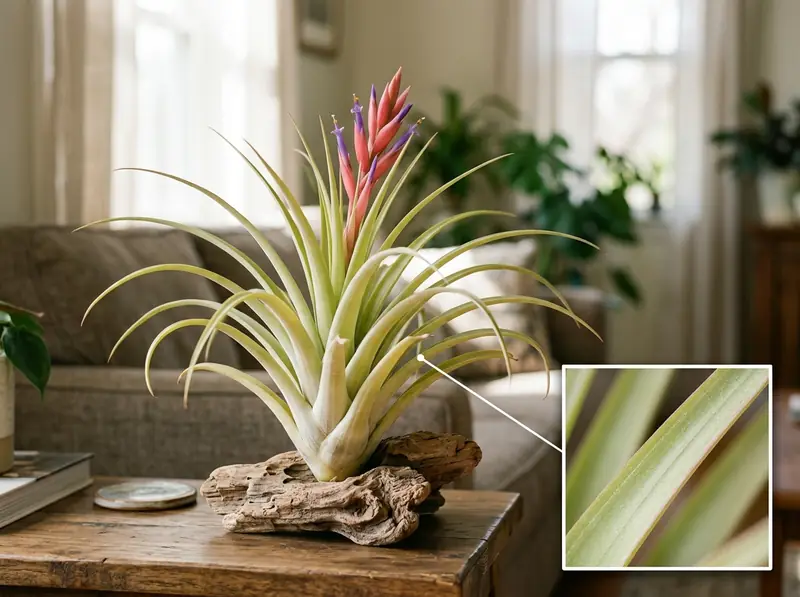
Leiboldiana Air Plant
Tillandsia leiboldiana
- Bright, indirect light
- Let it dry out
Pets: not yet checked AI-generated
 AI-generated
Chinese Money Plant
Pilea peperomioides
- Bright, indirect light
- Dry to moderate watering
Pets: not yet checked AI-generated
Christmas Cactus
Schlumbergera × buckleyi
- Bright, indirect light
- Moderate watering
Pets: not yet checked