
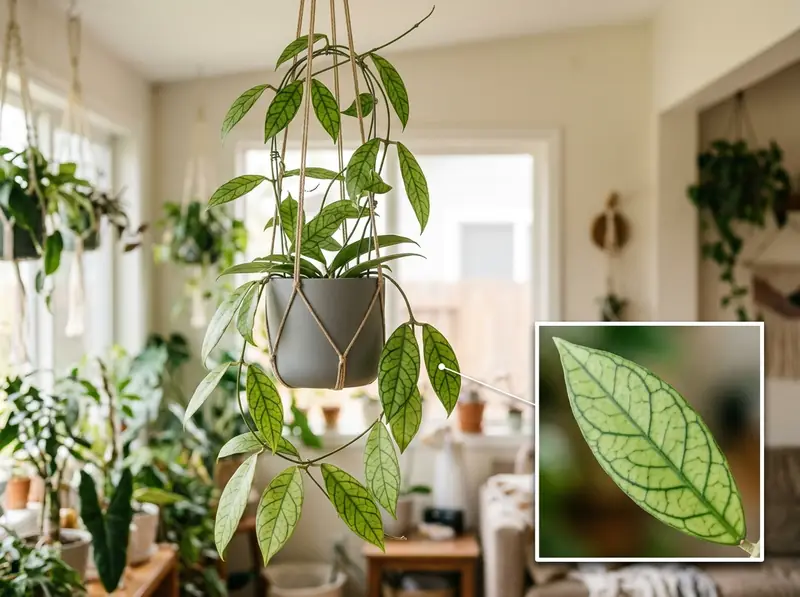
 AI-generated
Callistophylla Hoya
Hoya callistophylla
Hoya callistophylla is a Borneo native with large leaves marked by dark green veins and clusters of fragrant flowers. It likes warmth, humidity, and steady watering more than the thick-leaved hoyas do.
Saving is free with a KinClub account, and it works here and in the KinClub app. Sign up free
Care profile
- Light
- Bright, indirect lightLow → direct sun
- Water
- Moderate wateringAbout every 8 days
- Difficulty
- ModerateTricky → easy
- Coldest it tolerates
- 60°F
- Humidity
- High
- Mature size
- MediumSmall → tree-size
- Growth rate
- Slow to moderate
- How common
- EnthusiastRare → everywhere
- Plant family
- Apocynaceae
Pets and toxicity
Cats and dogs: not yet checked
Not yet checked against ASPCA — don't assume it's safe for pets.
No toxicity source on record for this plant yet. If a pet eats any houseplant, call your vet or an animal poison helpline.
How to care for Callistophylla Hoya
Light
Bright indirect light shows off its dark-veined leaves best, such as an east window or a few feet from a south one. Direct afternoon sun scorches the thin leaves.
Watering
Water when the top inch of soil is dry, about every 8 days in the growing season. Do not let the pot dry out completely, since this hoya comes from humid forest and wilts faster than thick-leaved kinds.
Soil
Use a loose, airy mix of orchid bark, perlite, and some potting soil. A pot with drainage holes is essential.
Feeding
Feed every 3-4 weeks in spring and summer with a half-strength balanced fertilizer. Skip in winter.
Repotting
Repot every 2 years in spring, going up one size. It prefers a snug pot.
Propagation
Root 2-3 node stem cuttings in water or moist perlite with warmth and humidity. Rooting is steady if kept warm.
Common problems
- Yellow, soft leaves and wrinkled or mushy stems mean overwatering or a dense mix: let the pot dry more and repot into chunky bark mix.
- Wrinkled, limp leaves mean the plant is thirsty: give a deep soak, then let it drain.
- No flowers usually means not enough light: move to brighter light, and do not cut off the old flower stalks (peduncles), since they rebloom.
- Dry air and cold drafts curl and brown the leaves: keep it away from vents and raise humidity.
Similar plants
Same light needs and difficulty.
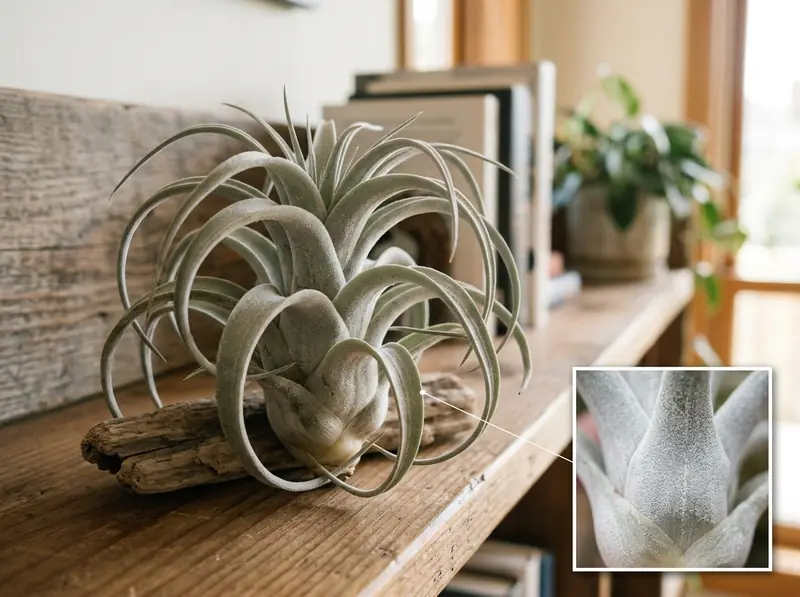 AI-generated
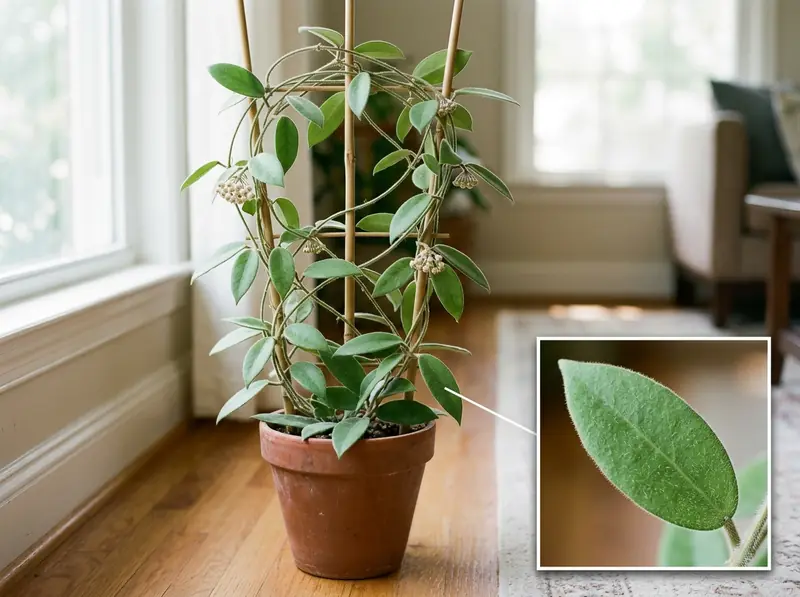 AI-generated
 AI-generated
 AI-generated