
 AI-generated
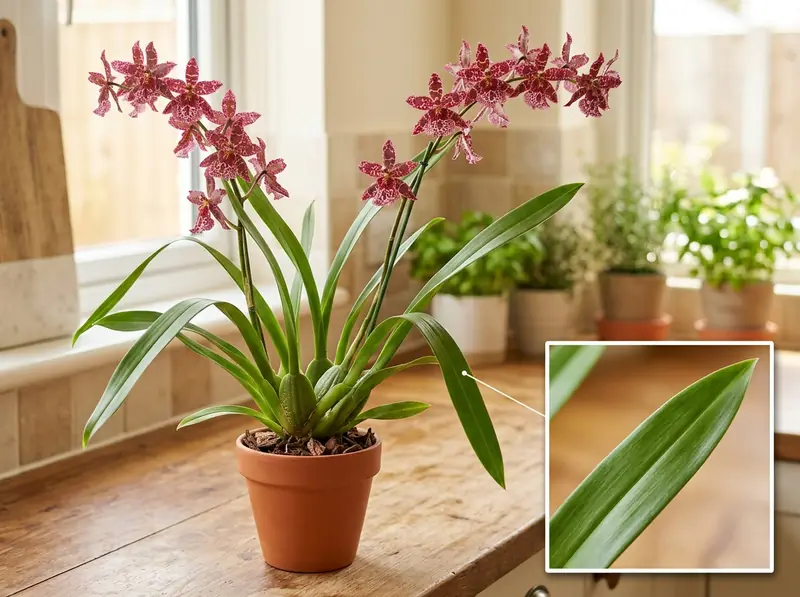
Cambria Orchid
Cambria hybrids
Cambria is a group of colorful intergeneric orchid hybrids that bloom with flat, star-shaped flowers, often spotted or barred, on arching spikes. They prefer cooler rooms and bright light, and they flower reliably for owners who give them cool nights.
Saving is free with a KinClub account, and it works here and in the KinClub app. Sign up free
Care profile
- Light
- Bright, indirect lightLow → direct sun
- Water
- Moderate wateringAbout every 7 days
- Difficulty
- ModerateTricky → easy
- Coldest it tolerates
- 50°F
- Humidity
- Medium to high
- Mature size
- MediumSmall → tree-size
- Growth rate
- Slow to moderate
- How common
- EnthusiastRare → everywhere
Pets and toxicity
Cats and dogs: not yet checked
Not yet checked against ASPCA — don't assume it's safe for pets.
No toxicity source on record for this plant yet. If a pet eats any houseplant, call your vet or an animal poison helpline.
How to care for Cambria Orchid
Light
Bright indirect light from an east or lightly shaded south window, with no hot midday sun. Leaves should be a light, bright green; dark green means it needs more light.
Watering
Water thoroughly when the bark mix is nearly dry, about weekly, and let it drain fully. Water less in winter. Use low-mineral water if your tap water is hard.
Soil
Use a fine-grade orchid bark mix with perlite or charcoal that drains quickly and dries within a few days.
Feeding
Feed with a half-strength orchid fertilizer every 2 weeks while it grows, and monthly or less in winter. Flush the pot with plain water monthly.
Repotting
Repot every 2 years after flowering into fresh bark when new roots appear, in a pot just large enough for the pseudobulbs.
Propagation
Divide an overgrown clump after flowering, leaving at least three pseudobulbs per division, and repot each in fresh orchid mix.
Common problems
- No flowers: usually too little light or no cool nights. Give brighter light and cooler fall nights of 55 to 60 degrees F.
- Pleated, shriveled leaves: roots are damaged or too dry. Check roots, trim dead ones and repot into fresh mix.
- Sticky or cottony spots on leaves: scale or mealybugs. Wipe off with alcohol on a cotton swab.
Similar plants
Same light needs and difficulty.
 AI-generated
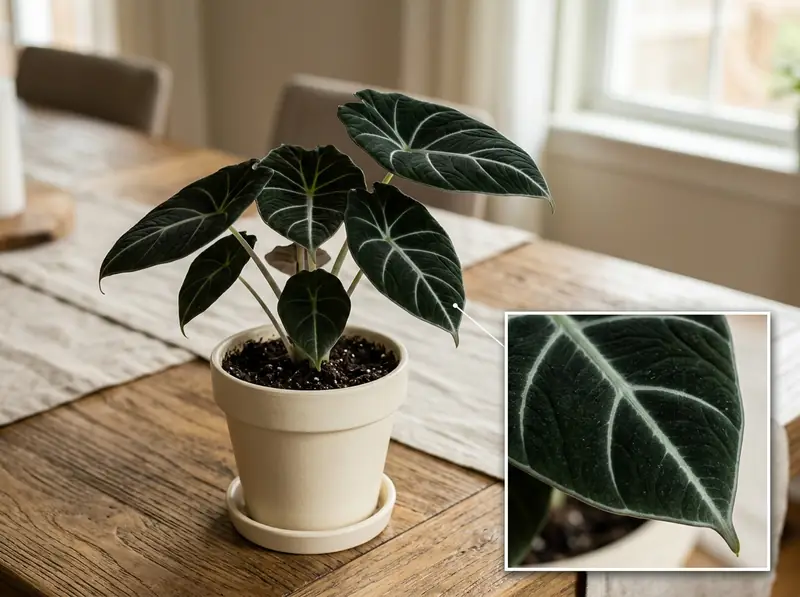
Black Velvet Alocasia
Alocasia reginula 'Black Velvet'
- Bright, indirect light
- Moderate watering
Toxic to cats and dogs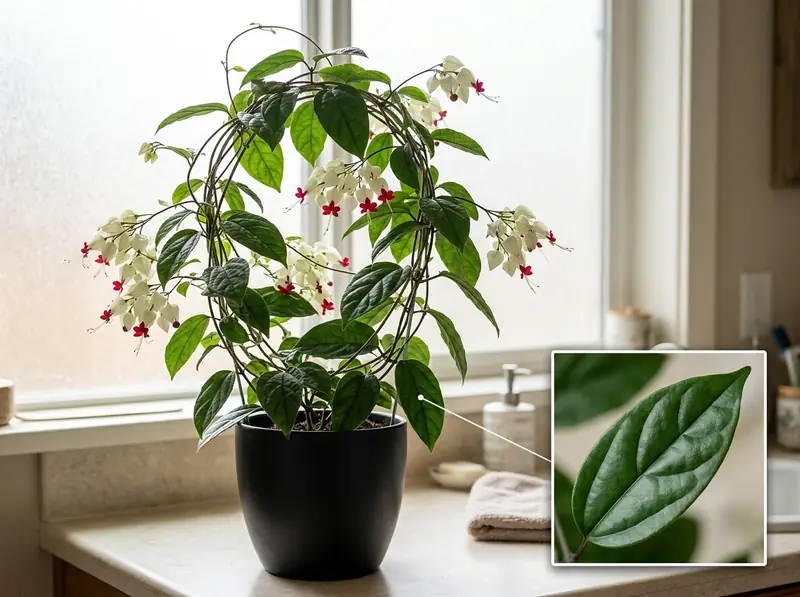 AI-generated
Bleeding Heart Vine
Clerodendrum thomsoniae
- Bright, indirect light
- Moderate watering
Pets: not yet checked AI-generated
 AI-generated