
 AI-generated
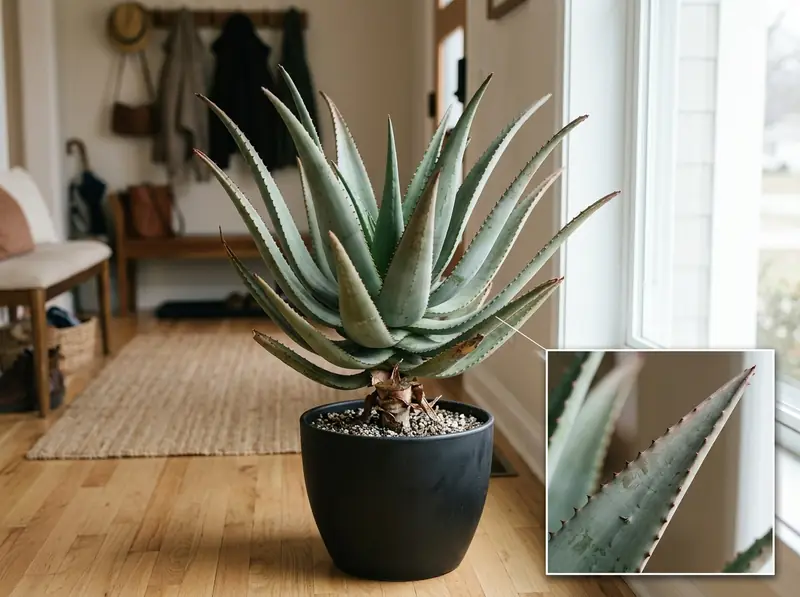
Cape Aloe
Aloe ferox
Cape Aloe is a large, slow-growing succulent with a rosette of thick, spiny-edged gray-green leaves that can eventually form a trunk. It needs lots of direct sun, gritty fast-draining soil, and infrequent watering. Indoors it needs a big pot and a bright spot, and a cool winter rest may bring tall orange flower spikes.
Saving is free with a KinClub account, and it works here and in the KinClub app. Sign up free
Care profile
- Light
- Direct sunLow → direct sun
- Water
- Let it dry outAbout every 21 days
- Difficulty
- EasyTricky → easy
- Coldest it tolerates
- 30°F
- Humidity
- Low
- Mature size
- LargeSmall → tree-size
- Growth rate
- Slow
- How common
- CommonRare → everywhere
- Plant family
- Asphodelaceae
Pets and toxicity
Cats and dogs: not yet checked
Not yet checked against ASPCA — don't assume it's safe for pets.
No toxicity source on record for this plant yet. If a pet eats any houseplant, call your vet or an animal poison helpline.
How to care for Cape Aloe
Light
Give it at least 4-6 hours of direct sun from a south or west window. Acclimate it gradually to stronger sun to avoid scorching, and move it outdoors for summer if you can.
Watering
Soak the soil thoroughly, then let it dry out completely before watering again, about every 3 weeks in summer. In winter water only once every 6-8 weeks, or not at all in a cool room.
Soil
Use a gritty cactus and succulent mix, ideally with extra pumice or coarse sand so that about half is mineral grit. Use a pot with drainage holes; unglazed clay works well.
Feeding
Feed with a diluted cactus fertilizer at half strength once a month in spring and summer. Do not feed in autumn or winter.
Repotting
Repot every 2-3 years in spring, or when roots fill the pot, into a heavy pot only slightly larger. A heavy base stops the tall plant from tipping over.
Propagation
Seed is the usual method since it rarely makes offsets. Sow on gritty mix in warmth, or root an occasional offset after letting the cut end callus for several days. It grows slowly.
Common problems
- Mushy, collapsing lower leaves: this is rot from overwatering, so cut away the soft tissue, let the plant dry, and repot in fresh gritty mix.
- Stretched, pale, floppy growth: light is too low, so move it to a sunny south or west window or add a grow light.
- Mealybugs in leaf bases: dab them with cotton swabs dipped in 70% isopropyl alcohol and repeat weekly until gone.
- Brown, scorched patches: sudden strong sun, so move it back gradually over 1-2 weeks to build tolerance.
Similar plants
Same light needs and difficulty.
 AI-generated
 AI-generated
 AI-generated
 AI-generated
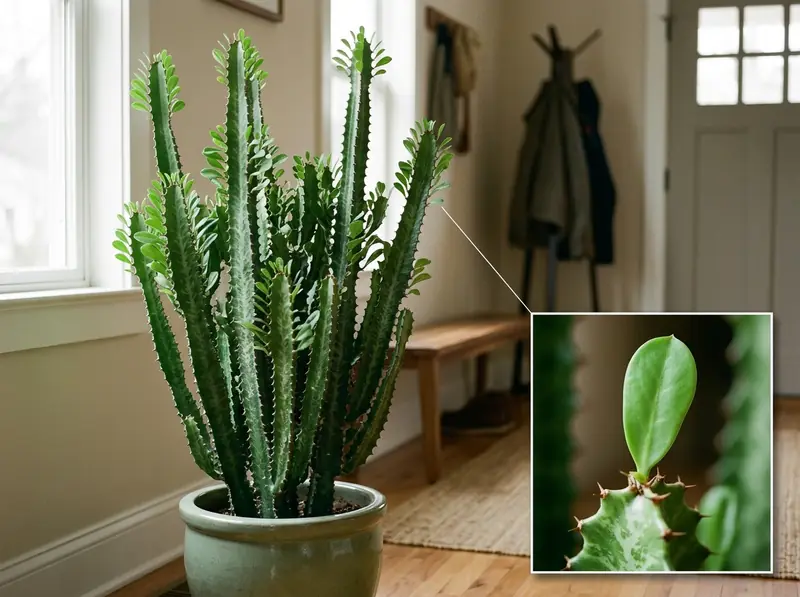
African Milk Tree
Euphorbia trigona
- Bright, indirect to direct sun
- Let it dry out
Pets: not yet checked