
 AI-generated
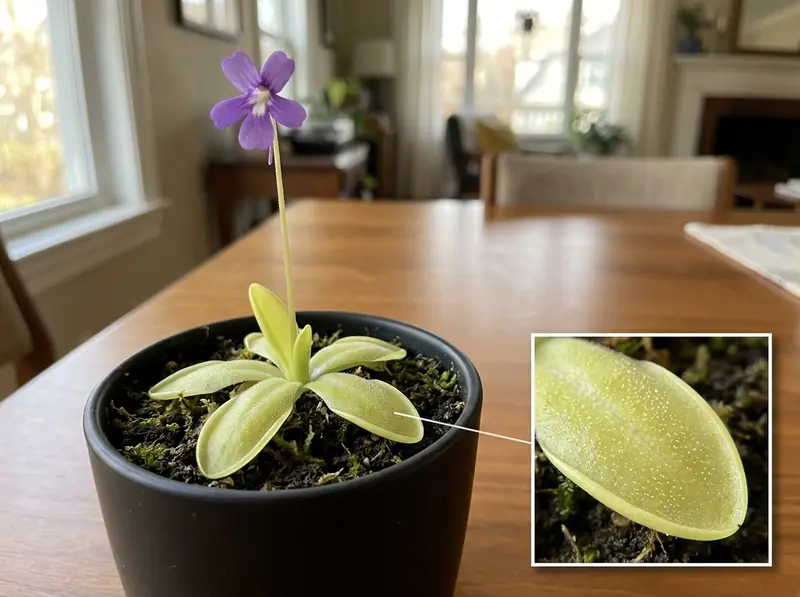
Common Butterwort
Pinguicula vulgaris
Common butterwort is a hardy, cold-climate butterwort with a sticky rosette and violet flowers that traps small flies. It is harder indoors than Mexican kinds because it needs a cold winter rest.
Saving is free with a KinClub account, and it works here and in the KinClub app. Sign up free
Care profile
- Light
- Bright, indirect lightLow → direct sun
- Water
- Keep moistAbout every 4 days
- Difficulty
- Moderate to challengingTricky → easy
- Coldest it tolerates
- 20°F
- Humidity
- Medium to high
- Mature size
- SmallSmall → tree-size
- Growth rate
- Slow to moderate
- How common
- RareRare → everywhere
- Plant family
- Lentibulariaceae
Pets and toxicity
Cats and dogs: not yet checked
Not yet checked against ASPCA — don't assume it's safe for pets.
No toxicity source on record for this plant yet. If a pet eats any houseplant, call your vet or an animal poison helpline.
How to care for Common Butterwort
Light
Bright light is needed, ideally a cool south or east window with several hours of sun. Keep it out of hot midday sun behind glass. It grows best in a cool room, not a warm heated one.
Watering
Keep the peat evenly damp from spring to fall with distilled or rainwater in a shallow tray. In winter the rosette shrinks to a tight bud and needs only barely damp peat. Never use tap water.
Soil
Use a lean mix of equal parts peat moss and sharp sand or perlite. Do not add fertilizer or lime.
Feeding
Do not fertilize. It lives on the insects it catches, and fertilizer burns the roots.
Repotting
Repot in early spring every 1 to 2 years in fresh peat and perlite. Keep the pot small, about 4 inches.
Propagation
Divide the small winter buds (gemmae) that form around the plant, or pull a leaf in spring and lay it on damp peat. Both root in a few weeks.
Common problems
- Warm winter rooms stop it resting and it slowly dies; move it to a cool spot at 35 to 45 F in winter.
- Root rot follows constant wet in cold weather; keep the tray shallow in winter.
- Aphids cluster on flower stalks; rinse or wipe them off with insecticidal soap.
- Brown leaf tips come from mineral-rich water; always use distilled or rainwater.
Similar plants
Same light needs and difficulty.
 AI-generated
 AI-generated
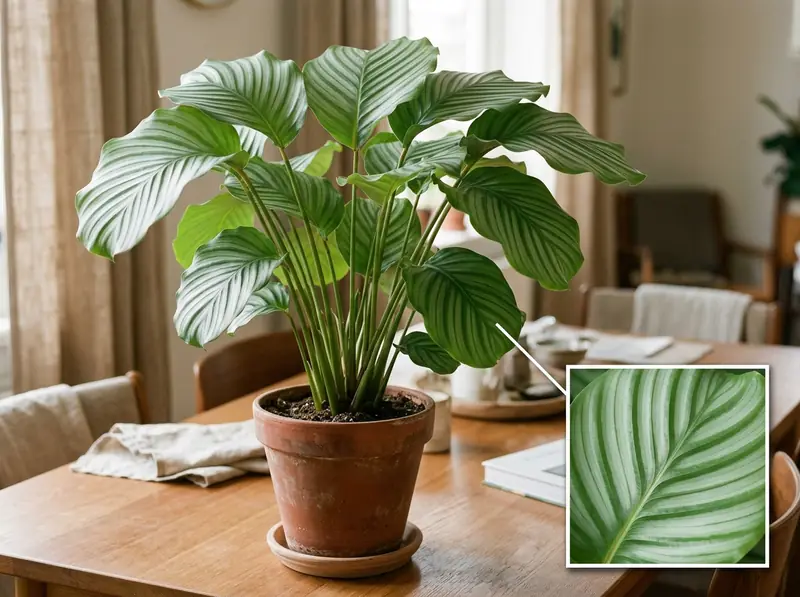
Calathea Orbifolia
Goeppertia orbifolia
- Medium to bright, indirect light
- Keep moist
Pets: not yet checked AI-generated
 AI-generated