
 AI-generated
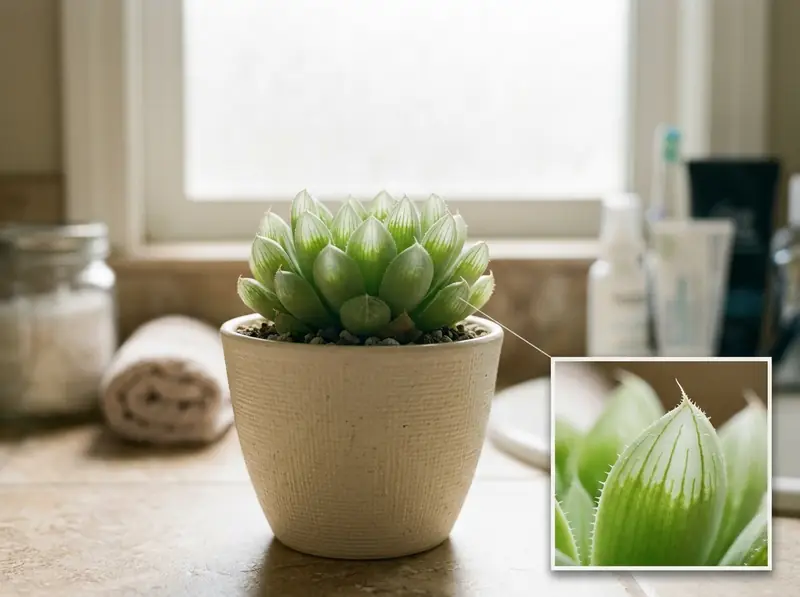
Cooper's Haworthia
Haworthia cooperi
Cooper's haworthia forms a tidy rosette of soft, plump, translucent green leaves with a frosted look. It is a compact, slow-growing succulent that thrives on neglect and fits a desk or shelf with a bright window nearby.
Saving is free with a KinClub account, and it works here and in the KinClub app. Sign up free
Care profile
- Light
- Bright, indirect lightLow → direct sun
- Water
- Let it dry outAbout every 14 days
- Difficulty
- EasyTricky → easy
- Coldest it tolerates
- 40°F
- Humidity
- Low
- Mature size
- SmallSmall → tree-size
- Growth rate
- Slow
- How common
- EnthusiastRare → everywhere
- Plant family
- Asphodelaceae
Pets and toxicity
Cats and dogs: not yet checked
Not yet checked against ASPCA — don't assume it's safe for pets.
Source: ASPCA toxic and non-toxic plants. If a pet eats any houseplant, call your vet or an animal poison helpline.
How to care for Cooper's Haworthia
Light
Bright indirect light from an east or a lightly shaded south window suits it best. A few hours of gentle morning sun is fine, but hot midday sun turns the soft leaves tan and brown.
Watering
Water deeply when the soil is fully dry, roughly every 2 weeks in the growing season and every 4-6 weeks in winter. Keep water out of the center of the rosette, where it can sit and rot the crown.
Soil
Use a fast-draining cactus mix, or blend potting soil with an equal part of pumice or coarse sand. A shallow terracotta pot with a drainage hole works well.
Feeding
Feed lightly, about once in spring and once in midsummer, with a half-strength cactus fertilizer. Skip it in winter.
Repotting
Repot every 2-3 years in spring, or when offsets crowd the pot. Choose a shallow pot only slightly wider than the clump.
Propagation
Separate the small offsets at the base in spring with a few roots attached, let the cut dry for a day, and pot them in gritty mix. Leaf cuttings are much slower and less reliable.
Common problems
- A mushy, dark base is rot from overwatering: unpot, cut away soft tissue, and repot into dry gritty mix.
- Reddish-brown leaves usually mean too much direct sun or drought stress: move back from the glass and water deeply.
- Shriveled outer leaves are normal as old leaves age; remove them to keep the rosette tidy and prevent rot.
- Cottony white mealybugs in the leaf folds: dab with alcohol on a swab and repeat weekly.
Similar plants
Same light needs and difficulty.
 AI-generated
Chinese Money Plant
Pilea peperomioides
- Bright, indirect light
- Dry to moderate watering
Pets: not yet checked AI-generated
Christmas Cactus
Schlumbergera × buckleyi
- Bright, indirect light
- Moderate watering
Pets: not yet checked AI-generated
 AI-generated