
 AI-generated
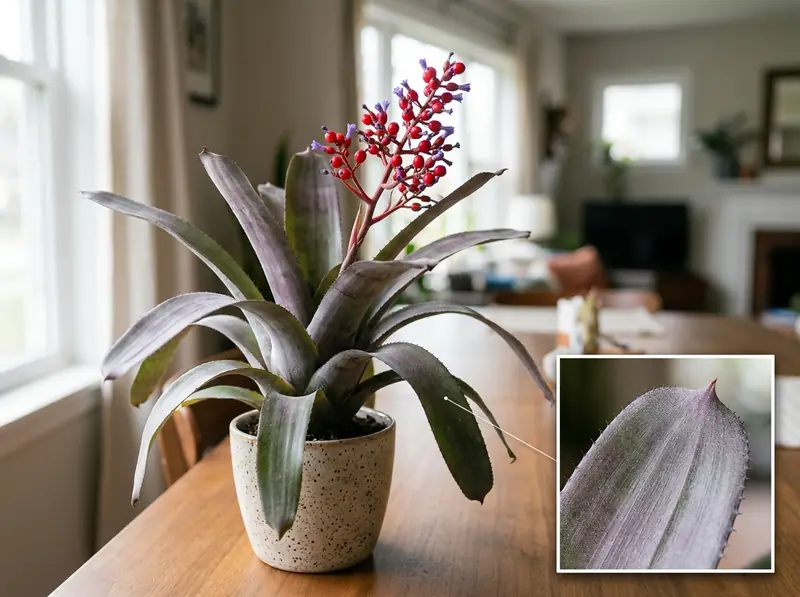
Coral Berry
Aechmea fulgens
Coral berry is a compact bromeliad with a rosette of broad, dusty purplish-green leaves. Mature plants send up a branched spike of violet flowers that turns into long-lasting bright red berries. It is easy to grow in bright, indirect light with a little water in its central cup and a loose, fast-draining mix.
Saving is free with a KinClub account, and it works here and in the KinClub app. Sign up free
Care profile
- Light
- Bright, indirect lightLow → direct sun
- Water
- Moderate wateringAbout every 10 days
- Difficulty
- EasyTricky → easy
- Coldest it tolerates
- 50°F
- Humidity
- Medium to high
- Mature size
- SmallSmall → tree-size
- Growth rate
- Slow
- How common
- EnthusiastRare → everywhere
- Plant family
- Bromeliaceae
Pets and toxicity
Cats and dogs: not yet checked
Not yet checked against ASPCA — don't assume it's safe for pets.
No toxicity source on record for this plant yet. If a pet eats any houseplant, call your vet or an animal poison helpline.
How to care for Coral Berry
Light
Give it bright, indirect light, such as a spot near an east or lightly shaded south window. Gentle morning sun is fine, but avoid hot midday sun, which scorches the leaves.
Watering
Keep the central cup about a quarter full of water and flush it every week or two. Water the potting mix lightly only when the top inch or two is dry, roughly every 10 days, and less often in winter. Use rainwater or filtered water if your tap water is hard.
Soil
Use a very loose, airy mix, such as orchid bark blended with a little peat-free potting soil and perlite. The pot must have drainage holes, because the roots are small and rot in dense, soggy soil.
Feeding
Feed a quarter-strength balanced liquid fertilizer once a month in spring and summer, applied to the soil or a little into the cup. Skip feeding in fall and winter.
Repotting
Repot rarely, as the roots are small. Move up only when the plant is top-heavy or pups crowd the pot, usually every 2 to 3 years, into a pot only slightly bigger, in spring.
Propagation
After flowering, the mother plant slowly declines and produces pups at its base. Cut off pups once they are about one third to half the size of the parent, and pot them in a loose mix.
Common problems
- Brown, soft center: water stood in the cup for too long. Tip out the water, let it drain, and refill with fresh water sparingly.
- Brown leaf tips: dry air or mineral build-up from hard water. Switch to filtered or rainwater and flush the cup regularly.
- No flowers: usually not enough light or a young plant. Give brighter light and be patient, since plants bloom at maturity, typically after a few years.
- White cottony fluff or brown bumps in the leaf bases: mealybugs or scale. Wipe off with rubbing alcohol on a cotton swab and repeat weekly until clear.
- Mother plant browning after flowering: this is normal. Let the pups take over and remove the old rosette when it is fully dead.
Similar plants
Same light needs and difficulty.
 AI-generated
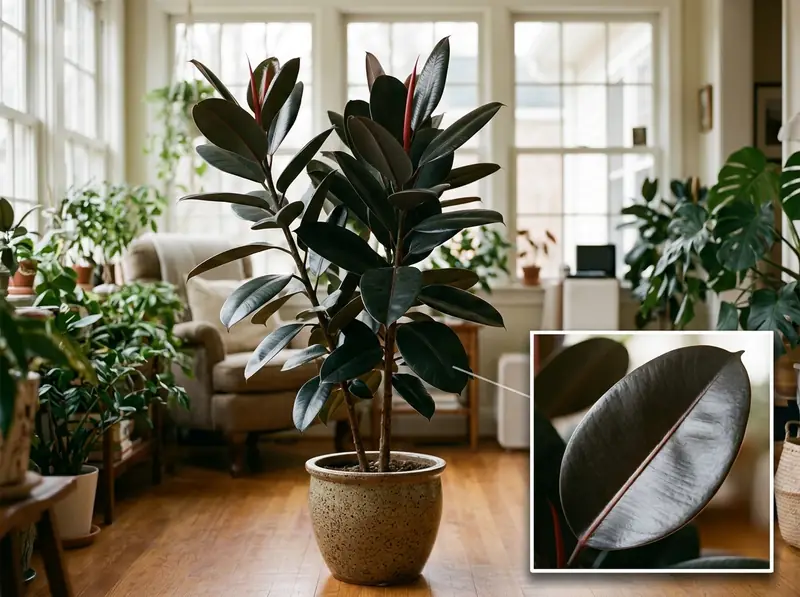
Burgundy Rubber Plant
Ficus elastica 'Burgundy'
- Bright, indirect light
- Moderate watering
Toxic to cats and dogs AI-generated
 AI-generated
Chinese Money Plant
Pilea peperomioides
- Bright, indirect light
- Dry to moderate watering
Pets: not yet checked AI-generated
Christmas Cactus
Schlumbergera × buckleyi
- Bright, indirect light
- Moderate watering
Pets: not yet checked