
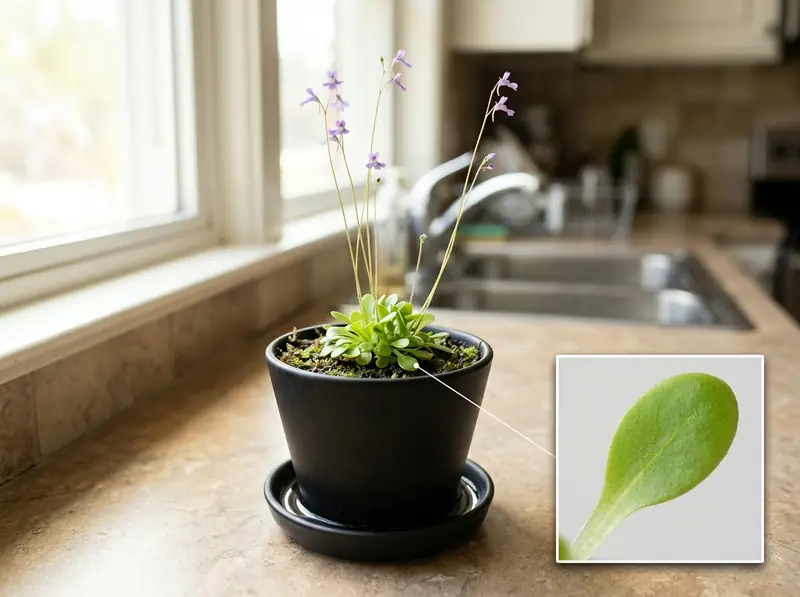
 AI-generated
Corkscrew Plant
Genlisea violacea
The corkscrew plant is a small carnivorous plant from Brazil that traps microscopic prey in underground spiral traps while showing only a few tiny leaves and small purple flowers. It is a conversation piece that needs distilled water, bright light and wet roots.
Saving is free with a KinClub account, and it works here and in the KinClub app. Sign up free
Care profile
- Light
- Bright, indirect lightLow → direct sun
- Water
- Keep moistAbout every 3 days
- Difficulty
- ModerateTricky → easy
- Coldest it tolerates
- 50°F
- Humidity
- Medium to high
- Mature size
- SmallSmall → tree-size
- Growth rate
- Slow
- How common
- RareRare → everywhere
- Plant family
- Lentibulariaceae
Pets and toxicity
Cats and dogs: not yet checked
Not yet checked against ASPCA — don't assume it's safe for pets.
No toxicity source on record for this plant yet. If a pet eats any houseplant, call your vet or an animal poison helpline.
How to care for Corkscrew Plant
Light
Prefers bright light, such as a sunny window with a little direct morning sun or a grow light for 12 hours. It should be bright but not harsh; leaves redden slightly in strong light.
Watering
Keep the pot standing in about an inch of distilled, rain or reverse-osmosis water year-round. The plant must never dry out, and tap water minerals will damage it.
Soil
Use a mix of unfertilized peat and fine silica sand, about 1 to 1, in a shallow pot. Avoid potting soil or perlite with added fertilizer.
Feeding
Do not fertilize. It catches tiny microorganisms with underground corkscrew-shaped traps and gets what it needs from them.
Repotting
Repot every year or two into fresh peat and sand in spring; keep the white corkscrew traps buried and undisturbed.
Propagation
Divide a clump in spring into pieces with roots, or collect and sow the fine seed on moist peat. Divisions are the easier method.
Common problems
- Algae and slime in the tray make the roots unhealthy; rinse the tray and refill with fresh distilled water.
- Stunted growth and no flowers usually mean too little light; add a grow light.
- Fungus gnats breed in the wet peat; use sticky traps and top-dress with sand.
- Yellowing leaves with tap water point to mineral buildup; switch to distilled water permanently.
Similar plants
Same light needs and difficulty.
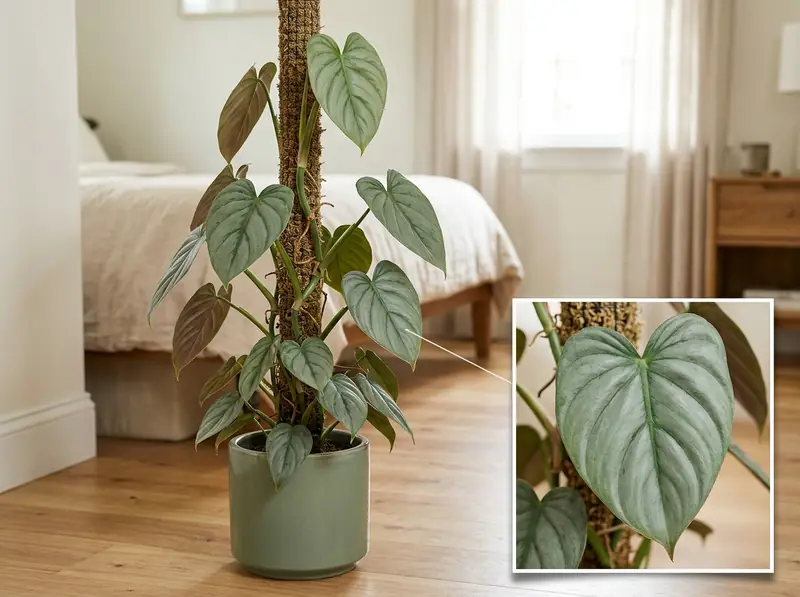 AI-generated
Sodiroi Philodendron
Philodendron sodiroi
- Bright, indirect light
- Moderate watering
Toxic to cats and dogs AI-generated
 AI-generated
 AI-generated