
 AI-generated
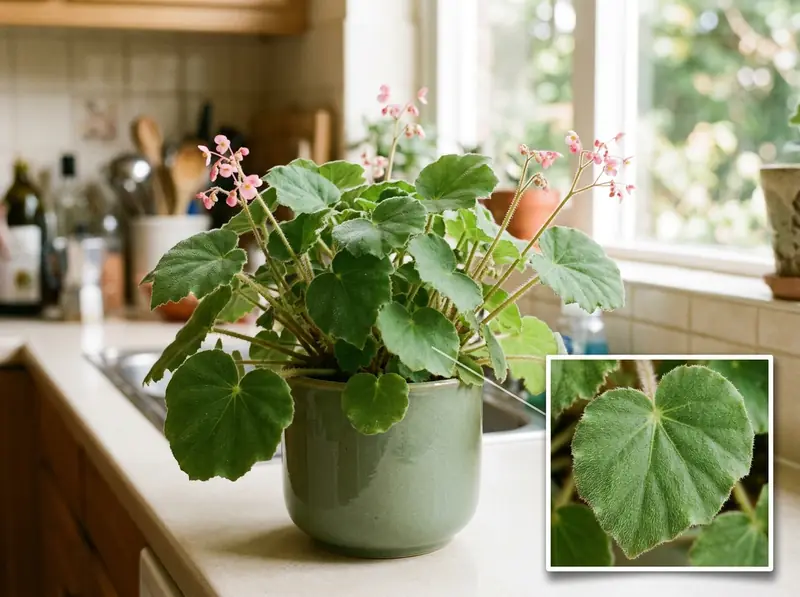
Solimutata Begonia
Begonia solimutata
A hairy-leaved, rhizomatous begonia from Brazil with soft, lobed leaves and sprays of small pink flowers. It stays manageable on a table or shelf and likes bright shade and even moisture.
Saving is free with a KinClub account, and it works here and in the KinClub app. Sign up free
Care profile
- Light
- Bright, indirect lightLow → direct sun
- Water
- Moderate wateringAbout every 7 days
- Difficulty
- ModerateTricky → easy
- Coldest it tolerates
- 55°F
- Humidity
- Medium to high
- Mature size
- Small to mediumSmall → tree-size
- Growth rate
- Moderate
- How common
- EnthusiastRare → everywhere
- Plant family
- Begoniaceae
Pets and toxicity
Toxic to cats
Keep away from cats. Call your vet or a pet poison helpline if a cat chews it.
Toxic to dogs
Keep away from dogs. Call your vet or a pet poison helpline if a dog chews it.
Source: ASPCA toxic and non-toxic plants. If a pet eats any houseplant, call your vet or an animal poison helpline.
How to care for Solimutata Begonia
Light
Bright indirect light, such as an east window or a bright spot a few feet from a south window. Avoid midday sun. Rotate the pot so growth stays even.
Watering
Water when the top inch of soil is dry, roughly weekly, and avoid splashing the hairy leaves. Water less in winter when growth slows.
Soil
Use a light, airy mix of potting soil, perlite and orchid bark. Keep the creeping rhizome at the soil surface, not buried.
Feeding
Feed with a half-strength balanced fertilizer every 4 weeks in spring and summer, and none in winter.
Repotting
Repot every 1 to 2 years in spring in a wide, shallow pot, because the rhizome spreads sideways.
Propagation
Cut a piece of rhizome with a leaf and set it on moist mix, or root a leaf with part of its stalk under a clear cover.
Common problems
- Powdery mildew on leaves: stagnant, damp air. Add airflow, water the soil only and remove affected leaves.
- Rotting rhizome: planted too deep or soil stays wet. Keep the rhizome above the soil line and let the top inch dry between waterings.
- White cottony clumps: mealybugs. Dab with alcohol on a cotton swab and repeat weekly.
Similar plants
Same light needs and difficulty.
 AI-generated
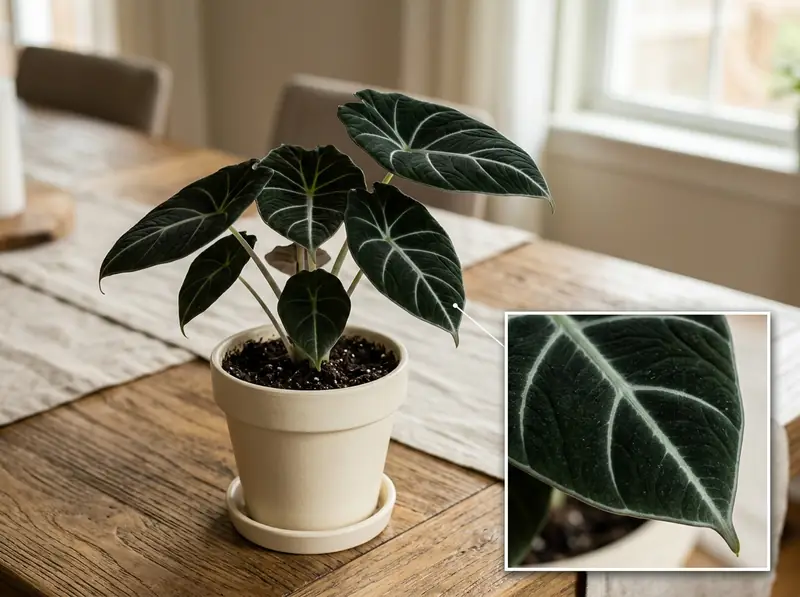
Black Velvet Alocasia
Alocasia reginula 'Black Velvet'
- Bright, indirect light
- Moderate watering
Toxic to cats and dogs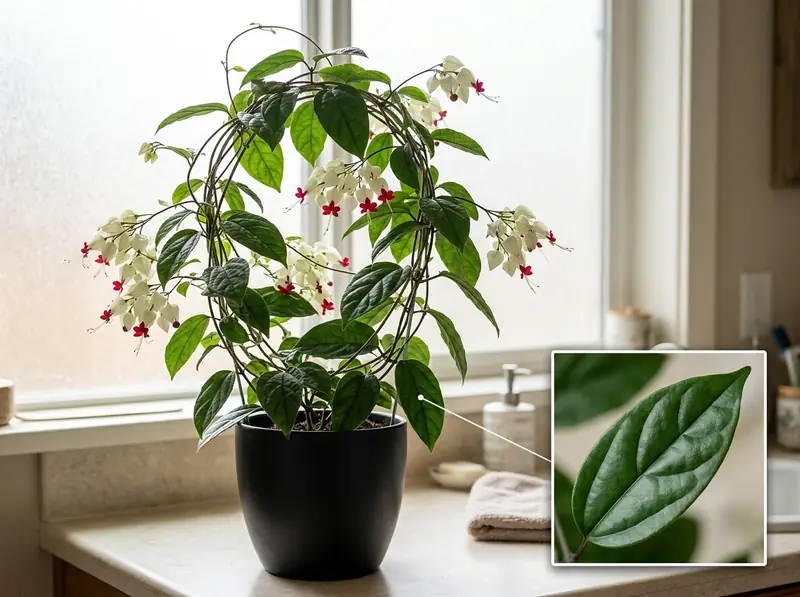 AI-generated
Bleeding Heart Vine
Clerodendrum thomsoniae
- Bright, indirect light
- Moderate watering
Pets: not yet checked AI-generated
 AI-generated